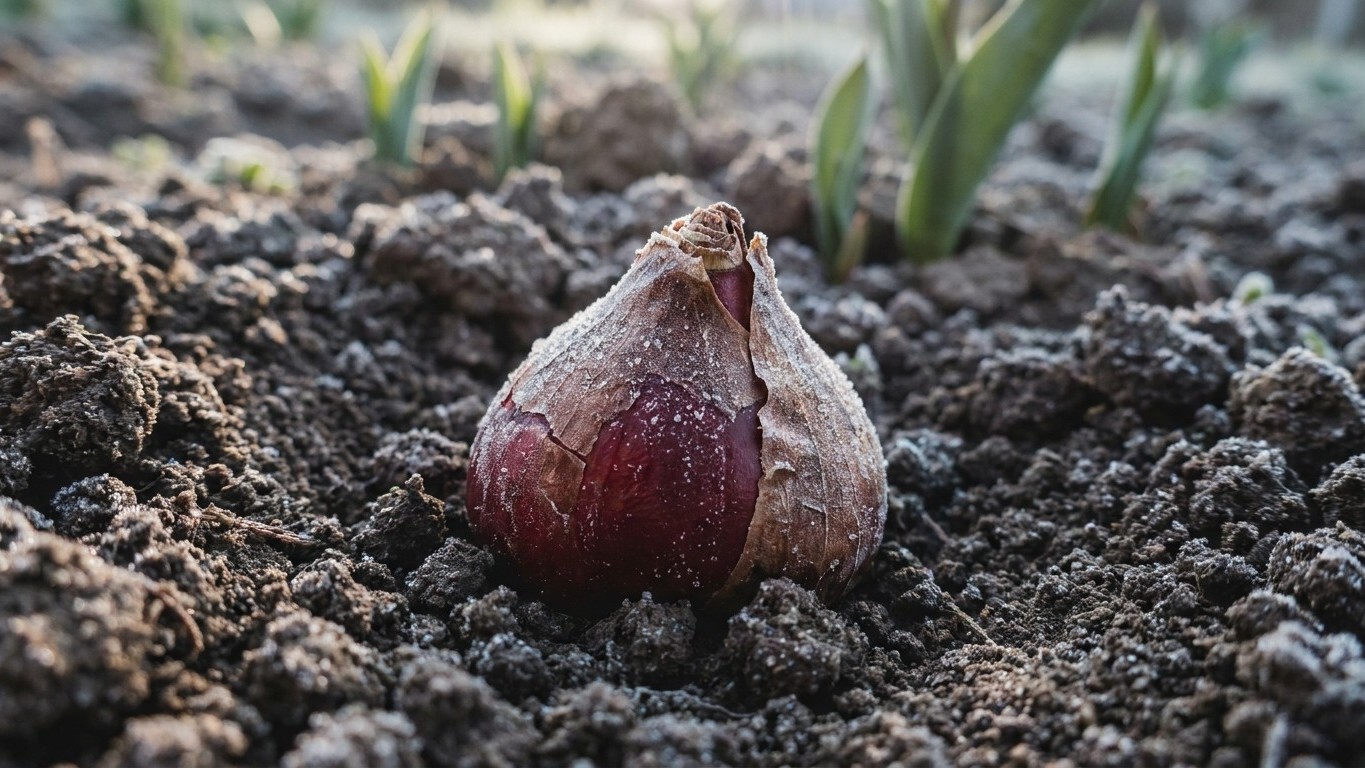

Voles, squirrels, wireworms, onion thrips and a few soil-borne troublemakers do most of the damage to garlic in Missouri, and each one works on its own schedule. Rodents and squirrels go after cloves in the weeks after planting, voles and rabbits keep at it through winter, and thrips arrive with spring heat. Nematodes ride in on seed stock whenever you plant. Garlic goes in during autumn and comes out the following summer, so it sits in the ground through all of them.
The short answer for Missouri
Garlic goes in around the first fall frost, which the NOAA NCEI 1991-2020 Climate Normals place between October 18 and October 29 at Kansas City International (MCI). That band comes from the 30-70% probability range for a 32F freeze, so it is a midpoint, not a safe date: in one year out of two the frost falls later.
The frost date matters for pests because it sets the clock. Plant on time and the clove has a root system by the time the ground chills, which makes it a poor target for digging animals and rot. Plant late and you have a bare clove sitting in soft soil, exactly what a squirrel is looking for. After that, the pest calendar runs on its own:
| When | Who | What happens |
|---|---|---|
| Weeks after planting | Squirrels, chipmunks, birds | Dig up freshly turned beds and eat or scatter cloves |
| Winter | Voles, rabbits, mice | Tunnel under mulch, chew cloves, nip green shoots |
| Cool, wet spring | Slugs, onion maggots | Ragged leaves, occasional damage at the base |
| Warm, dry late spring | Onion thrips, aphids | Silvery streaks on leaves, smaller bulbs |
| Any season | Wireworms, stem and bulb nematodes, mites | Hollowed cloves, swollen and stunted plants, damage carried into storage |
One caution on the numbers: that frost band comes from a single station, and MCI sits well north of the city. Your garden may not match it.
Working it out for your own garden
A state is not one climate, and Missouri proves it. Kansas City, the Ozark hills and the Bootheel do not share a frost date, so the band above is a starting point. Here is how to adjust it and lay pest timing on top.
Start from the nearest station
Find the 1991-2020 normals for the weather station closest to you and look at the 32F freeze probabilities. The 30-70% band is the useful part. It tells you the frost might come at the early end, the late end, or after the band closes. Treat the middle of the band as a coin flip and plan around the whole spread. Counting your planting date forward from that anchor is covered on the When to Plant Garlic in Missouri: Counting Back From the First Frost page, so the weeks are not repeated here.
Shift it for your ground
Distance from the station, elevation, and the pooling of cold air in low spots all push the date around. Local terrain can move a date by a couple of weeks either way. Cold air drains downhill, so a hollow can freeze while the ridge above it stays clear. The same station gap shows up in spring: the downtown Kansas City station runs about five days earlier than MCI, and southern Missouri is milder still. A fall offset for your own county is not published here, so check the local normals rather than borrowing a number.
Lay the pests on the calendar
Once you have your planting window, work forward. Early planting means more weeks of top growth before winter, which rabbits and cold both exploit. Late planting leaves the clove exposed. After planting, the next pressure point is the first cold snap, when voles move into mulch. Spring thrips depend more on weather than on the calendar. A warm, dry May speeds them up, and the damage shows as silvery flecks on leaves and bulbs that stop sizing up. Harvest comes the following summer, when the lower leaves brown. Nematodes and mites ignore all of this, because they travel in the cloves themselves. Soil pests like wireworms are worst in beds converted from sod, so a new bed cut from lawn deserves a closer look than one that has grown vegetables for years.
What changes across Missouri
Missouri runs a long way north to south, and its terrain is not flat. The differences that matter come from latitude, the Ozark highlands, the cities, and the Mississippi lowlands.
| Area | What moves the dates | What it means for pests |
|---|---|---|
| Northern Missouri and the northwest, including the MCI station | Furthest north, open prairie, wind | The earliest frost of the state’s major regions. Rodents settle into mulch sooner |
| St. Louis and Kansas City metros | Urban heat. Downtown Kansas City runs about five days earlier than MCI in spring | More squirrels and chipmunks in small beds. Slightly longer growing season in the core |
| Ozark highlands | Elevation and cold air pooling in hollows | Cold hollows freeze first. Voles are common in wooded edges |
| Southern Missouri and the Bootheel | Milder, lowland Mississippi valley air | Frost comes later and spring warms sooner. Thrips and aphids start earlier |
The region you live in shifts the pest story as much as the date. In the north, hard cold is the main threat, so rodents and heaving soil matter more than insects. In the Bootheel, mild winters keep voles and rabbits active longer, and a warm spring brings thrips earlier than gardeners in Kansas City will see. The Ozarks sit between the two, with cold-air pockets that behave like a small northern climate. Even a single yard can span a week or more between its low corner and its ridge.
The variety you choose also follows geography. Hardnecks do well in the north and in cold hollows, while softnecks lean toward the milder south. The Garlic Varieties That Suit Missouri Winters page covers which types fit which part of the state, and the broader Growing Garlic in Missouri page puts them in context.
The mistakes this climate punishes
Missouri winters swing. A warm spell in January can be followed by a hard freeze, and then another thaw. That pattern, not steady cold, causes most of the pest-related losses, and it makes a few common habits expensive.
Mulching too early and too heavy. Straw laid thick over warm soil gives voles shelter before the cold arrives. Advice written for colder places, such as the planting guidance in When to Plant Garlic in Montana: Counting Back From the First Frost and the variety notes in Garlic Varieties That Suit Montana Winters, pushes deep protection because Montana winters are severe. In Missouri, the same blanket can become vole housing. Wait until the ground has chilled, and keep mulch from piling against the stems.
Planting too shallow. Freeze-thaw cycles push shallow cloves upward. Once a clove is heaved, birds and squirrels find it quickly, and exposed roots dry out or freeze. Plant with enough soil over the tip to ride out a few cycles, and check the bed after the first hard freeze.
Planting too late. A clove that goes in after the ground has begun to freeze does not root before winter. A clove without roots is food for anything that digs, and it has little to resist soil rot. Remember that the frost date is a midpoint: half of all years, frost holds off, and the temptation is to wait. Planting on the early side of your window costs less than missing it.
Replanting from your own stunted or swollen plants. Stem and bulb nematodes and curl mites spread in seed stock. Cloves from plants that were stunted, twisted or swollen can carry them into the next crop, and neither pest dies in winter. Buy clean seed garlic, and rotate beds so garlic does not return to the same soil year after year.
Skipping the spring scout. Thrips are easy to miss until the leaves are streaked. Look at the leaf folds in late spring, especially in warm, dry weather, and act early. Mild hardnecks planted in the south and the Bootheel are not off the hook; milder winters mean pests build up sooner.
Checking this against your county
County-level frost and pest figures are not published here. University of Missouri Extension has county offices that can tell you which pests are active in your area this year, what the local frost timing looks like, and how to send a suspect plant for identification. Ask before you replant from a bed that looked off.
Common questions
What eats garlic cloves right after planting in Missouri?
Squirrels, chipmunks and birds dig in freshly turned soil, and voles and mice tunnel in from the edges. A thin layer of mulch added once the ground has chilled, plus a check after the first hard freeze, covers most of the risk.
Do deer and rabbits bother garlic?
Garlic is not a favorite of either. Rabbits will nip green shoots in winter, particularly when other food is scarce, but established plants usually recover. Rodents under mulch are the larger concern.
When do onion thrips show up?
In spring, when the weather turns warm and dry. Look for silvery streaks on the leaves, and check the folds where the leaves meet the stem. A cool, wet spring tends to hold them back.
Can I replant garlic from my own harvest?
Yes, if the plants were healthy. Avoid any that were stunted, swollen or twisted, because nematodes and mites ride in the cloves and survive winter. Bulb size is no guide to health, so judge the plant, not the bulb.