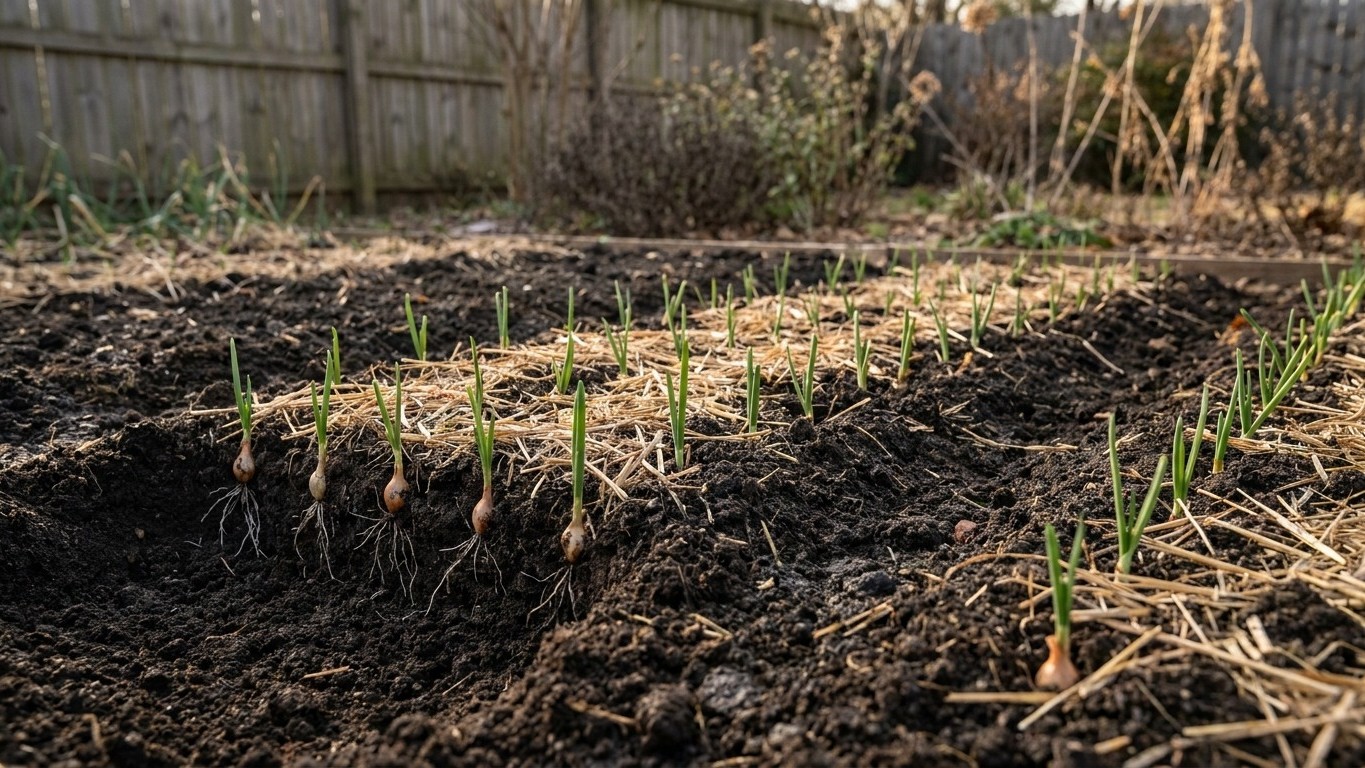

Gophers, voles and ground squirrels go after the cloves from the day they are planted until the ground freezes. Onion thrips and mites take over once the leaves green up in spring, and the bulb and stem nematode works underground the whole time. Nevada’s climate shifts when each of these shows up, because garlic goes in during autumn and comes out the following summer, so a pest calendar spans nearly a full year.
The short answer for Nevada
The only frost figure verified for this page is a Las Vegas one: in NOAA NCEI’s 1991-2020 U.S. Climate Normals, the 32F freeze probability at the Las Vegas airport reaches the 30-70% band between December 8 and December 23. That is a desert urban-heat-island extreme, so it is not a planting window for Nevada. Reno, Carson City and any garden at elevation freeze months earlier in fall and stay cold later in spring.
Pests matter here because of what the frost date sets in motion. Garlic roots in cooling soil before winter, and a clove that sits in warm ground for weeks is a clove that wireworms, rodents and soil fungi can reach. The pest calendar is tied to that same clock, running from planting through the cold months and into the warm ones.
Treat any frost date as a midpoint, never a safe date. In one year out of two, the frost arrives later than the published figure. A late frost keeps the soil warm longer, which extends the window for insects and soil-borne trouble in the bed. It also gives a mild autumn more time to push early top growth that the first hard freeze can burn back.
The sections below set out how to anchor your own pest watch to your own frost date. They also cover how the state’s very different climates change it, and which habits cost Nevada gardeners bulbs.
Working it out for your own garden
A state is not one climate, and Nevada may be the clearest case in the country. Elevation changes the dates by weeks, and a large lake like Tahoe softens the swings near its shores. The pest calendar moves with them, so work it out from your own numbers rather than from a statewide chart.
Start from your own frost midpoint
Get your local first fall frost date from your county extension office (more on that at the end). Remember it is a 50-50 date, not a deadline. Then follow the planting arithmetic laid out in When to Plant Garlic in Nevada: Counting Back From the First Frost, which counts backward from the frost so roots establish before the ground locks up. Every pest window below hangs off that planting date and that frost date.
Lay the pest windows over the calendar
With those two anchors, the year breaks into four watch periods:
- Planting to hard freeze: rodents, wireworms and soil fungi find freshly planted cloves. This is the stretch when a bed is most exposed.
- Dormant months: voles and gophers keep tunneling under mulch and snow where it lies. Nematodes are already in the clove if they came in with the seed.
- First green growth in spring: onion thrips and eriophyid mites begin feeding as leaves open and the weather warms. Dry, windy springs favor thrips.
- Bulb sizing to harvest: thrips pressure peaks while bulbs swell. Lift the crop when the lower leaves brown, because bulbs left in warm summer soil are open to maggots, rot and mites.
Shift the whole sequence by your frost date. A garden whose midpoint frost comes weeks earlier than another’s will see its dormant period start sooner and its spring pests wake later, because cold soil holds them back. A garden that freezes late has the reverse: a longer autumn exposure and an earlier spring start.
Choosing a variety changes the timing too. Types differ in how early they size up, and that decides how long the bulbs sit in the ground through the pest season. Variety notes for the state are in Garlic Varieties That Suit Nevada Winters, and the broader growing picture is on Growing Garlic in Nevada.
What changes across Nevada
Southern Nevada, the Mojave side around Las Vegas and Pahrump, runs ahead. Mild winters mean soil rarely stays cold, so wireworms, ants and soil fungi stay active far longer into the year, and spring thrips can appear early. Garden beds there rarely get the winter pause that knocks pest numbers back elsewhere.
The Reno-Sparks-Carson City corridor and the valleys of Douglas and Lyon counties sit in the high desert, with real freezes and a distinct dormant period. Rabbits and deer drift in from the foothills, and the winter pause is clearer. The Tahoe basin and mountain towns run behind: snow cover can last for months, and that blanket shelters voles, which feed under it undisturbed.
The northern and eastern Great Basin, including Elko and the high ranch country, has the coldest winters and the latest springs. Pests wake late there, but gophers and ground squirrels are a constant on open ground. The table gathers these regions on the same criteria.
| Part of Nevada | Runs | Cause | Pest pattern |
|---|---|---|---|
| Las Vegas and the Mojave south | Ahead | Low elevation, desert heat, urban heat island | Long exposure after planting, early spring thrips |
| Reno, Carson City, Douglas and Lyon valleys | Middle | High desert, real freezes | Clear dormant pause, rabbits and deer from foothills |
| Tahoe basin and mountain towns | Behind | Elevation, long snow cover | Voles under snow, late spring pests |
| Elko and the northeastern Great Basin | Behind | High elevation, cold basins | Late wake-up, gophers and ground squirrels on open ground |
For contrast, a wet maritime climate handles the same crop very differently. When to Plant Garlic in New Brunswick: Counting Back From the First Frost and Garlic Varieties That Suit New Brunswick Winters show how a damp, snowy province frames the same decisions.
The mistakes this climate punishes
In the mild south, the costly mistake is planting hardneck types and expecting them to behave. They want a hard winter chill, and a weak, stressed plant in warm soil is easier prey for thrips and rot. Softneck types suit that climate better. Leaving cloves in warm ground through a long autumn is the companion error, because wireworms and fungi get weeks of access.
In cold Nevada, the opposite errors bite. Planting too shallow or too late to root is the big one. A clove without an established root system heaves out of frozen, thawing ground, and an exposed clove is a free meal for birds, rodents and anything else that digs. Late planting also leaves the plant too weak to outgrow early thrips damage in spring.
Several other habits cost bulbs across the state:
- Planting grocery-store garlic. It can carry nematodes or mites, and those persist in the soil once introduced. Buy clean seed garlic from a reputable grower.
- Replanting in the same bed. Nematodes survive in soil, so a multi-year rotation away from alliums is the main defense.
- Thick straw mulch against rodents. Mulch protects soil from freeze-thaw but also hides voles. Hardware cloth under or over the bed does more than mulch alone.
- Ignoring dry-weather thrips. Nevada springs are dry, and thrips thrive in dry, windy weather. Check leaf axils regularly once growth starts.
- Leaving bulbs in the ground after the leaves brown. Late lifting in summer heat invites maggots and storage mites.
Checking this against your county
County-level frost dates and local pest reports are not published on this page. For your own figures, contact University of Nevada, Reno Extension, which can give you frost probabilities for your area and tell you which pests are active in your county this season. Bring a bulb or a damaged leaf if you can, since symptoms of nematodes, mites and rot are easy to confuse.
Common questions
What is the most common garlic pest in Nevada?
No verified Nevada ranking is available here. Onion thrips, rodents such as gophers and voles, and soil-borne problems like nematodes are the usual suspects for home gardens in the arid West. Your county extension office can tell you which dominates locally.
When are garlic pests most active?
Ground-dwelling pests are most active between planting and the first hard freeze. Thrips and mites become active as leaves emerge in spring and the weather warms, and thrips pressure is usually highest while bulbs are sizing up.
Does Nevada’s dry climate protect garlic from pests?
Partly. Dry conditions reduce some fungal diseases, but they favor thrips, which multiply in dry, windy weather. Rodents are unaffected by aridity.
How do I keep gophers and voles out of a garlic bed?
Line the bed with hardware cloth before planting, since a barrier works better than mulch alone. Keep grass and weeds trimmed around the bed to remove cover, and check your county extension for local control guidance.