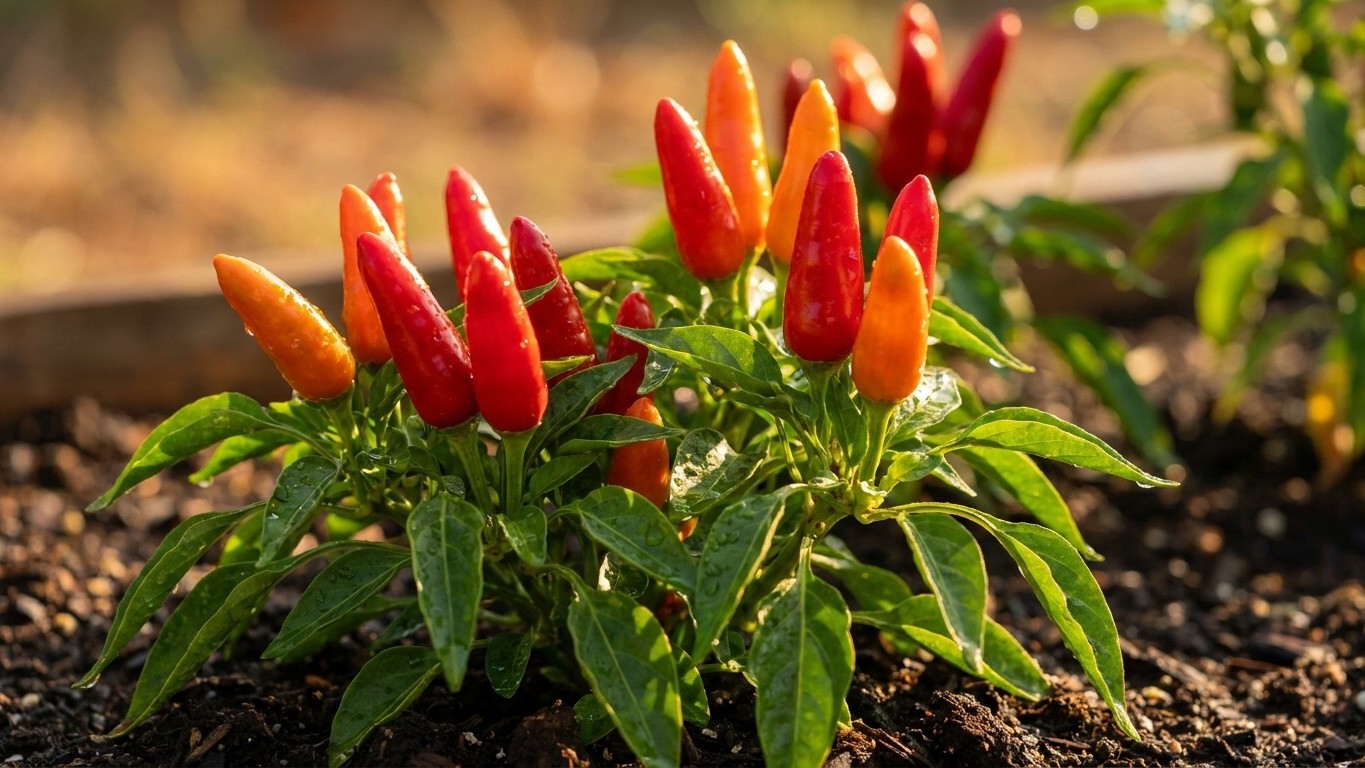

Pick peppers once the fruit has reached full size and feels firm. Clemson Extension puts that at about 70 to 85 days after transplanting. Then keep them out of the refrigerator. A home fridge runs colder than the 45 to 50 °F range whole peppers prefer, and below roughly 45 °F they pit and soften. In Kentucky, though, the first question is often whether the plants set fruit at all, because heat and cool nights can both stop it.
The short answer
The NOAA NCEI climate normals for the Louisville reference station show an average of 37.2 days a year at or above 90 F. That number measures summer heat load, not average summer temperature. It matters because Utah State University Extension is blunt about it: pepper fruit set fails when days climb above 90 F. Blossoms that open during a hot spell tend to drop, and a dropped blossom is a pepper you will never pick. Thirty-seven days is a yearly average, not a single block, and this site does not say how they fall across the calendar. What counts is whether a stretch of them lands while your plants are in flower.
The other end of the thermometer gets less attention. The same Utah State source says fruit set also fails when nights fall below 55 F. This site carries the count of hot days for each territory but does not carry summer night minima. I won’t guess at them from latitude or from how cold the winters get, because neither one tells you what a July or September night will do. Put a min/max thermometer near the bed and write down the overnight low while the plants are flowering. Two or three nights under 55 F is your signal to cover the plants or at least to expect a gap in the harvest.
The picking window
Clemson Extension says peppers should be ready for harvest in about 70 to 85 days after transplanting. Count from the day the seedling went into the ground, not from the day the seed went into the tray. A heat or cold stall during flowering pushes your real date later, since the plant has to flower again before it can set the next round. Green fruit at full size is edible, and fruit left on the plant to color will keep gaining sweetness while it uses more of the plant’s energy. Cut the stem with pruners instead of yanking, because pepper branches snap easily.
The fridge problem
Clemson gives the optimal storage conditions as 45 to 50 °F and 80 to 90 percent relative humidity, good for two to three weeks. Treat that as a ceiling, not a promise: it applies under ideal conditions, and a pepper that was stressed or bruised in the field will not make it that long. The refrigerator is the mistake nearly everyone makes. Its temperature is below that range, and chilling injury shows up as small sunken pits, soft spots, and a watery texture that arrives a few days later, usually after the pepper has been moved back to the counter. A cool pantry, cellar, or unheated room that holds the target range works better, and a cheap thermometer will tell you if yours does.
When to start seed here
The planting arithmetic works backward from the transplant date, and you can redo it for your own county in five steps. This ties into the broader picture in Growing Peppers in Kentucky.
- Find your transplant date. Peppers go out after the last frost and once the soil reaches 60 F. For the Louisville reference station, NOAA NCEI shows the last spring 32F freeze falling between March 24 and April 4 (that is the 30 to 70 percent probability band). Treat that as a floor, not a planting date, because soil often takes longer to warm than the air does. The reference station is urban, and the notes on it warn that rural parts of Jefferson County should expect a tighter window. If you garden outside the city, use your own frost record and your own soil thermometer.
- Count back 8 to 10 weeks. Utah State says transplants need that long indoors. Eight weeks is 56 days and ten weeks is 70 days, so you are looking at a seed-starting range, not a single date.
- Run a sample. Say the soil hits 60 F on May 1 (an example only, not a Kentucky forecast). Eight weeks back lands on March 6, and ten weeks back lands on February 20. Start seed anywhere between those dates and the seedlings will be the right size on transplant day.
- Count forward to first harvest. Using Clemson’s 70 to 85 days after transplanting, a May 1 transplant gives you picking between July 10 and July 25. Those weeks sit squarely in the season when days of 90 F or more occur, so plan some shade cloth for the flowering stretch.
- Redo it for your county. Swap in your own transplant date, subtract 56 to 70 days for seed, add 70 to 85 days for harvest. If your date moves a week later, everything moves a week with it.
Starting too early is as costly as starting late. Seedlings held indoors past ten weeks outgrow their pots and often flower in the tray, and a transplant that flowers under stress rarely rewards you. Starting too late means the first fruit ripens in the middle of a hot stretch, which is when blossoms drop.
What goes wrong here
Before you blame the weather, check for chewing and sucking pests, since some of what looks like climate damage is not. What Eats Pepper in Kentucky, and When covers that side. The failures below are the ones this climate produces.
- Blossom drop. Flowers fall off when a hot spell (days above 90 F) or a cool night (below 55 F) catches the plant in bloom. Remedy: shade cloth over the bed on the hottest afternoons, a row cover or old bedsheet on a night that dips under 55 F, and consistent watering so the plant isn’t stressed on top of the temperature. Do not feed extra nitrogen to compensate, because you will get leaves instead of fruit. Once the weather settles, the plant usually flowers again, so a gap in picking is normal. The longer version is in Why Peppers Fail to Set Fruit in Kentucky.
- Sunscald. Fruit turns pale, papery, and sunken on the side that faces the sun, and gray mold often follows. It happens when leaves are lost to disease, pests, or heavy pruning and the fruit is left exposed. Remedy: leave the foliage alone, stake or cage plants so branches don’t splay open, and use light shade cloth over fruiting plants during the strongest afternoon sun. Cut off scalded fruit so it doesn’t rot on the plant.
- Blossom-end rot. A dark, leathery, sunken patch forms on the bottom of the fruit. It is a calcium delivery problem, usually triggered by uneven watering, not by a shortage of calcium in the soil. Remedy: mulch to even out soil moisture, water deeply on a steady schedule instead of in bursts, and get a soil test before adding anything. Pick off affected fruit, and the next ones often come in clean once watering steadies.
Common questions
Can I pick peppers green?
Yes. A pepper at full size and firm is edible green, and picking it can encourage the plant to keep flowering. Fruit left on the plant will color and sweeten, but it also keeps drawing on the plant for longer. If a hot spell or a cold night is coming, harvesting mature fruit early is a reasonable hedge.
Is the refrigerator ever okay for peppers?
Not for whole, fresh peppers you want to keep for weeks. The 45 to 50 °F range in the Clemson guidance is warmer than a domestic refrigerator, and below about 45 °F the fruit pits and softens from chilling injury. A day or two in the crisper may not show damage, but the risk rises the longer they stay. Cut or cooked peppers are a different matter and belong in the fridge.
How long will picked peppers last?
Clemson’s figure is two to three weeks at 45 to 50 °F and 80 to 90 percent relative humidity. That is a maximum under optimal conditions. Fruit with bruises, sunscald, or blossom-end rot will go faster, so use those first. For longer keeping, freezing sliced peppers is the usual fallback, though this site does not publish storage times for it.
Does the Louisville frost date apply to my yard?
Only roughly. The March 24 to April 4 band comes from NOAA NCEI normals for the Louisville reference station, which is urban, and the notes on that station warn that rural Jefferson County runs differently and that rural gardens should expect a tighter window. Use the band as a starting point, check your own last frost, and wait for the soil to reach 60 F before you transplant.