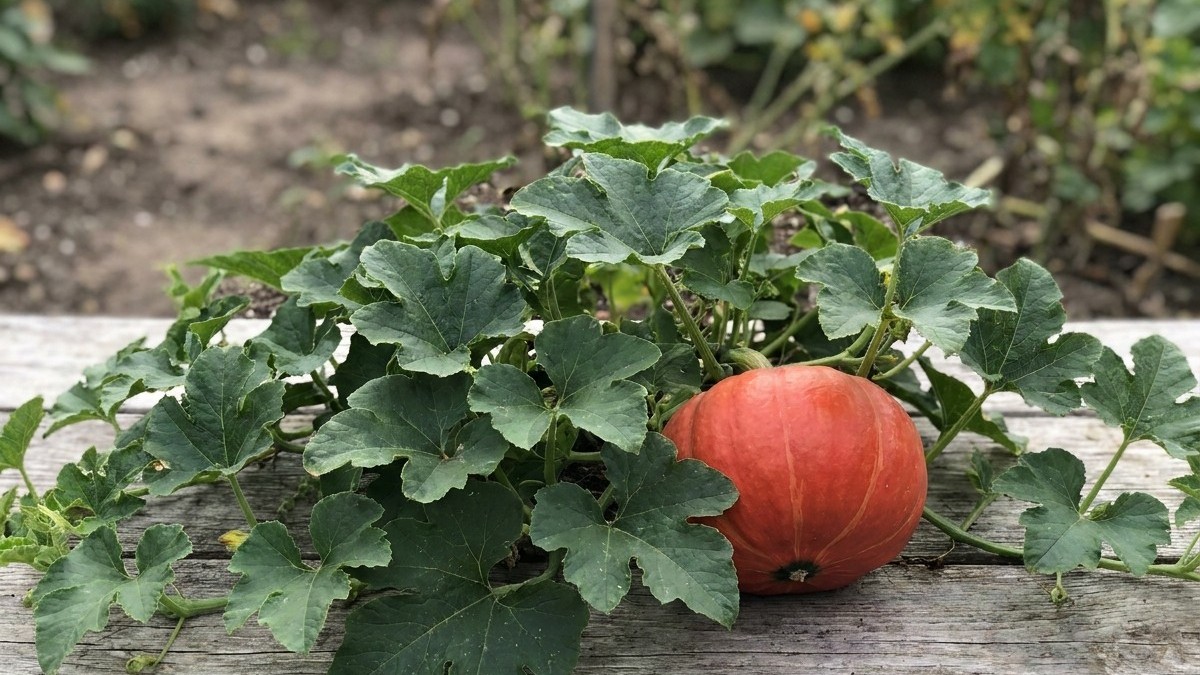

Cut pumpkins before the first fall frost, with a piece of stem still attached. Whether a fruit is ready by then depends on the day its flower opened, not the day the seed went in. Once cut, a whole pumpkin keeps three to six months in a cool, dark place at 45-50 F. Here is how those numbers fit together on the Front Range.
The short answer
Start with the frost. NOAA’s 1991-2020 Climate Normals for the Denver station put the first fall 32 F freeze between September 30 and October 12. That window covers the 30 to 70 percent probability band, so a freeze before September 30 is possible and one after October 12 is far from guaranteed (NOAA NCEI station data). Count backward from there.
Utah State University Extension says pumpkins take 45 to 55 days to mature after flowering. Take the early end of the frost window, September 30, and subtract 55 days: you land on about August 6. Take the late end, October 12, and subtract 45 days: about August 28. So the latest a flower can open and still give a ripe pumpkin is somewhere between roughly August 6 and August 28, depending on how kind the fall turns out and how fast your variety finishes. Plan around the early side of that window. A flower that opens after it is, in most years, a green fruit with no future.
The clock runs from flowering. Not from seeding, not from transplanting. A vine can sprout in early June and spend weeks making leaves and runners before a single fruit-bearing flower opens, and none of that time counts toward the 45 to 55 days. Many gardeners get this wrong, and it explains the green, grapefruit-sized pumpkins that sit on a dying vine in October. If you want to know whether a fruit will make it, write the flower date on a plastic tag tied near the fruit, then add 45 to 55 days.
One caution on geography. These dates belong to Denver, which sits at 5,280 feet on the plains. Mountain towns run far shorter seasons and can see frost in July, and the western slope has its own pattern. If you garden above the metro area, your window is earlier and tighter, and the arithmetic above will tell you to pass on pumpkins or choose a quick finisher. The longer picture for the state is in Growing Pumpkins in Colorado, and the question of whether a late fruit can still catch up is covered in Will Pumpkins Ripen Before Frost in Colorado?
When it is time to cut, leave the stem attached and cut before the frost arrives. Keeping the stem on matters for storage, since a pumpkin with a broken-off stem has an open wound. How long it keeps depends on where you put it. University of Illinois Extension gives three to six months for a whole pumpkin in a cool, dark spot between 45 and 50 F. Utah State’s guidance is less specific: it says only to keep pumpkins where they will not freeze, and publishes no storage temperature or keeping time. The 45-50 F figure is for whole fruit. It says nothing about a carved one, and no carved-pumpkin figure is published here.
Where you store them matters as much as the temperature. Illinois Extension advises keeping pumpkins away from ripening fruit and vegetables such as apples, potatoes and tomatoes. Ripening produce gives off a gas that ages a pumpkin faster, which makes the porch beside the apple crate about the worst spot you could pick.
When to sow here
The planting date follows the soil, not the calendar and not the frost date. Utah State Extension says to sow pumpkins when the soil reaches 65 F. In the Denver normals the last spring 32 F freeze falls between May 1 and May 11, but soil lags the air by weeks. A spring night can clear freezing in early May while the ground, still cold from winter, sits well below 65 F. Treating the last frost date as the planting date is how seed ends up rotting in cold dirt.
The sequence works like this:
- Start with the last frost window. That is May 1 to May 11 in the Denver normals. This is when freezing air stops being the main threat, not when the soil is ready.
- Add the weeks the soil needs to catch up. The ground trails the air by weeks, so the real sowing date lands weeks after May 1 to May 11. No exact number is published here, so a soil thermometer settles it. Push it a couple of inches down in the morning, when the reading is lowest, and wait for 65 F.
- Subtract the two weeks a row cover buys. Row covers warm the soil beneath them, which lets you sow about two weeks earlier than bare ground would allow. Take the date the uncovered bed would reach 65 F, move it two weeks earlier, and that is your covered-bed target. Check it with the thermometer under the cover, not beside it.
- Check the result against August. Your vines need to be flowering well before the window of roughly August 6 to August 28 closes. A seed that goes in earlier gives you more flower dates to choose from. The time from seeding to first flower is not published in the sources used here, so rely on your own tags and notes from season to season.
- Take the cover off when flowers open. Pollinators cannot get into a covered bed. Pull the cover when flowering starts, and this is also when to start watching for insects. Squash bugs and cucumber beetles are covered in What Eats Pumpkin in Colorado, and When.
Planting too early costs more than it saves. A seed in 55 F soil sits and waits, or rots, while one sown a week later in warm ground comes up quickly and catches up. The two weeks of head start from a row cover is real, but it only helps if the soil under the cover reaches 65 F.
What goes wrong here
A Front Range season is long enough for pumpkins, but not by a wide margin. The usual failures come from the gap between the frost window and the 45 to 55 day clock.
- A late flower that never colors. A flower that opens after the window of roughly August 6 to August 28 gives a fruit that stays green when frost arrives. Remedy: tag flower dates, and once the date passes, pinch off new flowers and tiny fruit so the vine puts its energy into the fruit that can finish. A green fruit cut at frost can sometimes be used, but do not expect it to store like a ripe one.
- A fruit caught by frost. The first freeze can arrive as early as September 30, and the Utah State advice is to harvest before it. Remedy: watch the forecast from late September, and cut with the stem attached ahead of any freeze. Cover the vines for a single cold night if fruit is still a few days from done. Frozen fruit is a poor candidate for storage, so use it first.
- A vine that dies back before the skin hardens. Insects, disease or a cold snap can kill the leaves while the fruit is still soft-skinned. Remedy: protect the leaves, since they feed the fruit through the last weeks, and deal with squash bugs and cucumber beetles early using the guidance in What Eats Pumpkin in Colorado, and When. If the vine is gone, cut the fruit with its stem rather than leaving it exposed to the freeze.
- A stem knocked off at harvest. The source advice is to harvest with the stem attached. Remedy: carry the pumpkin by its body, not the stem, and use pruners or a knife to cut a section of vine along with the stem. A pumpkin that loses its stem is a pumpkin to eat soon.
- Storing next to ripening fruit. A good pumpkin kept beside apples, potatoes or tomatoes ages faster than it should. Remedy: give pumpkins their own spot, cool and dark, at 45-50 F, away from the fruit bowl and the root-vegetable bin. Look for a place that will not freeze, such as an interior closet, a cool basement room, or an insulated unheated space.
Common questions
Do the 45 to 55 days start at seeding?
No. Utah State University Extension counts them from flowering. Seeding to first flower is a separate stretch, and the sources used here do not give a figure for it. That is why a flower date tag is more useful than a seed packet.
Can I leave pumpkins out until after the first frost?
The guidance is to harvest before frost. In the Denver normals, the first 32 F freeze falls between September 30 and October 12, so by the last days of September you should be watching nightly lows and ready to cut. The conditions differ in the mountains and on the western slope, where frost can come far earlier.
How long will a harvested pumpkin last?
A whole pumpkin keeps three to six months in a cool, dark location between 45 and 50 F, per University of Illinois Extension. That number is for an intact fruit. Utah State Extension adds only that pumpkins should be stored where they will not freeze, and no storage figure for a carved pumpkin is published here.
Why does it matter what I store next to my pumpkins?
Apples, potatoes and tomatoes give off a gas as they ripen, and that gas ages a pumpkin faster. Illinois Extension recommends keeping them apart. A shelf with the apple crate on it will shorten the three to six months a whole pumpkin could otherwise offer.