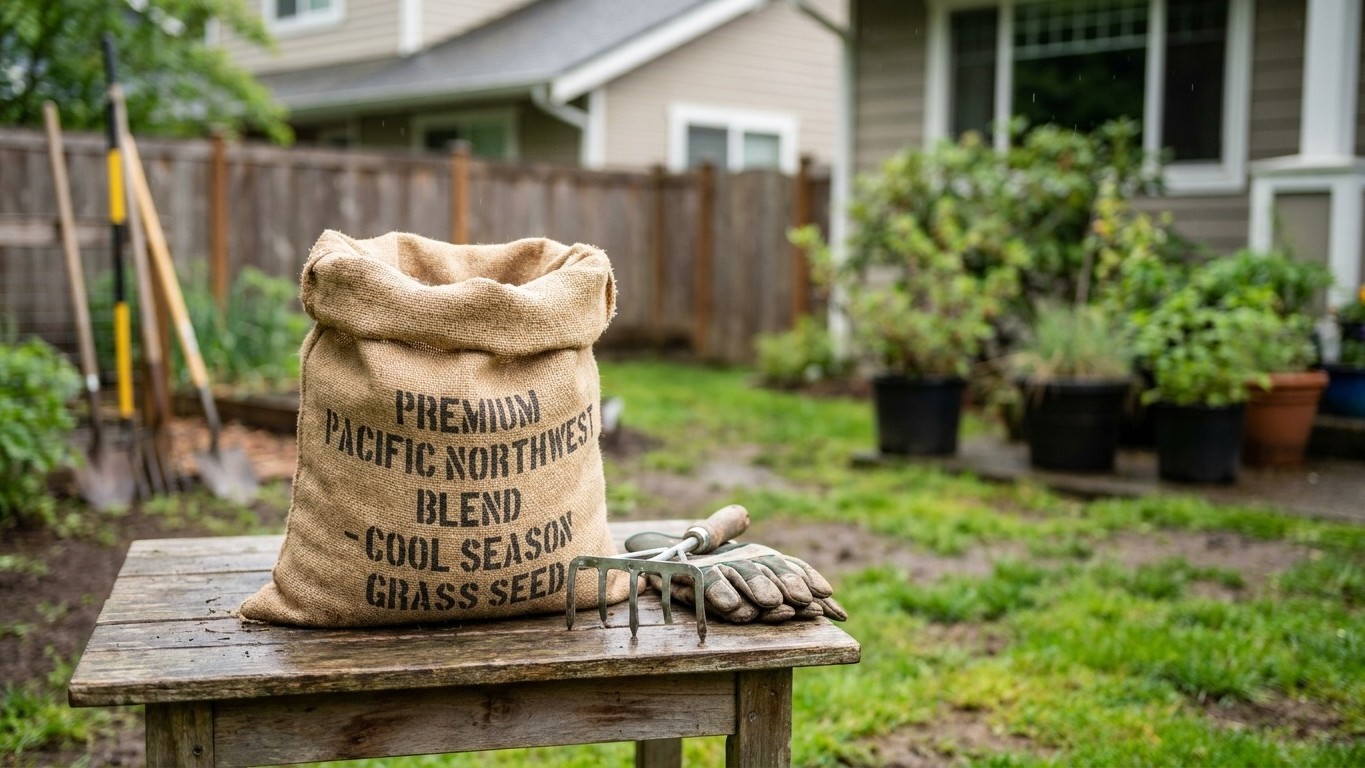

Washington falls into what The Homestead Post classifies as a turf transition zone, the band where neither cool-season nor warm-season grass performs at its best year round. There is no single best grass seed for the state. A cool-season lawn of tall fescue, Kentucky bluegrass, or perennial ryegrass holds its color through the mild wet winter but stresses out in summer heat. A warm-season lawn of zoysiagrass or bermudagrass shrugs off summer heat but sits brown and dormant from fall frost into spring. Pick based on which season you’re willing to see it struggle.
The short answer for Washington
Washington’s turf transition zone means no grass seed here gets a free pass in every season. Cool-season fescue and bluegrass hold their green through the wet winter but wilt when summer heat sets in; warm-season zoysia and bermuda shrug off that heat but sit brown and dormant from the first fall frost until spring. So before you buy a bag, walk your yard and decide which season you can stand watching it disappoint you.
The cool-season group, tall fescue, Kentucky bluegrass, and perennial ryegrass, is the safer default for most home lawns west of the Cascades. These species green up in the mild, wet winter and hold that color for most of the year, but they slow down and can scorch during a hot, dry summer stretch unless you’re watering. The warm-season group, zoysiagrass and bermudagrass, does the opposite: it thrives in summer heat and needs less water once established, then goes dormant and turns straw-brown for months once the first fall frost arrives.
Which one makes sense for your yard depends on what you can’t stand looking at: a tired, heat-stressed cool-season lawn in August, or a brown, dormant warm-season lawn from autumn through spring. It also depends heavily on where in the state you’re standing, since Seattle’s mild maritime climate and the high desert east of the Cascades are not the same growing environment at all. Before choosing seed, it helps to have already worked through the basics of Washington Lawn Care, since species choice only matters once site prep, drainage, and sun exposure are sorted out.
Working through the year

Ranking the five realistic species for Washington means ranking what each one costs you, not what it wins. Here’s how they stack up against each other on the traits that actually decide a homeowner’s day-to-day experience.
The cool-season options
Tall fescue is the most forgiving of the cool-season choices for Washington. Its coarse, deep-rooted bunch growth handles part shade and dry spells better than bluegrass, and it’s the species Clemson Cooperative Extension covers in its HGIC 1219 Tall Fescue Maintenance Calendar, which lays out exact mowing height, nitrogen timing, and overseeding windows for a fescue lawn. The cost: it doesn’t spread by rhizomes, so bare patches from foot traffic or disease don’t fill in on their own and need reseeding.
Kentucky bluegrass fills in its own bare spots through underground rhizomes, which makes it the self-repairing choice of the three. Its cost is a shallower root system than fescue, meaning it drinks more and stresses out faster in a dry summer. Perennial ryegrass germinates fastest of any of the five, which is why it shows up in blends with fescue and bluegrass as a nurse grass, but it’s shorter-lived and doesn’t recover from wear as well as either.
The warm-season options
Zoysiagrass forms the densest, most weed-resistant turf of the two warm-season species and tolerates drought well once it’s established, with its maintenance rhythm laid out in Clemson’s HGIC 1217 Zoysiagrass Maintenance Calendar. The cost is a slow start: zoysia can take a full season or more to fill in from seed or plugs, and in a Washington yard it will sit brown through the same fall-to-spring stretch a cool-season lawn stays green.
Bermudagrass is the most heat- and drought-tolerant of the five, covered by Clemson’s HGIC 1216 Bermudagrass Maintenance Calendar, but it’s also the least cold-hardy. That’s a real liability in a state where winter lows vary sharply between the mild coast and the colder interior, and a hard freeze can thin or kill patches of bermuda that a fescue lawn wouldn’t notice.
| Grass | Season | Main strength | Main cost |
|---|---|---|---|
| Tall Fescue | Cool | Deep roots, shade tolerance | No self-repair, needs reseeding |
| Kentucky Bluegrass | Cool | Self-repairs via rhizomes | Shallow roots, thirsty in summer |
| Perennial Ryegrass | Cool | Fast germination | Short-lived, wears out |
| Zoysiagrass | Warm | Dense, drought-tolerant once set | Slow establishment, long brown season |
| Bermudagrass | Warm | Best heat and drought tolerance | Least cold-hardy, winterkill risk |
What changes across Washington
The frost and climate figures used on lawn care pages for this state, including the November frost window below, come from a NOAA weather station near Seattle, and Seattle’s mild, wet, maritime climate is not representative of the whole state. Three broad regions behave differently enough that a single seed recommendation for “Washington” is close to meaningless without naming which part.
- Western Washington / Puget Sound: mild winters, wet shoulder seasons, dry summers. Cool-season grass thrives most of the year here and warm-season grass has its longest realistic window.
- Eastern Washington, beyond the Cascades: high desert climate with colder winters and hotter, drier summers than the coast. NOAA’s Seattle frost normals do not apply here; the growing season is shorter and the freeze risk arrives earlier and harder.
- Higher elevations in the Cascades and nearby foothills: colder and shorter seasons still, closer to a straight cool-season-only climate where warm-season grass has little realistic place at all.
A homeowner outside Seattle should treat every date and threshold as a starting estimate, not a local fact, and check it against a source closer to home before committing seed to the ground.
The mistakes this climate punishes
Feeding warm-season grass into fall
Feeding zoysiagrass or bermudagrass a full nitrogen dose in September or October pushes fresh, tender growth right as the season turns. Around Seattle, NOAA’s 1991-2020 climate normals put the first fall freeze at November 13 to November 30, and that new growth has no time to harden off before it. The damage doesn’t show immediately. It shows the following spring as dead patches that should have simply gone dormant.
Seeding cool-season grass too early
A mild frost date does not mean an early planting date. Cold, wet soil and low spring light in western Washington hold cool-season seed back well past the point where a calendar might suggest it’s safe to sow tall fescue or Kentucky bluegrass. Seed put down too early sits and rots or germinates so weakly it never builds a real root system before summer stress hits it.
Mowing short in summer heat
Cutting a cool-season lawn down to a short, tidy height right as a hot, dry stretch sets in exposes the crown and soil to direct sun, and the lawn scalps and browns out fast. The fix is raising the mower deck through the hottest weeks, not lowering it. This is one of the timing questions covered step by step in The Washington Lawn Care Calendar, Month by Month, which lays out when to raise and lower cutting height across the season.
Reading brown as dead
A warm-season lawn goes straw-brown from fall frost through spring, and a cool-season lawn browns out under summer drought. Neither one is dead. Ripping out and reseeding a dormant lawn because it looks brown wastes seed and money on a problem that would have solved itself with the next season change.
Checking this against your county
Every figure is tied to a specific station or reference point, not the whole state, so confirm it against a source close to your own address before you buy seed or set a mowing schedule. WSU Extension runs county offices across Washington and is the right place to check local frost dates, soil conditions, and species performance for your specific area: extension.wsu.edu. This matters most if you’re east of the Cascades or at higher elevation, where the Seattle-based figures used above run noticeably behind or ahead of your own ground.
Common questions
Can I grow bermudagrass in Seattle?

You can, but expect a long dormant brown season and a real risk of winterkill in a hard freeze, since bermudagrass is the least cold-hardy of the five species covered here. Most Seattle-area lawns get more reliable results from a cool-season species or from zoysiagrass, which tolerates cold somewhat better than bermuda.
Why does my zoysia lawn stay brown so long into spring?
Zoysiagrass is slow to green up compared to cool-season grass, and it stays dormant through the same stretch a fescue lawn is already growing. It’s a trait of the species, not a sign of damage, and it will fill back in with warmer soil temperatures.
Do I need to overseed a fescue lawn every year?
Not every year, but tall fescue doesn’t spread by rhizomes, so any bare or thinning patch from wear, disease, or shade needs reseeding to fill in rather than filling itself in the way Kentucky bluegrass does. Many fescue lawns get a light overseed every one to two years to keep density up.
Can I mix cool-season and warm-season grass in the same lawn?
It’s not a practical combination for a single stretch of turf, since the two groups want opposite mowing heights, feeding schedules, and water regimes at opposite times of year. Blends within the cool-season group, like fescue and bluegrass together, are common and work well; mixing across the cool and warm groups generally doesn’t.