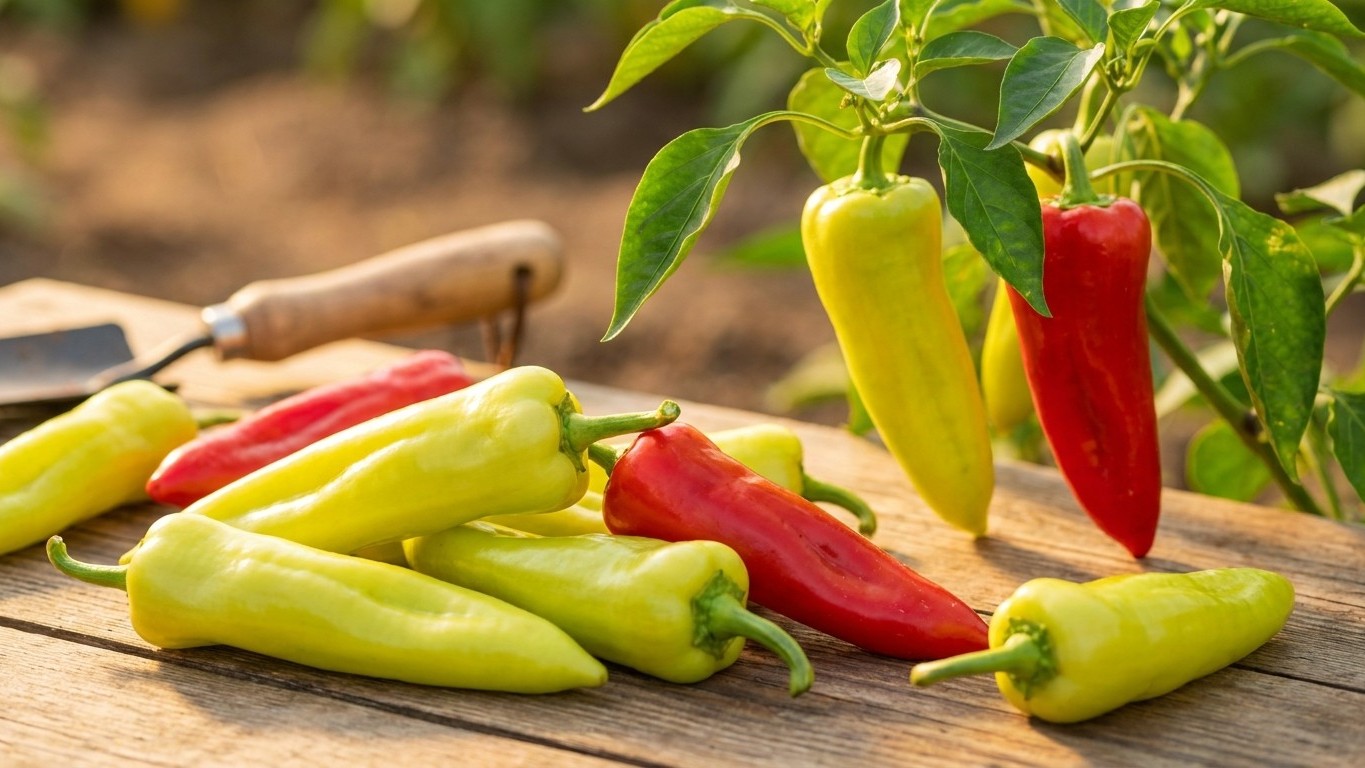

Pick peppers once the fruit is full size, firm and glossy. In Ontario that usually means August into early fall for plants set out after the last frost. Clemson Extension puts harvest at about 70 to 85 days after transplanting. Storage is where most people go wrong. Peppers keep best at 45 to 50 °F (roughly 7 to 10 °C), and a refrigerator runs colder than that. Below about 45 °F the skin pits and softens. A cool room works better.
Keeping them, and for how long
Clemson Cooperative Extension’s Home & Garden Information Center gives the optimal storage conditions for peppers as temperatures of 45 to 50 °F and 80- to 90-percent relative humidity, for two to three weeks. Read that as a ceiling. Three weeks is what you get when the fruit is unblemished, picked at the right stage and held steady the whole time. A pepper with a nick, a sunscald patch or a soft spot will not last that long, and neither will one that sits in a swinging temperature.
Why does the refrigerator damage peppers?
Peppers come from warm climates, and the fruit never loses that. Below about 45 °F the cells in the wall are injured, a problem called chilling injury. The first signs are small sunken pits on the skin, then soft patches and a watery look. The damage often shows up after the fruit comes out of the cold and warms on the counter. A pepper that looked fine in the crisper drawer can turn slack and start to rot within a day or two of leaving it.
Most refrigerators are set to keep milk and meat safe, which puts them under the 45 °F floor. That is why the habit of tossing peppers in the crisper drawer shortens their life instead of extending it. The cold is doing the harm.
Humidity matters too, and the 80 to 90 percent range is damp, closer to a cellar than a kitchen. Dry air pulls water out of the fruit and leaves the skin wrinkled. Standing water or condensation does the opposite and invites mold. A paper-towel-lined container or a bag with a few holes poked in it holds moisture without trapping a film of water against the skin.
What stage should you pick peppers at?
A pepper is ready for the green stage when it reaches full size for its type and feels firm and heavy for its size. Fruit left on the plant will color up to red, yellow or orange if the season allows, but that takes longer and the plant keeps feeding a pepper it has already finished. In Ontario, where fall frost closes the season, fruit that has started to color often finishes indoors, so there is little reason to gamble on a cold night.
Cut the stem with pruners and leave a short piece of it attached. Pulling snaps the brittle branches and tears the shoulder of the fruit, which opens a spot for rot. Keep the peppers dry, wash them only when you are ready to cook, and check the stored batch every few days. Use the softest ones first. Fruit left hanging long past ripe also draws more attention from pests, a pattern covered in What Eats Pepper in Ontario, and When.
Where in the house that actually is
The target of 45 to 50 °F rules out most of the house. A refrigerator is colder than that, which is the chilling-injury problem above. A heated kitchen or living room is warmer by a wide margin, so peppers on the counter soften and shrivel faster, which is fine for fruit you will eat this week but no good for storage. A garage is the trickiest. An attached garage can sit near the right range on a mild October afternoon, then drop below freezing on a clear November night. Ontario autumns swing enough that a garage reading good on Tuesday can ruin a crate by Friday.
The room that usually comes closest is a cool, unheated interior space. Think of a basement room away from the furnace, a cold cellar, or an enclosed porch or mudroom that stays cool without freezing. Basement corners along an outside wall often run cooler than the rest of the house, and basements tend to hold humidity well, which helps with the 80 to 90 percent target. The spots to avoid are the furnace room, the side of a room next to a heat register, and anywhere that gets direct sun through a window.
No guess substitutes for a reading. Leave a thermometer in the spot for two or three days before you store anything there, and skipping that step is how a crate of good peppers turns to mush. A min/max thermometer is best because it shows the overnight low and the afternoon high, which a single glance at the dial will not. A small hygrometer, the kind sold for humidors and reptile tanks, tells you whether the air is near 80 to 90 percent. If the room is right on temperature but dry, a perforated bag or lidded container does the job.
If the fridge is the only cool place you have, use the crisper drawer, keep the stay short and cook those peppers first. Expect some pitting. It is a compromise, and a cool room does better.
Common questions
How do I know a pepper is ready to pick?
Look for full size, firm walls and a glossy skin. Clemson Extension puts harvest at about 70 to 85 days after transplanting, so a transplant set out in early June reaches that window in August. Seed packet counts can run differently, so go by the fruit itself. Peppers also need roughly 35 to 45 days from flowering to mature, according to Utah State University Extension, and that clock starts at the flower, not at sowing or transplanting. A plant that flowered late, or whose early flowers dropped, will be behind the calendar. For the full season plan, start with Growing Peppers in Ontario.
Can I put peppers in the fridge at all?
For a few days, yes, with some loss. Below about 45 °F the fruit is at risk of chilling injury, which shows as pitting and soft spots. Cut peppers are different. Once sliced, they belong in a sealed container in the fridge because the open flesh spoils quickly, and chilling injury is no longer the main concern. Whole peppers are the ones that want a cool room instead.
When should I pick before frost in Ontario?
Pick everything that is full size before the first frost. Do not wait for a date, because the fall date varies a lot between districts, so watch the forecast and clear the plants on the afternoon before a frost warning. On the spring side, Environment and Climate Change Canada’s long-term normals for the Toronto Lester B. Pearson station give an average last spring frost of April 30. That is a midpoint, and in one year out of two the last frost falls later. Northern and upland districts run weeks behind that airport station. Transplants need 8 to 10 weeks indoors and should go out once the soil reaches 60 °F, after frost has passed.
Does Ontario heat hurt pepper fruit set?
Only at the extremes. Utah State University Extension says pepper fruit set fails at both ends, with nights below 55 °F (about 13 °C) or days above 32 °C. At the Toronto Lester B. Pearson station, Environment and Climate Change Canada counts a yearly average of 6.08 days reaching 32 °C and 15.8 days above 30 °C. Airport stations read differently from the neighbourhoods around them, so your own yard may run warmer or cooler. Night lows vary by site and by year, so keep a thermometer where the plants grow and check the overnight minimum. If flowers keep dropping, Why Peppers Fail to Set Fruit in Ontario walks through the causes.