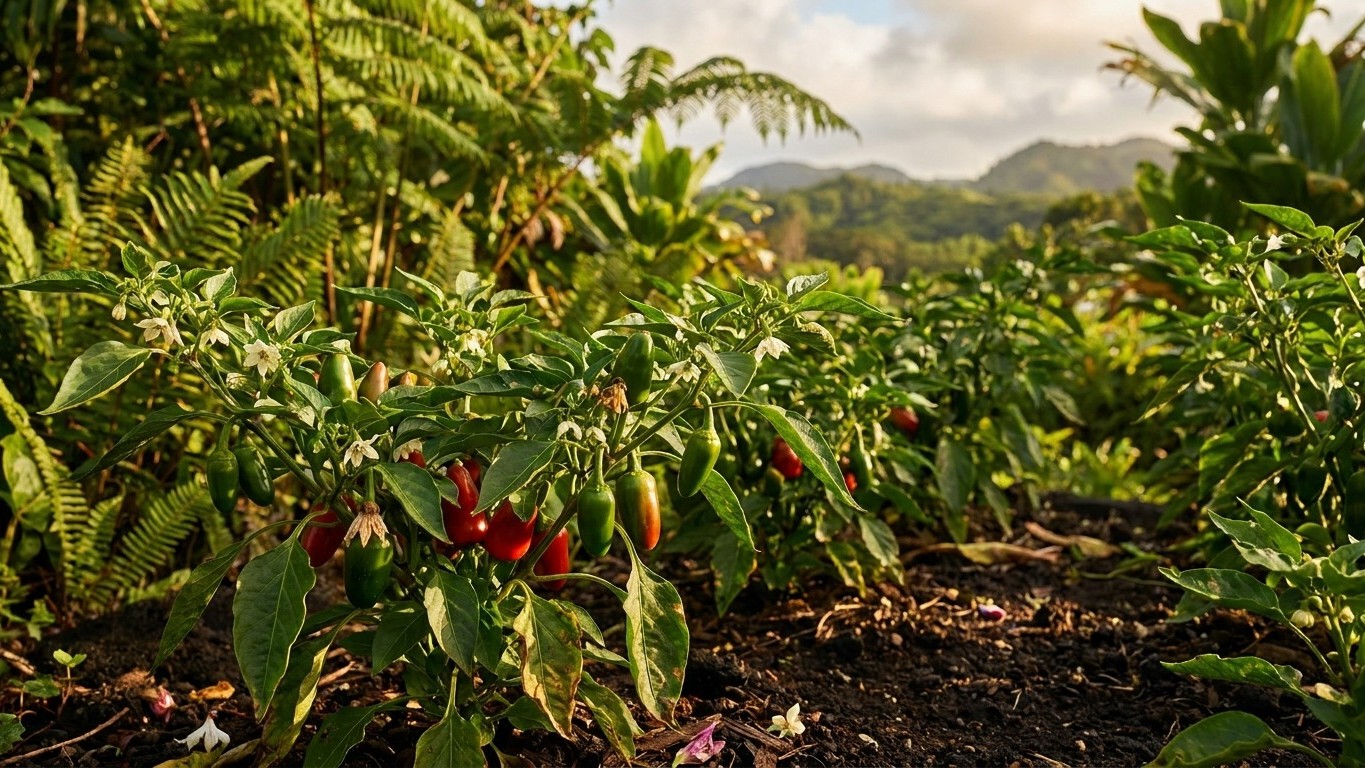

Pick peppers when the fruit reaches full size and feels firm. For a transplant, that is about 70 to 85 days after it goes into the garden, according to Clemson Cooperative Extension. Then keep them out of the refrigerator. Whole peppers hold best at 45 to 50 °F, and a home fridge runs colder than that, so the skin pits and the flesh goes soft. A cool room is the right place for a harvest to wait.
Keeping them, and for how long
Why does the fridge hurt peppers?
Peppers are a warm-climate crop, and their tissue does not tolerate chill. Clemson Cooperative Extension’s Home & Garden Information Center (its pepper factsheet is here) gives the best storage conditions as 45 to 50 °F and 80- to 90-percent relative humidity, for two to three weeks. Below about 45 °F, peppers develop chilling injury: small sunken pits appear on the skin and the wall of the fruit softens.
A refrigerator is set to keep milk, meat and leftovers safe, which puts it under that range. The crisper drawer feels like the natural home for a bell pepper, and that habit is exactly what does the damage. A pepper that spends a couple of weeks there comes out dimpled and limp, even though it looked perfect going in.
Peppers are not the only crop with this problem. Tomatoes, cucumbers and basil also resent the cold, and they all end up in the same drawer for the same reason. For peppers, the temperature window is narrow enough that a few degrees matters.
How long do picked peppers really last?
Two to three weeks is a ceiling, reached only when conditions are close to ideal and the fruit starts out sound. Most kitchens fall short of it. A pepper with a nick in the skin, a patch of sunscald or a bruise from a rough pick will fail well before the third week, because rot enters through any break.
Humidity is the other limit. Eighty to ninety percent relative humidity is damp air, far damper than a house with the furnace running in fall. Left out on a shelf, a pepper loses water through its skin and wrinkles. A loosely closed container or a perforated bag slows that loss while still letting air move. Check the container every few days and pull out anything that has gone soft, since one bad fruit spoils its neighbors.
Sort the harvest as it comes in. Use the blemished peppers first, cut the stem short rather than tearing it off, and treat the best fruit as the ones that might reach the third week. Warmer than 50 °F, they ripen and break down faster. Colder than 45 °F, they pit. The target is a narrow band.
Where in the house that actually is
A domestic fridge runs colder than peppers tolerate. A heated living space runs warmer than the storage range, and the pepper ripens and softens faster there. A garage is the wild card: it tracks the weather, so a mild afternoon can be followed by a night that drops under 45 °F. Western Washington’s maritime climate softens those swings compared with the dry country east of the Cascades, but a garage still moves more than a room inside the house.
The spots that tend to come closest are the ones the furnace barely reaches:
- A basement room or a cellar-type space away from the furnace and water heater
- A pantry or closet on an outside wall, on the north or shaded side of the house
- An unheated spare room with the vent closed
- A cool mudroom, if it stays shut off from the kitchen’s warmth
Rooms vary too much from house to house for a guess to be reliable. A basement in an older home with a leaky foundation can run cooler than the range, and a newer one with a finished ceiling and ductwork may sit warmer. Put a thermometer in the spot you are considering and read it for several days, ideally one that records the daily low and high. Skipping that step means finding out from the fruit, after the pits have already formed.
Read the low as carefully as the high. A room that averages 48 °F can still dip below 45 °F overnight in a cold snap. If the reading wanders outside the band, move the container a few feet, to a different shelf or a different wall, and check again. A small insulated cooler with a thermometer inside works as a backup, though it needs the humidity managed the same way. When no spot in the house lands in range, use the peppers sooner. Cut, cooked or frozen peppers do not need the same conditions as whole fruit.
How do you know when a pepper is ready to pick in western Washington?
Start with the calendar, because a mild frost date can mislead. NOAA NCEI’s climate normals put the last spring freeze at the Seattle reference station between February 27 and March 18, using the 30 to 70 percent probability band. That is a western Washington number, and it does not mean peppers go out in late winter. Utah State University Extension says to transplant when the soil reaches 60 F, after frost, and cold wet soil and low light hold peppers back long after the last freeze. The same source says transplants need 8 to 10 weeks indoors, so the seeds start well before the soil is ready.
The harvest clock begins at transplanting. Clemson’s 70 to 85 days gives a rough window once the plant is in warm soil. Count from your own transplant date, not from the freeze date, and treat the result as a starting point for scouting. The plant itself gives a better signal: the fruit has reached the full size its variety should make, the skin is glossy, and the wall feels firm when squeezed gently.
Peppers can be picked green, and many cooks prefer them that way. If the fruit is left to color on the plant, it takes longer. Cut the stem with pruners or scissors, since pulling can snap a branch. Picking regularly also lets the plant keep setting new fruit. Pick promptly, too: fruit left hanging is easier for slugs, birds and insects to find. What Eats Pepper in Washington, and When covers who shows up and when.
Fruit set is the timing problem that catches many gardeners. Utah State University Extension says pepper fruit set fails at both ends: nights below 55 F or days above 90 F. The hot end is a small risk in western Washington, since the Seattle reference station averages about 3.0 days a year at 90 F or more. The cool end is a different matter. Summer night lows vary from yard to yard, so watch your own nights. If flowers keep dropping while the weather is cool, the nights are the likely cause. Why Peppers Fail to Set Fruit in Washington goes through the diagnosis.
East of the Cascades, the picture changes. That is high desert with a far shorter season, and the Seattle frost window does not apply there. Gardeners in that part of the state should ask the county extension office for local frost dates and plan the whole schedule around them. The broader planting picture is in Growing Peppers in Washington.
Common questions
Can I store whole peppers in the refrigerator at all?
It is a poor choice for whole fruit you plan to keep for weeks. Below about 45 °F, peppers pit and soften from chilling injury, and a refrigerator runs colder than that. Peppers you have already cut are a separate matter: they will not last as whole fruit would, and a sealed container in the fridge is the usual home for them.
How long do picked peppers keep?
Clemson Cooperative Extension gives two to three weeks at 45 to 50 °F and 80- to 90-percent relative humidity. That is the most you can expect under optimal conditions. Bruised, cut or sun-damaged fruit and dry air all shorten it, so check the container every few days and use the weakest peppers first.
Should I pick peppers green or wait for them to color?
Both work. A pepper is ready to pick once it is full size, glossy and firm, and green fruit is edible. If the season allows and the nights are not turning cold, leaving fruit on the plant lets it color up. If a hard cold spell is coming, pick what you have, because chilled fruit damages the same way it does in the fridge.
Does the Seattle frost date apply across Washington?
No. The February 27 to March 18 window comes from the Seattle reference station and describes western Washington’s mild, maritime climate. Eastern Washington beyond the Cascades is high desert with a far shorter season. Even in the west, a mild frost date does not mean an early planting date, since peppers wait for 60 F soil.