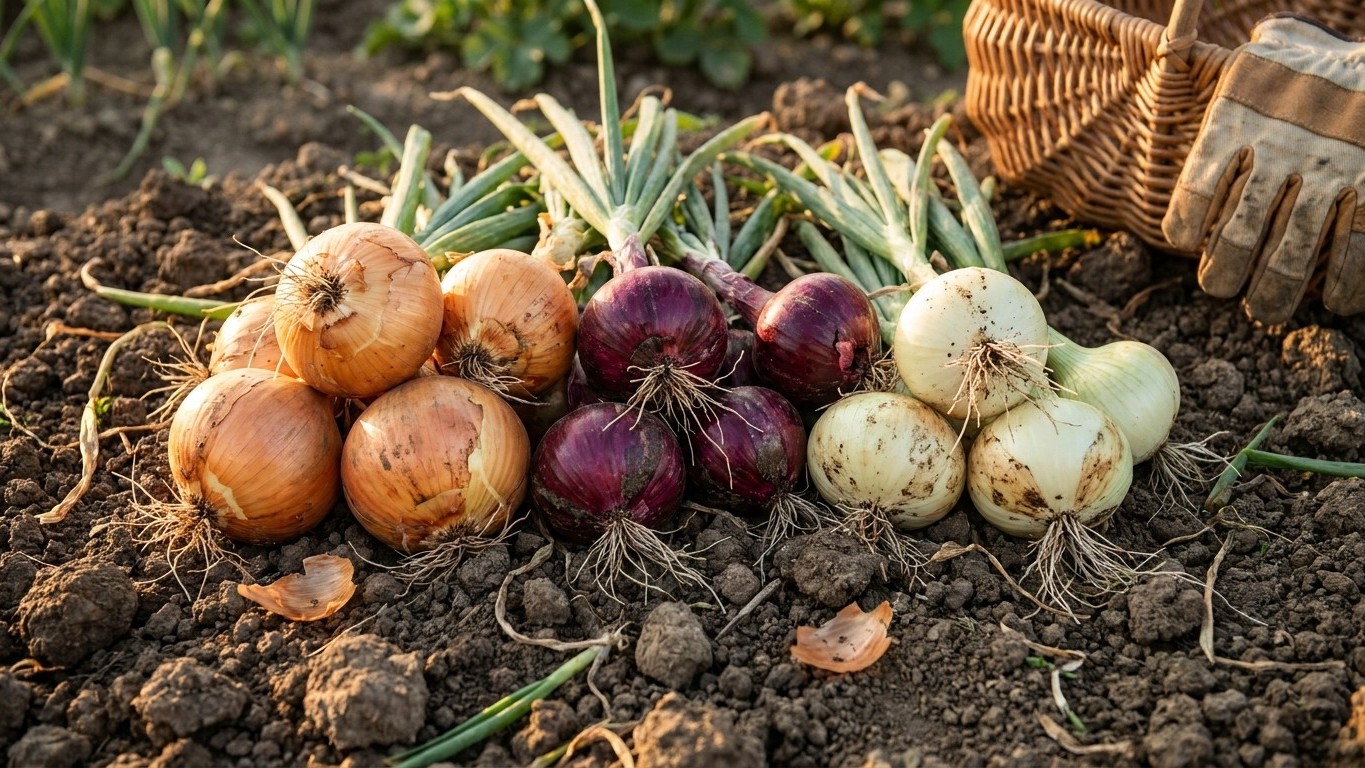

Lift onions once most of the tops have flopped over and the necks have gone soft, usually in late summer. Then cure them in a warm, dry, shaded spot with good airflow until the necks are tight and the skins papery. Only after that do they go into storage at 45 °F to 55 °F and 50 to 60 percent humidity. A bulb that skips curing can rot long before winter ends.
When should you lift onions in Oregon?
Day length sets the schedule. An onion stops making leaves and starts swelling a bulb when the days pass a threshold that depends on the variety. Clemson Cooperative Extension puts the short-day threshold at about 12 hours, while long-day types wait for 14 to 16 hours. NOAA NCEI lists the Portland station at 45.59 degrees north, and Portland gets 15 h 30 of daylight on the longest day. That is enough for long-day onions to bulb fully. Short-day onions start bulbing early and stay small. If your garden sits near the southern border or up along the Columbia, check your own latitude, because the daylight changes with it.
The leaves feed the bulb. Once the bulb is full, the neck, the soft section where the leaves meet the bulb, weakens and the tops fall. That is your signal, and the calendar matters less than the plants. Look for these signs:
- Most of the tops have fallen over, and the leaves are yellowing.
- The necks feel thin and soft when you pinch them.
- The outer skins are dry and rustle between your fingers.
- The bulbs sit high on the soil, with the shoulders showing.
Ease off watering once the tops begin to go down, so the bulbs can firm up. Then pick a dry day to lift. Loosen the soil beside each row with a garden fork and pull the bulbs by hand. Bruises and cuts are where rot gets in, so set each bulb down instead of tossing it into the bucket. Any bulb with a thick, stiff neck that never softened should be eaten first, because it will not seal properly. The same goes for bulbs with tunnels or soft spots, which are covered in What Eats Onion in Oregon, and When.
How do you cure onions after lifting?
Curing dries the neck and the outer skins so they seal the bulb like a wrapper. Leave the tops attached. Spread the bulbs in a single layer on screens, slatted crates or a rack, off the ground, in a spot that is shaded, dry and breezy. Direct afternoon sun can scald the shoulders. A covered porch, an open-sided shed or a garage with the door up all work.
Keep the bulbs under cover and move them indoors if the air turns damp, with a fan moving air across them. Damp air slows the process everywhere, so give it more time when the weather turns humid.
The bulbs are ready when the neck is tight and shows no moisture when you squeeze it, and the skins are papery. Then trim the roots and cut the tops down to a short stub. Sort at that point too, setting aside any bulb that is soft, damaged or thick-necked for the kitchen.
Keeping them, and for how long
Clemson Cooperative Extension’s Home & Garden Information Center states it this way: “Ideal conditions are between 45 °F and 55 °F, and 50 to 60 percent humidity.” Write down 45 °F to 55 °F at 50 to 60 percent humidity and plan the storage spot around it. Onions want dry air. That is the opposite of carrots and other roots, which need damp cold. One cellar cannot hold both crops well, so decide which one gets the better spot.
No storage period is guaranteed. A duration is the best case when everything goes right: cured bulbs, steady temperature, dry air and a sound variety. The best pungent onions grown in a northern garden can carry a household into March. A sweet onion will not last that long, even in perfect conditions.
The reason is chemical. The bite of an onion comes from volatile sulfur compounds, and those same compounds help protect the bulb while it sits in storage. A sweet variety has fewer of them. That makes it better raw and a poor keeper. The University of Missouri Extension (publication G6355) puts it plainly: “As a rule, ‘sweet’ onions do not store as well as the more pungent types.” Day length lines up with this. Short-day types run sweeter and long-day types keep longer. A southern garden gives onions to eat soon, and a northern one gives onions that feed you through winter.
| Onion type | Day length needed to bulb | Sulfur compounds | Storage outlook |
|---|---|---|---|
| Short-day | About 12 hours | Fewer, sweeter flavor | Eat first |
| Long-day | 14 to 16 hours | More, sharper bite | Best keepers, into March at best |
| Sweet varieties of any type | Depends on the variety | Fewest | Eat first, never count on winter |
If winter storage is the goal, pick your varieties for it. The Best Onion Varieties for Oregon sorts them by day length and keeping quality.
Where in the house that actually is
Few homes have a spot that matches 45 °F to 55 °F and dry air, so each room needs a quick check against the target.
- Refrigerator: Colder than the 45 °F floor, and damp. Keep it for cut onions only.
- Heated living space: Too warm.
- Garage: Swings with the weather.
- Basement: Often right on temperature but too humid. Humid air makes bulbs mold.
- Unheated interior room: A back bedroom with the vent closed, a pantry on an inside wall or a closet away from the furnace usually comes closest.
The best candidate is usually that cool interior room, away from exterior walls and away from the furnace and water heater. A dry corner of a basement can also work if a humidity reading proves it, and a dehumidifier running nearby can bring the air down to range. Whichever you choose, put a thermometer and a hygrometer in the spot for several days before moving the onions in. Look at the daily high and low, not a single reading. Skipping this check costs you the crop. Sprouting, soft spots and mold can show up, and a whole box can go together.
Once the spot passes, store the onions in mesh bags, slatted crates or hanging braids so air moves around every bulb. Avoid sealed plastic and deep piles. Look through the batch regularly and pull out any bulb that has gone soft or started to sprout, because one bad onion spoils its neighbors.
Common questions
Can I lift onions before the tops fall?
Yes, for eating right away. Young bulbs taste fine, but they have not sealed their necks and will not store.
What if fall rain arrives before the onions are cured?
Move them under cover straight away, into a dry porch, shed or garage, and add a fan if the air stays damp. Give them extra time. Keep them in a single layer until the necks are tight and the skins papery, because wet bulbs piled together rot quickly.
Can I keep whole onions in the refrigerator?
It is not a good fit. A refrigerator runs colder than the 45 °F floor and holds moisture, while onions want 50 to 60 percent humidity. Use the refrigerator for cut onions, wrapped well.
How long will cured onions last?
It depends on the variety and the conditions. Pungent long-day onions kept at 45 °F to 55 °F and 50 to 60 percent humidity last the longest, and in the best case they can reach March. Sweet onions give out much sooner, so cook and eat them first. For local timing and variety advice, your county extension office can help. For a broader view of growing, see Onions in Oregon.