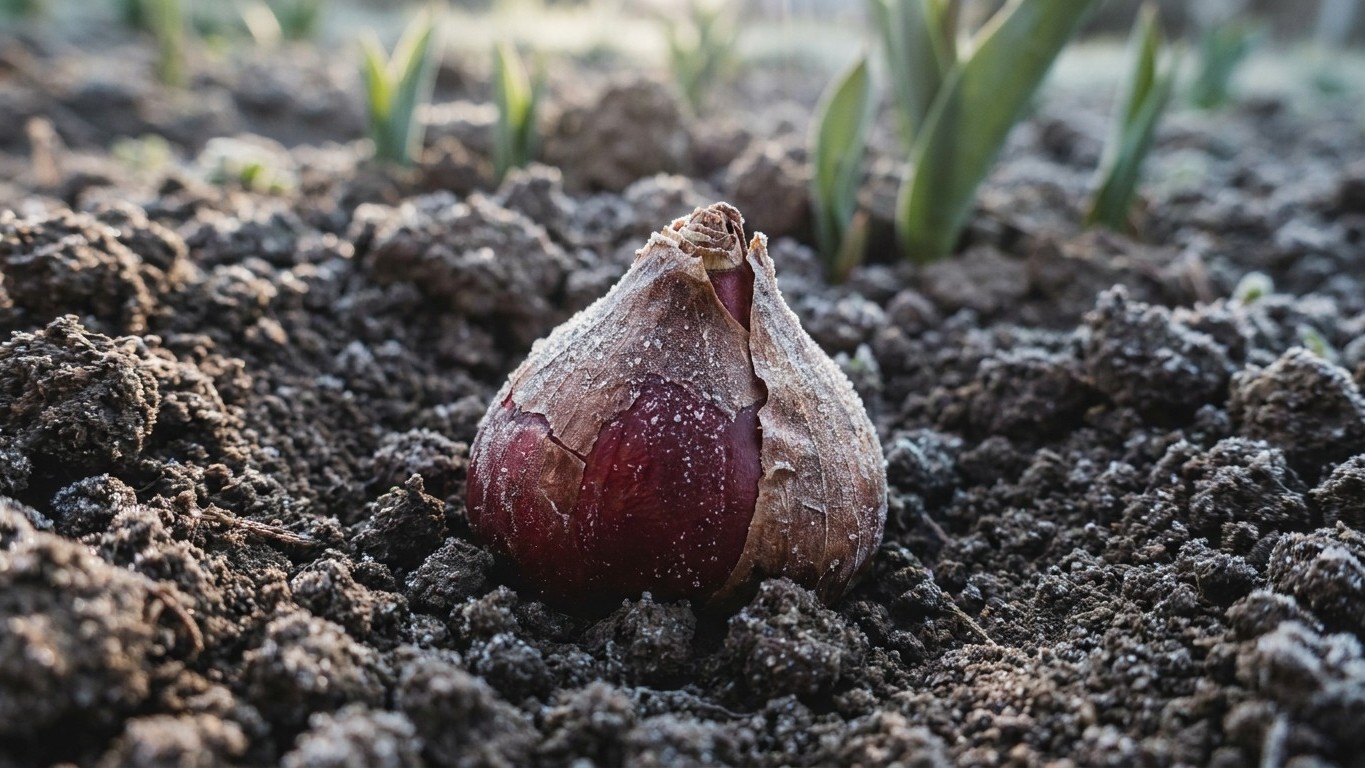

Garlic in Tennessee has trouble from three groups of pests: those that feed in the soil on cloves and roots, those that chew or rasp the leaves in spring, and those that get into the bulb as it fills out. Garlic goes in during autumn and comes out the following summer, so it sits in the ground long enough to meet all three. The University of Tennessee Extension is the service to ask when you need a name for what you are seeing.
Which pests attack garlic in Tennessee
The University of Tennessee Extension, through its county offices, is the service that documents which insects and mites are active on vegetables in the state. Its guidance is organized the way a gardener meets the problem: by where on the plant the damage shows up. That works better than memorizing a species list, because the symptom is what you have in hand when you walk out to the bed.
Soil-dwelling pests come first. They feed on the clove after planting and on the roots through winter and spring. A clove that never sends up a shoot, or a shoot that wilts and pulls out of the ground with no roots, points this way. Leaf feeders come second. They chew edges or scrape the surface of the green blades once growth picks up in spring. Bulb pests come third. They work inside the wrappers and the cloves late in the season, and the damage is often found only at harvest or in storage.
Match the symptom to the group before you do anything else. A bed treated for a leaf feeder when the real trouble is in the soil wastes a season. The next sections help you tell them apart by timing and by what you see first.
When each one shows up, and what it does first
The calendar for garlic starts with the first fall frost. At the NOAA NCEI 1991-2020 Climate Normals station (USW00013897), the probability of a 32F freeze climbs through a 30-70% band from October 28 to November 8. That window is a midpoint. The first frost can land later, so a warm autumn can leave the soil open and active for extra weeks after the cloves go in. East Tennessee and the Cumberland Plateau run cooler than that station, and they are slower to warm in spring, so everything described below shifts a little later there.
Soil pests, from planting through winter
Soil pests are the earliest arrivals. Cloves set in the ground in autumn can be hollowed or nibbled before they root. What you see first is absence. Shoots come up patchy, with gaps in a row that should be even. Dig around a gap and look at the clove. A tunneled or hollowed clove, or roots chewed short, tells a different story from a clove that simply rotted in wet soil. In a mild winter these pests stay active longer, because the ground does not stay frozen for long.
Leaf feeders, once spring growth resumes
Leaf feeders appear when the plants wake up and put on new growth after winter. The first sign is a change in the leaf surface: pale or silvery flecks, ragged edges, or tips that curl and brown sooner than their neighbors. These symptoms show up on the blades long before the bulb is affected. Check the base of the leaves where they wrap the stem, because small insects shelter in those folds. A close look in the morning, when insects are slow, finds more than a quick glance at midday.
Bulb pests, as the crop sizes up toward summer
Bulb pests work late. Garlic is lifted the summer after planting, and by then the leaves are yellowing on their own as the plant finishes, which hides early trouble. What gives the problem away is the bulb itself. A bulb that feels soft at the neck, wrappers that peel with dark staining, or cloves that are hollow or shriveled when you cut them open all point to something that has been feeding inside. Damage found at lifting may keep spreading in storage, so check cured bulbs again a few weeks later.
Telling the damage apart from everything else
Yellow tips in spring are the most common garlic complaint, and insects explain only some of them. Cold snaps, soggy soil, dry spells, disease and animals all make garlic look sick. Reading the plant below ground settles most of it. Dig one plant and examine the roots and the clove before you spray, cover or pull anything. That single check separates an insect problem from a drainage or nutrient one in a few minutes.
| What you see | Other causes to rule out | What settles it |
|---|---|---|
| Gaps in the row, shoots missing | Rot in wet soil, cloves planted too shallow and pushed up by freeze and thaw, animals digging | Dig the spot. Disturbed soil and scattered cloves suggest heaving or digging. A clove with tunnels or chewed roots suggests a soil pest. A mushy, foul clove suggests rot. |
| Yellowing leaf tips in spring | Cold burn on leaf tips, nutrient shortage, waterlogged or dry soil | Check root color and soil moisture. Even yellowing across the whole bed points to growing conditions. Damage on a few plants, with healthy ones beside them, deserves a closer look at those plants. |
| Silvery or pale flecks on blades | Wind scuffing, spray burn, sun scorch after cloudy weather | Look in the leaf folds for small insects. Flecks with nothing living on or near them often have a weather cause. |
| Soft bulbs, dark wrappers, hollow cloves at lifting | Fungal or bacterial disease, lifting too late, poor curing | Cut a bulb open. Tunnels or fine grit inside suggest feeding. Fuzzy growth or a wet, discolored rot suggests disease. |
Do not trust a single symptom. Disease and insects often arrive together, because feeding wounds let rot organisms in. A bulb can show both, which is why a name given from a photo online is a guess at best.
When the check does not settle it, bring a sample to your county office of the University of Tennessee Extension. Take a whole plant with soil still on the roots, sealed in a bag. Extension staff can identify the cause, and they know which pests have been active locally that season.
What actually works here, and what is a waste of time
Garlic has a long season, so timing and barriers beat any treatment. Plant when the soil is cooling but before it freezes, so roots establish ahead of winter. A planting calendar built around the first fall frost helps, and the guide to when to plant garlic in Tennessee, counting back from the first frost shows how to set that date. Remember that the frost window above is a midpoint.
A physical barrier laid down early does more than anything sprayed later. A light row cover set over the bed in spring, with edges buried or weighted, keeps flying insects off the leaves. It has to go on before they arrive, since covering plants that already hold pests just shelters them.
Buy seed garlic from a clean source and discard any soft, discolored or shriveled cloves before planting. Infested seed carries pests and disease straight into a clean bed. Rotate: garlic and its onion relatives should not follow one another in the same ground. Pull and dispose of the plant debris after lifting, rather than tilling it in, and cure bulbs in a dry, airy place so that trouble does not spread in storage. The right variety also matters, and the guide to garlic varieties that suit Tennessee winters covers which ones carry through the cold season well.
Several common habits waste effort. Spraying at the first sign of yellow leaves, with no diagnosis, treats a condition that may not involve insects at all. Calendar sprays applied just in case add cost and may harm helpful insects. Replanting cloves from a diseased crop passes the trouble on, and grocery-store garlic of unknown origin carries the same risk. Pesticide choices belong to the extension service, which knows what is registered for home garden use in the state and how to use it safely.
Where to check this for your own county
Pest pressure varies inside Tennessee. East Tennessee and the Cumberland Plateau are cooler and run later in spring than the Nashville area, and the pests that are active in one valley may be quiet on the next ridge. What is documented across the state describes a general picture. It does not say what is in your own bed this season.
The University of Tennessee Extension has an office in each county. The staff there see local samples every week of the growing season and know which problems are showing up near you. They can also confirm a diagnosis from a plant you bring in. If you want a broader look at the crop first, the overview of growing garlic in Tennessee covers the season from planting to lifting.
Advice written for other regions may not fit. Guides such as when to plant garlic in Texas and garlic varieties that suit Texas winters reflect different winters, and pest timing follows local weather, so it may be off by weeks here.
Common questions
Do I need to treat garlic for insects every year?
Not by routine. Many beds pass through the season with little damage when the seed is clean, the planting is timed to the fall frost window, and the crop is rotated. Treatment decisions come after a diagnosis, and the county extension office can tell you what is registered for home use in the state.
Why did some of my cloves never come up?
Dig the gap and look. A mushy clove suggests rot in wet soil, a clove pushed to the surface suggests freeze and thaw, and a tunneled or chewed clove suggests a soil pest. Missing shoots have several causes, so the clove itself is the evidence.
Are yellow leaves in spring always a sign of pests?
No. Cold burn, wet or dry soil and low nutrients cause yellowing too. Even yellowing across the whole bed usually points to growing conditions. Damage on a few plants with healthy neighbors deserves a closer look at roots and leaf folds.
Is it safe to store garlic that showed some damage?
Check each bulb at lifting and again after curing. Soft necks, dark wrappers or hollow cloves mean that bulb should be used first or discarded, and kept apart from sound ones. Never keep damaged bulbs as seed for next fall.