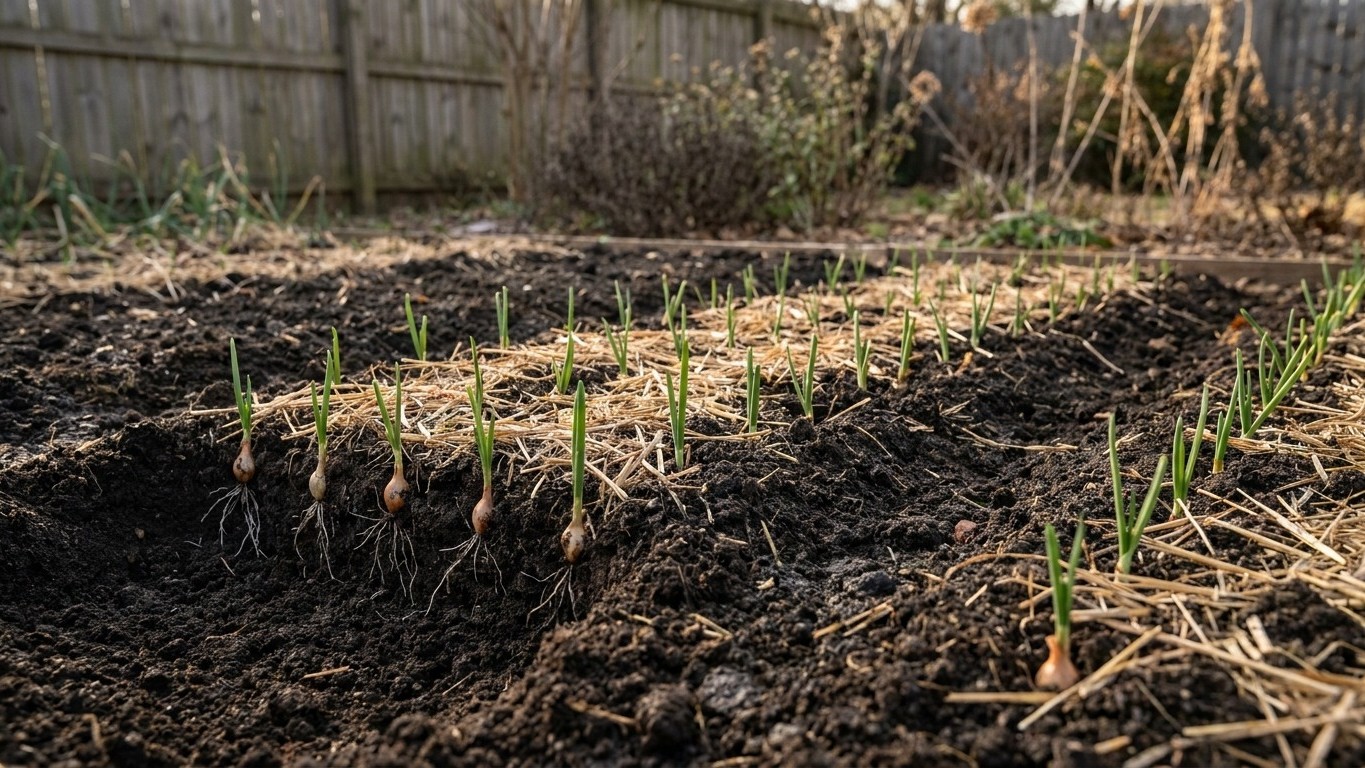

Garlic has few insect enemies, but a bulb that sits in the ground from autumn until the following summer gives the ones it has a long window. In South Carolina, trouble comes in two stretches: the weeks after planting, when cloves are underground, and the spring growth spurt, when leaves are exposed. Clemson Extension is the service that documents crop pests across the state.
Which pests attack garlic in South Carolina
Clemson Extension is the starting point for anything that eats a crop in South Carolina, and its county offices handle the garlic and onion-family questions that come in each year. Rather than a long catalog of insects, the useful way to sort garlic’s problems is by where on the plant the feeding happens. That tells you when to look and what to dig up.
Three groups matter for a garlic bed. Soil-dwelling pests attack cloves and young roots after planting. Leaf feeders work on the green tops once growth picks up in spring. Storage and bulb-damage problems show up when you lift the crop and cure it. Garlic is in the ground from autumn planting until it is lifted the following summer, so all three can get a turn.
What does not belong on a garlic list
Plenty of garden pests never touch garlic, and a list that includes them only wastes your time. Insects that bore into fruit trees or feed on tree bark have no reason to visit a bed of bulbs, because garlic has no wood, no fruit and no tender stems to tunnel into. Lawn pests that chew turf roots stay in turf. Pests that specialize in the cabbage family or in tomato vines follow their own crop families and skip alliums, which carry a strong sulfur smell that many insects avoid.
When each one shows up, and what it does first
Timing starts with frost. For a 32°F freeze, the 30-70% probability band at the Charleston airport reference station (NOAA NCEI 1991-2020 Climate Normals) runs November 20 to December 5. That band is a midpoint, never a safe date. The first freeze can come later than the middle of the range, so warm soil and active insects can linger past the date you circled. Peninsular Charleston is milder than the airport station, and Upstate South Carolina runs several weeks tighter at both ends. For the planting side of this, see When to Plant Garlic in South Carolina: Counting Back From the First Frost.
Count from planting, not from the calendar, and the pest sequence is easier to follow.
In the first weeks after planting, soil is still warm and soil pests are most active. The first sign is a clove that never sends up a shoot, or a shoot that comes up thin and yellow. Dig up a few of the stragglers and look at the clove itself. A clove that is hollowed out or chewed at the base points to a soil feeder, while a soft, mushy one points to rot.
Through winter the bed sits quiet. Garlic puts on root growth and a few green leaves, and cold slows most insect feeding, so winter symptoms are rarely insect work. A tip burned brown after a hard freeze is cold injury, and garlic recovers from it.
When growth resumes in spring, leaf feeders arrive. What you see first is a pale, silvery stippling or fine streaking on the leaves, sometimes with tips that curl or twist. Look at it early, before the whole leaf turns, because by the time a leaf has gone yellow the cause is hard to read.
Weeks before lifting, as the lower leaves start to yellow and dry down naturally, bulb problems become visible. That is the time to pull a test plant and check the base. Soft spots, tunnels or a collapsed outer wrapper tell you more than the tops do. After lifting, damage that continues in storage shows up as cloves going soft or dusty inside the wrapper.
Telling the damage apart from everything else
Yellow leaves are the most common garlic complaint, and insects are one of the least common causes. A natural dry-down in early summer looks the same as a problem that started in spring if you only glance at the tops. Dig one plant and read the roots and the base of the bulb before you blame an insect. The table below separates the usual suspects.
| What you see | Possible causes | What settles it |
|---|---|---|
| Silvery streaks or stippling on leaves | Insect feeding on the leaf surface; sun or wind scorch; leaf disease | Look closely at the leaf with a hand lens; insects or their shed skins sit on or between the folds. Scorch has no visible culprit. |
| Yellow tips in spring | Nutrient shortage; cold injury; dry soil; waterlogged soil; insect or disease at the base | Check the soil moisture a few inches down, then pull a plant and inspect the roots and base. Healthy roots are white and firm. |
| Cloves that never emerged | Rot in wet soil; digging animals; soil pests; cloves planted too shallow | Dig where the clove should be. A missing clove with a hole points to an animal. A soft clove points to rot. A hollowed one needs an Extension look. |
| Cloves lifted out of the ground or scattered | Animals digging, or soil heaving in freeze and thaw | Scratch marks and disturbed mulch point to animals. Roots pushed up cleanly, with no digging marks, point to heaving. |
| White or fuzzy growth at the base of the bulb | Fungal disease | Insects do not leave fuzzy growth. Bag the whole plant and take it to your county office. |
| Tunnels or holes inside the bulb | Soil or bulb feeders; secondary rot after damage | Cut the bulb open. Take the sample, with some surrounding soil, to Extension rather than guessing. |
What actually works here, and what is a waste of time
On a long South Carolina season with mild winters, barriers and timing beat any treatment. The most effective step is the physical one, and it works best when it goes on right after planting, before pests or digging animals find the bed. A light row cover or a wire mesh laid flat over the bed and pinned down keeps animals from lifting cloves and blocks flying insects from laying eggs near the plants. Take it off once growth is strong, so the leaves can size up and the bed does not overheat in late spring.
Planting choices do a lot of quiet work. Start with firm, clean cloves from healthy bulbs and discard any soft or discolored ones. Put the bed in well-drained soil, or raise it, because wet ground in a humid climate brings rot that looks like pest damage. Rotate the bed each year so garlic, onions and other alliums do not follow each other in the same spot, since soil pests build up where their food source stays put. After lifting, clear plant debris, cure the bulbs dry and store them cool and ventilated. Varieties matter as well, and Garlic Varieties That Suit South Carolina Winters covers which types handle the local conditions.
Plenty of popular fixes waste time. Spraying the bed the moment a yellow tip appears treats a symptom that has many causes, and the insect may not even be involved. Home-mixed sprays and repellents applied on a routine schedule do little against pests living in the soil or inside the bulb. A heavy mulch thrown on to hide the problem can hold moisture against the clove and make rot worse. And any product choice belongs with your county Extension office, since it alone knows what is registered for use in the state and how to apply it safely to a food crop.
Where to check this for your own county
The pest picture shifts inside a single state. A garden on the coast, one in the Midlands and one in the Upstate each deal with a different mix of soil, rainfall and first-freeze timing, and Upstate frost can arrive weeks earlier than at the Charleston airport reference station. A pest documented somewhere in South Carolina may never appear in your garden, and the reverse is just as possible.
Your best local source is your county office of Clemson Extension. Agents there see what has actually been reported in your area during the current season, and they can say whether a problem is spreading or isolated. For a diagnosis, bring a whole plant, roots and soil included, in a bag, along with photos of the bed and a note of the planting date. A sample with context tells them far more than a leaf alone.
For the bigger picture on the crop, Growing Garlic in South Carolina covers the full season. Gardeners in colder climates face a much tighter window, as seen in When to Plant Garlic in South Dakota: Counting Back From the First Frost and Garlic Varieties That Suit South Dakota Winters, which shows how much the pest timeline moves with the climate.
Common questions
Do insects eat garlic cloves in the ground over winter?
Cold slows most insect feeding, so cloves face the most risk in the warm weeks after planting and again when spring growth begins. A clove that never emerges is more often rot or a digging animal than an insect. Dig it up and check before drawing any conclusion.
Does garlic keep pests away on its own?
Its sulfur smell deters many insects, which is why garlic is among the easier crops to grow. It does not make the plant immune. Soil feeders and leaf feeders can still attack it, and wet soil can ruin a crop with no insects involved.
Should I spray as soon as the leaves turn yellow?
No. Yellow leaves come from cold, dry or waterlogged soil, a nutrient shortage, disease or the plant’s own dry-down before harvest. Pull one plant and look at the roots and bulb base first, then ask your county Extension office what applies in your area.
When should I check my garlic for pests?
Look a few weeks after planting by digging up any clove that has not sprouted. Check the leaves closely when growth resumes in spring. Then pull a test plant in the weeks before lifting, when the lower leaves begin to dry. Frost timing shifts these checks, and a first freeze that falls later than the November 20 to December 5 midpoint keeps the soil warm and pests active longer.