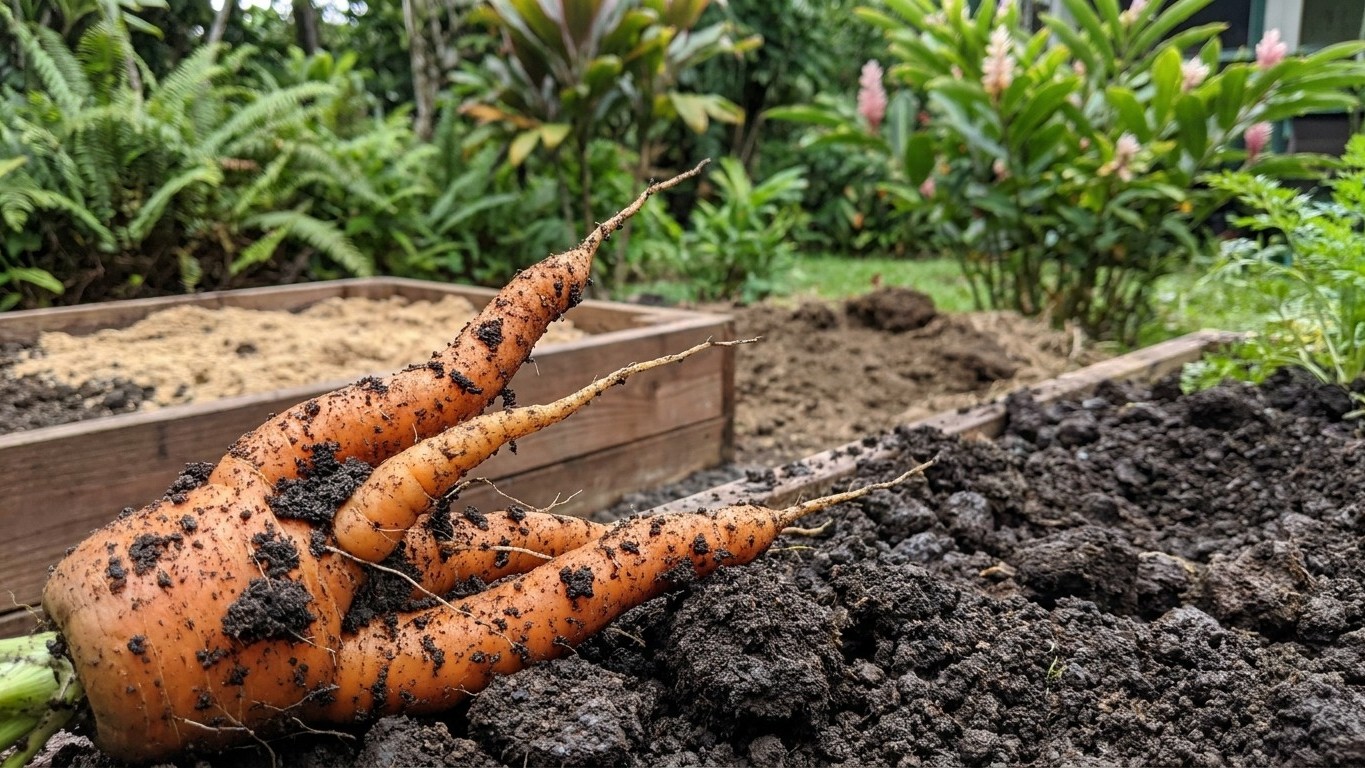

Pull carrots about 65 to 75 days after seeding, when the shoulders at the soil line have filled out to the width the packet describes and before the ground freezes hard. Keeping them is the harder half. Clemson Cooperative Extension recommends 33 °F with high humidity, and the tops have to come off first. Get those right and a fall row can feed a household for weeks. Get them wrong and the roots go limp within days. For the full season, start with Growing Carrots in Pennsylvania.
How do you know when carrots are ready to pull?
Carrots are sown in place, so there is no transplant date to count from. The clock starts the day the seed goes into the ground. Clemson Cooperative Extension says to harvest about 65 to 75 days after planting, and seed packets for slower types often run 70 to 100 days. Count every one of those days from seeding, and mark the sowing date on a stake or calendar. Where winters freeze, a spring sowing is usually ready by early to midsummer, and a midsummer sowing comes ready in fall.
What does a ready carrot look like?
The tops tell you first, and the roots confirm it. Brush the soil back from one shoulder and look at it before you pull anything.
- The shoulder at the soil line is as wide as the packet says a mature root should be.
- The tops are full, upright and deep green.
- A test carrot pulled from the row snaps crisply and tastes sweet.
Roots left in the ground past that point can be pulled as needed, which is why many gardeners leave part of the row in place. The limit is hard frozen soil. Once the ground locks up, the roots are stuck there until a thaw.
Does Pennsylvania ground change how they come out?
It can. Utah State University Extension says carrots want deep, sandy, well-drained soil rich in organic matter, and that heavy or rocky soil makes the root fork. The soil USDA lists as representative of Pennsylvania is the Hazleton series, an Inceptisol (a young soil without strong horizons yet). Its surface layer averages 46 percent sand, 12 percent clay and 42 percent silt, with about 3.0 percent organic matter, and it is well drained. That is a loam to silt with little clay, which suggests roots that pull fairly easily. Hill-country stone is a separate problem, and it forks roots just as heavy clay does. The same USDA record puts the surface pH of this series at about 4.6, which is strongly acid.
That describes the state’s representative soil. It does not describe your bed. A state spans hundreds of soil series, and river bottoms, ridges and any lot a builder has scraped or filled will differ. Settle it at home with two cheap checks. Fill a quart jar a third full of soil, top it with water, shake it and let it settle for a day to see the sand, silt and clay layers. Then dig a hole a spade deep, fill it with water twice and time the second draining. For a real pH and organic matter number, send a sample to your county extension office. If forked roots keep turning up, Will Carrots Fork in Pennsylvania Soil? covers the fixes.
Keeping them, and for how long
What temperature and humidity keep carrots longest?
Clemson Cooperative Extension’s Home & Garden Information Center gives the target in one line: store carrots at 33 °F and high humidity to prevent wilting. Water freezes at 32 °F, so that is barely above freezing. It is far colder than a cellar that feels cool to a person. A reader who stores carrots at 50 °F will see them sprout and soften in a fraction of the time.
Humidity matters as much as temperature because a carrot is mostly water. Dry air pulls it out of the root, and the carrot turns rubbery. In a refrigerator, a loosely closed plastic bag in the crisper drawer holds moisture around the roots. Gardeners with a true cold room often pack roots in damp sand or sawdust in a crate, which does the same job on a larger scale.
Clemson’s figure for carrots stored with their tops on, called bunched carrots, is about 10 to 14 days. Treat that as a maximum under ideal cold and humidity. A warmer shelf or drier air shortens it, and a carrot that was nicked at harvest will give out sooner. Carrots with the tops trimmed off keep much longer, up to months in the best conditions, but they have to be cold and moist the whole time.
Why do you cut the tops off first?
The leaves keep drawing moisture out of the root after harvest. A bunch with the greens still attached looks fresh for a day, then the root underneath goes soft because the tops have been draining it. That is why bunched carrots keep 10 to 14 days and trimmed ones keep months. Cut or twist the tops off within a day of pulling, leaving a short stub, and shake off loose soil without scrubbing the skin.
Sort as you trim. Roots that are split, tunneled or soft at the tip rot first and can spread it to their neighbors in a bag. Put those aside to eat this week and store only sound ones. If you find a lot of damaged roots, What Eats Carrot in Pennsylvania, and When explains what caused the damage and when it happens.
Where in the house that actually is
Which room comes closest to 33 °F?
A domestic refrigerator runs colder than some crops tolerate. Tomatoes and cucumbers suffer chilling injury there, which is why they live on the counter. Carrots take that cold well, so the refrigerator’s crisper drawer is the nearest match to Clemson’s target. Keep roots away from the back wall of the main shelves, where a cold spot can freeze them. A heated room is the wrong direction altogether. A kitchen counter or a pantry near the furnace is warm enough that carrots go limp in days and begin to sprout.
| Spot | What it tends to do | Fit for carrots |
|---|---|---|
| Refrigerator crisper drawer | Steady, cold and moist when the roots are bagged | Closest match for a household’s weekly supply |
| Unheated basement or cold room | Cools slowly as fall advances; often too warm early in the season | Good for bulk storage in late fall if a thermometer confirms it |
| Garage or shed | Warm on a sunny afternoon, freezing on a clear night | Poor; the swings spoil roots |
| Kitchen counter or heated pantry | Warm and dry | Days only |
For a bigger harvest than the crisper drawer can hold, the cold room is the real candidate. Many Pennsylvania basements stay too warm until well into fall, so the answer depends on the house. A wall of poured concrete below grade tends to run cooler than a basement with a furnace in it.
What should you check with a thermometer?
Guessing is how carrots get lost. Put a thermometer in the spot for two or three days before you load it with carrots, and read it at different times of day. A reading near 33 °F that stays steady means the spot works. A reading that wanders by a dozen degrees means it does not.
Common questions
How long do carrots last after harvest?
Carrots stored with their tops on keep about 10 to 14 days at 33 °F and high humidity, according to Clemson Cooperative Extension. That is the best case. With the tops trimmed off, carrots keep far longer, up to months under ideal conditions. A warm or dry spot cuts either figure sharply.
How many days from seeding until you can pull carrots?
Clemson says about 65 to 75 days after planting. Packets for slower types often run 70 to 100 days. Carrots are sown in place, so all of those days count from the day the seed goes in. Check the shoulders and pull a test carrot before you pull the whole row.
Can you leave carrots in the ground over winter?
You can leave them while the soil stays workable, and a thick mulch of straw or shredded leaves keeps the ground open longer. Once the soil freezes hard, you cannot get the roots out without breaking them. Pull what you want to keep before the first deep freeze and ask your county extension office what is normal for your area.
Why did my stored carrots go soft?
The usual causes are leaves left on, a storage spot that was too warm, or air that was too dry. Leaves drain the root while it sits. Warmth lets the root sprout and soften, and dry air pulls water out of it. Trim the tops, move the roots to the crisper drawer or a thermometer-checked cold room, and keep them in a bag or damp packing.