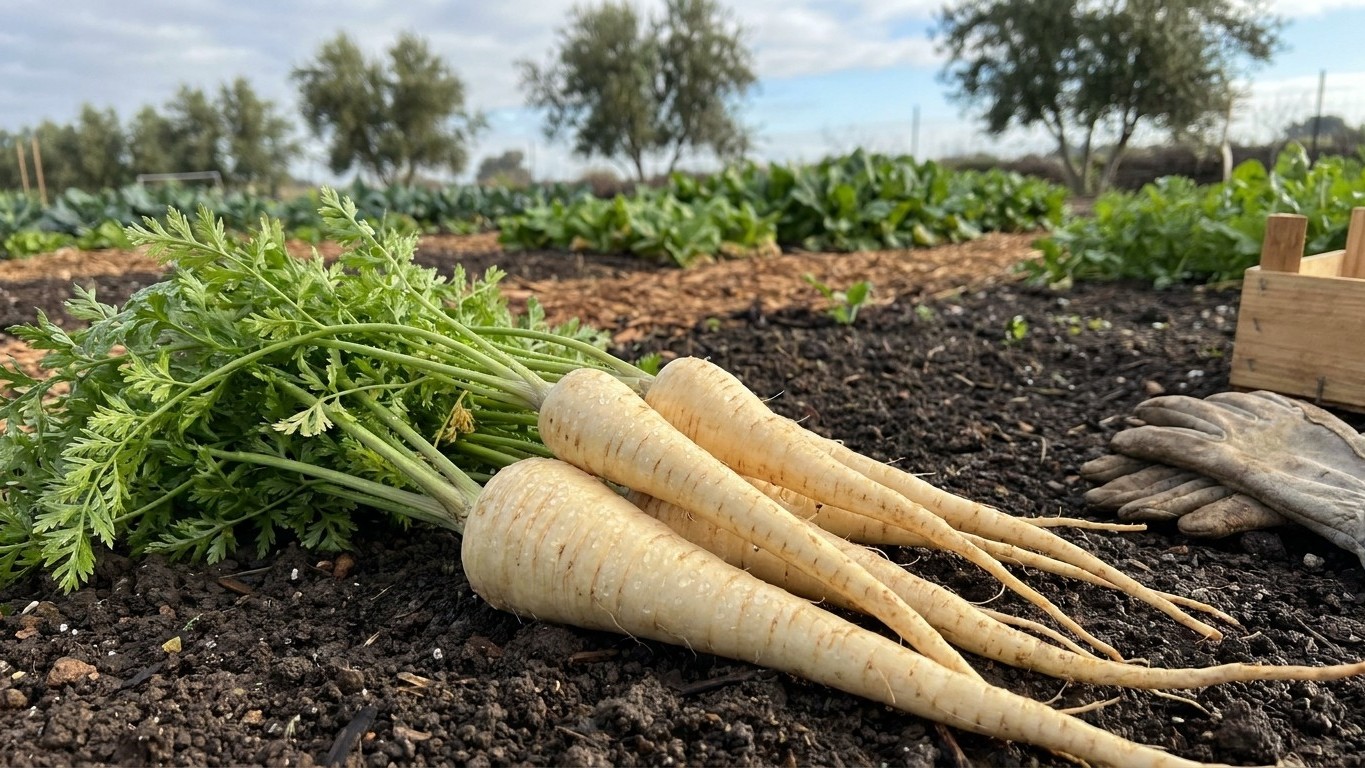

Lift parsnips in Missouri after the ground has had several frosty weeks. That means mid-to-late November at the earliest, and you can keep digging through winter whenever the soil isn’t frozen solid. Roots sown on time are full size long before that, but they won’t be sweet yet. Once lifted, parsnips keep four to six months in a cold, humid spot. Put them next to apples and they turn bitter.
The short answer
Does Missouri deliver several frosty weeks? Yes. The mean daily minimum in the coldest month is 19.5°F at the Kansas City reference station, which means winter nights regularly fall well below freezing. A parsnip grown here will sweeten, not just grow. Utah State University Extension explains the mechanism: parsnips taste best after several weeks of cool, frosty weather, which converts stored starch to sugar. A root pulled in September is edible but plain. One pulled after a run of hard nights tastes noticeably sweeter.
That sweetening depends on frost exposure. A comfortable hardiness zone doesn’t guarantee it, since a zone describes what a plant survives rather than how many cold weeks its roots sit through. In the southern part of the state, winters run milder than at Kansas City, so the frosty stretch is shorter and the payoff smaller. The county extension office can tell you how your own area compares. For a fuller look at the sugar conversion, see Will Parsnips Sweeten in Missouri?
The first fall frost at the reference station arrives between October 18 and October 29. Counting from that window, the roots need a few more weeks before they’re worth digging. In practice, that puts the first good harvest around the middle to end of November. After that, the ground works as your refrigerator. Parsnips can stay in the row through the winter, and you dig what you need. A thick layer of straw or shredded leaves over the row keeps the soil from freezing hard, so a fork still goes in during January. Pull whatever remains before the tops start to regrow in spring, because the root puts its energy into new leaves and turns tough.
If you’d rather not leave anything to a frozen February, lift the whole row after the frosty weeks have done their work and store it. Here the details matter more than most gardeners expect.
How long do parsnips keep after lifting?
Four to six months. That figure comes from the USDA’s handbook on commercial storage, and it assumes 32 to 34°F at 98 percent relative humidity, held steady. Almost no house provides that. A refrigerator crisper comes close on temperature but runs drier, so roots shrivel sooner. Wrapping them loosely in damp paper in a perforated bag, or packing them in barely moist sand in a cold garage or cellar, gets you closer. Expect the shorter end of the range unless you can hold both numbers.
Cold itself won’t hurt them. USDA lists parsnips as not chilling sensitive. The real danger is ethylene, the gas that ripening fruit gives off. Parsnips produce almost none themselves, but even low levels in cold storage make them bitter, likely through a buildup of a compound called xanthotoxin. So the crisper drawer shared with apples, pears, or ripening tomatoes is a bad place for them. Keep them in their own bag, or in a different fridge or cellar corner altogether.
One more handling rule from the same source: top the roots after harvest, but don’t trim into the crown. Cutting the green tops off is fine, but do not trim into the crown. Slicing into the root itself opens it to rot.
Does the season fit?
It fits with room to spare. Parsnips are sown in place, never transplanted, and the 100 to 120 days run from seeding. Here is how that plays out against the frost calendar at the Kansas City reference station.
- Sow two to three weeks before the last spring frost. The mean last frost there falls between April 6 and April 20, so sowing runs from mid-March to early April. The downtown station runs about five days earlier, and the airport sits well north of the city, so adjust a few days to your own ground.
- Expect nothing for a while. Parsnip seed is slow to germinate, and in cold March soil it leans toward the long end. Bare soil at day ten is normal. Don’t dig it up and re-sow.
- Count 100 to 120 days from the sowing date. A mid-March sowing reaches full size between late June and mid-July. An early April sowing gets there between mid-July and early August.
- Check the fall end. The first frost arrives between October 18 and October 29, and the stretch between the last spring frost and the first fall frost runs roughly six months. Roots sown in spring are mature months before the frost window opens.
- Know where the margin runs out. A sowing in mid-May still finishes before frost, between late August and mid-September. Sowing into June starts to cut it close, and the roots may be small when the cold arrives.
So the growing season is not the constraint. Early sowing means the roots are fully formed by summer and then simply wait for cold weather to turn their starch to sugar. Gardeners who sow in May, hoping to harvest in autumn, give up nothing important. Gardeners who wait until June are the ones who risk a thin crop. For the full sowing walkthrough, start with Growing Parsnips in Missouri.
What goes wrong here
Most parsnip failures in Missouri trace back to the ground, the water, or the calendar. Here are the common ones, each with its fix.
- Forked roots from heavy or stony ground. Clay that dries into clods, or rocky soil such as you find in the Ozarks, makes the taproot split around whatever blocks it. Utah State University Extension recommends deep sandy soil, and says heavy soil must be double dug. Loosen the bed two spades deep and pull out stones before sowing. Raised beds filled with loose, deep soil are a workable answer where the native ground won’t cooperate.
- Forked roots from overwatering. This is a separate cause and needs a separate fix. In loose soil, steady heavy watering can still produce stubby, branching roots. Water deeply but less often, and let the top inch or two dry between soakings. Mulch evens out the swings between dry spells and downpours.
- Bare soil after sowing. Seed that is slow to come up leads many gardeners to give up too soon. Keep the seedbed evenly damp for those weeks, and mark the row so you don’t dig into it.
- A season that runs out. Sowing in late May or June leaves too little time to reach full size before frost. Sow in the March-to-early-April window, and if you’ve missed it, sow as soon as the soil is workable rather than waiting for warmer weather.
- A winter too mild to sweeten. In years or places with few hard freezes, the roots grow fine but stay starchy. Leave them in the ground as long as you can before the spring regrowth, and check with your county extension office about how many frosty weeks your area usually gets. Southern Missouri gets fewer than the Kansas City area.
- Bitter roots in storage. Almost always ethylene from nearby fruit, as covered above. Move the roots away from apples and any ripening produce, and give them their own container.
- Pest damage that looks like disease. Chewed or tunneled roots and wilted tops usually have an insect cause. What Eats Parsnip in Missouri, and When covers what to look for and when it shows up.
Common questions
Can parsnips stay in the ground all winter in Missouri?
Yes. Frozen soil doesn’t hurt them, and the cold keeps improving their flavor. Mulch the row with straw or leaves so you can still dig in January. Lift whatever is left before spring growth begins, since roots that put up new leaves turn woody and lose their sweetness.
How do I know the frost has done its job?
Taste one. After several weeks of frosty nights following the first fall frost (October 18 to October 29 at the Kansas City station), pull a single root and cook a slice. If it tastes starchy and bland, leave the rest in the ground another week or two and try again.
Can I store parsnips with apples?
No. Parsnips make very little ethylene themselves, but apples and other ripening fruit give off plenty, and even low levels in cold storage turn parsnips bitter. Store them in a separate bag, drawer, or room. The right temperature won’t protect them if the gas is in the air.
Should I cut the tops off before storing?
Top them, but leave the crown intact. Cut the leaves off and don’t slice into the crown. Then store them cold at 32 to 34°F and as humid as you can manage. Four to six months is the ceiling, reached only when both numbers hold steady.