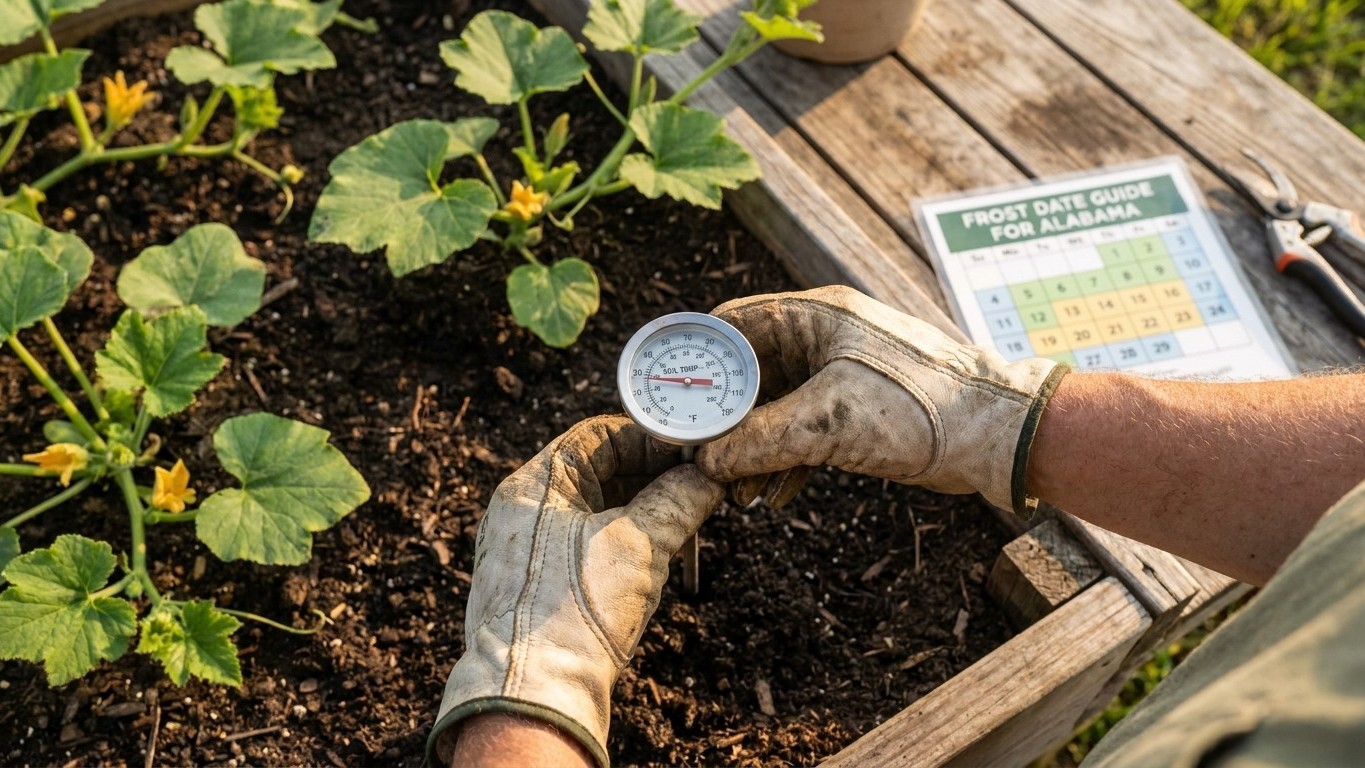

Alabama’s sowing window isn’t fixed to a date on the calendar. It’s set by two separate clocks: a soil thermometer that has to clear 65°F before seed goes in the ground, and a fall frost arriving sometime between November 2 and November 16 that puts a hard stop on ripening. Get the soil reading wrong, or ignore how far out that frost sits, and the pumpkin patch runs out of time before the fruit turns orange.
The short answer
Start from the back end of the season. NOAA’s 1991-2020 climate normals put the first fall freeze for the reference station at 32°F somewhere in a window running from November 2 to November 16. That’s not one day, it’s a two-week band, and it comes from an airport weather station. Gardens outside town, especially at higher ground or away from pavement, tend to see that first freeze arrive earlier, often by a week or two.
Utah State University Extension’s pumpkin guidance sets the ripening clock at 45 to 55 days, and that clock starts running only once a flower opens and sets fruit, not on the day seed goes into the soil. Line that up against the frost window and the latest a flower can afford to open comes out to a window of its own. Subtract 55 days from November 2 and you land on September 8. Subtract 45 days from November 16 and you land on October 2. The safe range, in practice, runs from roughly early September to early October, with early September being the cautious end for anyone whose garden tends to frost ahead of the reference station.
Push a flower open later than that window and the fruit is racing a clock it can’t win. A flower opening in mid-October, for instance, still has 45 to 55 days of growing to do, but the first freeze may arrive in three to five weeks. The pumpkin either stays green on the vine or gets caught mid-ripen by a hard frost that collapses the vine before the shell can harden and the color can finish turning.
This is the number the whole planting schedule hangs on, and it’s worth repeating because it’s the part gardeners get backwards most often: the 45 to 55 days is counted from flowering, not from the day the seed went in. A plant can take its own sweet time getting from germination to its first bloom, and that stretch isn’t part of the ripening clock at all, it’s extra time that has to be budgeted separately when working out a sowing date.
When to sow here
The last spring frost at the reference station falls in a window from March 19 to April 3, but that date tells you almost nothing about when it’s safe to sow pumpkin seed. Soil and air don’t warm at the same pace. Soil holds onto cold and releases it slowly, so a 65°F reading in the top few inches of a garden bed shows up well after the air has already cleared frost risk, often not until the soil has had three to four weeks of warming sun following that last frost date.
- Find your local last spring frost. Treat March 19 to April 3 as the reference-city figure, not a county-wide guarantee, and check a local extension office or a soil thermometer instead of guessing.
- Wait for the soil, not the air. A run of warm days doesn’t mean the ground has caught up. Push a probe thermometer two to four inches into the bed and look for a sustained 65°F reading before committing seed.
- Use row covers to buy time if the season feels tight. A row cover over freshly sown ground can shave roughly two weeks off the wait by trapping heat, letting a bed reach 65°F sooner than open, uncovered soil would.
- Count forward from the sowing date to the flowering deadline. Whatever date the seed goes in, the plant still needs its own stretch of time to grow, branch out, and produce its first bloom before the 45 to 55 day ripening clock can even start. Leave enough room between sowing and the early-September-to-early-October flowering cutoff established above.
- Treat early sowing as the safer default. Because the back end of the season is fixed by frost and the ripening clock doesn’t compress, extra time on the front end is the only cushion available if summer heat or a slow germination stretches the schedule.
What goes wrong here
- A late flower that never colors. This happens when the first bloom opens after the early-October cutoff, leaving the fruit still green when frost lands. The fix is entirely on the front end: sow early enough, and if a plant is clearly running behind by late summer, pinch off new blossoms so the plant’s energy goes into ripening the fruit it already has instead of starting fruit that has no chance of finishing.
- A fruit caught by frost before the skin hardens. A pumpkin that’s colored up but still soft-shelled can get nipped the first cold night. Utah State University Extension’s guidance is to harvest with the stem attached and get fruit in before frost rather than gambling on one more week on the vine. A fruit that’s mostly there is worth more than one lost to a freeze overnight.
- A vine that dies back before the season is finished. Vines sometimes collapse early from stress that has nothing to do with frost, most often insect damage working on the stem and leaves. Squash bugs and cucumber beetles are the usual culprits behind an early vine collapse in Alabama gardens, and both have their own dedicated pages on this site covering identification and control rather than repeating the details here.
Common questions
What month should I plant pumpkin seeds in Alabama?
There’s no single month that fits every garden. The right window is the one that lets seed go in after the local soil reaches 65°F and still leaves the plant enough time to reach its first flower before the early-September-to-early-October cutoff calculated from the fall frost window.
How many days does it take a pumpkin to grow after it flowers?
Utah State University Extension puts fruit maturation at 45 to 55 days counted from the day a flower opens and sets fruit, not from the sowing date. Anyone planning backward from a frost date needs to use this number, not the seed-to-harvest total.
Can I get away with sowing pumpkins in Alabama in July?
It depends entirely on where the local first fall frost lands. A July sowing only works if the plant can still reach its first bloom before the early-October end of the flowering window, since the 45 to 55 day clock still has to run its course after that.
Does a row cover really change the sowing date?
It can shift the sowing date earlier by roughly two weeks by warming the soil under the cover faster than open ground would warm on its own, which matters most for gardeners trying to squeeze in an early start ahead of a short season.