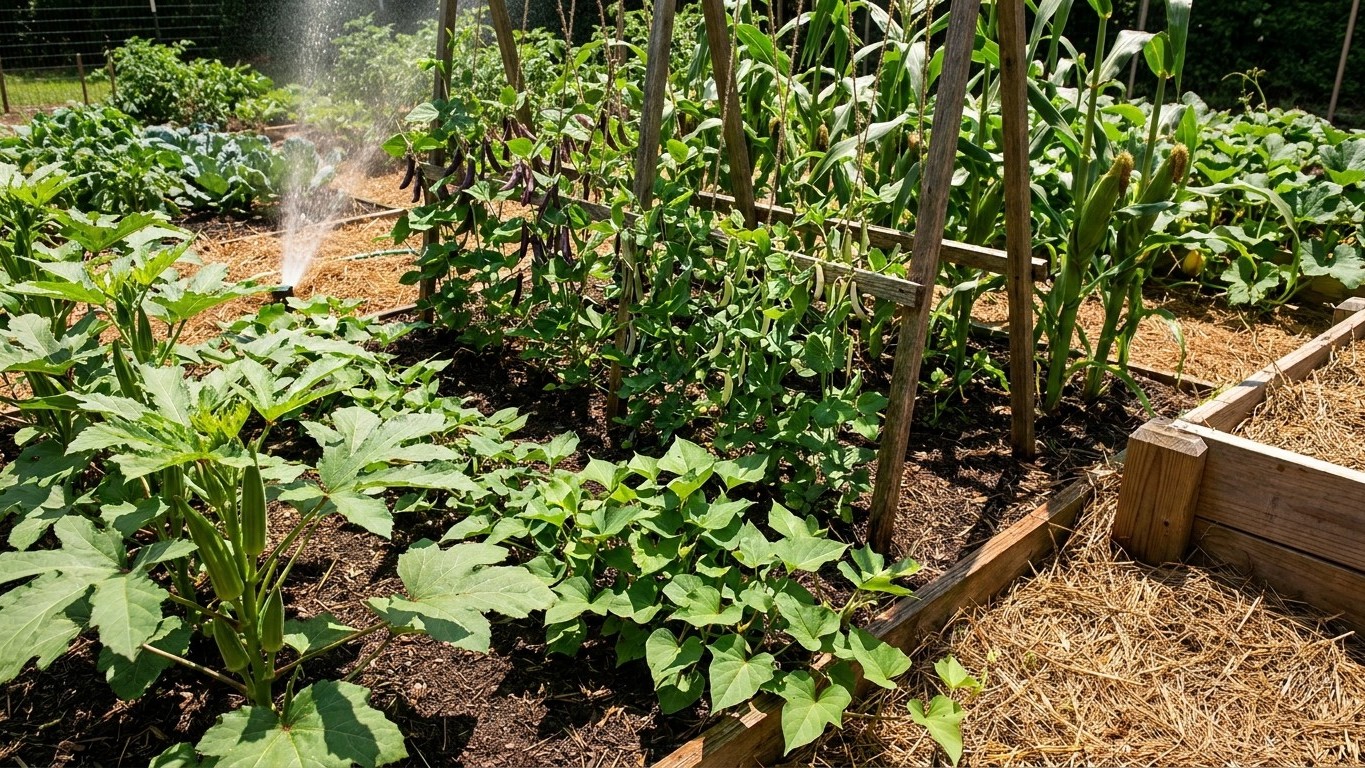

July in Alabama is a summer garden at full tilt, not a planting dead zone. Direct-sow heat-lovers like southern peas, okra, and sweet corn early in the month, get sweet potato slips in the ground before the window closes, and start seeds indoors or in shaded trays for the fall tomato, broccoli, and cabbage crop that will go outside once the worst heat breaks.
What goes in the ground in July

The number that runs this month isn’t the calendar, it’s soil temperature. Alabama soil in July regularly sits in the 85F to 95F range at planting depth, and that number decides everything. Lettuce, spinach, and peas simply won’t germinate reliably in soil that hot, no matter how carefully you water. Heat-adapted crops, on the other hand, treat that same soil as an invitation.
Southern peas (crowder, black-eyed, purple hull) go directly into the ground early in the month and shrug off the heat that would stall other legumes. Okra does the same, and a July sowing often outproduces an April one because the plants hit their stride just as day length starts pulling toward fall. Sweet corn planted in the first half of the month can still mature before frost across most of the state, though it’s a tighter window than an April planting.
Sweet potato slips need to go in early July at the latest to size up before the first fall frost arrives, and that frost lands anywhere from November 2 to November 16 depending on where you garden, per NOAA’s 1991-2020 climate normals. Winter squash and pumpkins destined for autumn harvest also need to be seeded in the first two weeks of the month; push much later and they run out of time to cure on the vine.
Skip the gamble on cool-season crops this month. Beets, carrots, and lettuce seeded into July soil either fail to germinate or bolt within days of sprouting. Save those for the fall sowing window once nighttime temperatures start easing.
What to start under cover
This is the month Alabama gardeners quietly build their fall garden, and the math runs backward from that first frost window of November 2 to November 16. Take a fall tomato variety that needs roughly 70 days to fruit, add two to three weeks for transplant shock and slower fall growth, and you land on a start date in the first half of July for seed trays kept in a shaded, ventilated spot indoors or under a porch.
Broccoli, cabbage, and Brussels sprouts follow the same logic but with more room to spare, since they tolerate cool weather and even a light frost once mature. Starting them under cover in July, rather than direct-sowing later, lets you dodge the worst of the summer heat that would otherwise kill seedlings in the tray or the open bed. Keep the trays out of direct afternoon sun; midday soil surface temperatures on an uncovered seed tray can spike well past what these seeds tolerate for germination.
Two mistakes show up every year. Start fall brassicas too early, before mid-July, and they can bolt or stall in the lingering heat before they ever reach transplant size. Start too late, past the first week of August for the slower varieties, and they won’t finish before frost cuts them off. July is the buffer month that makes the difference, so treat the backward count from your local frost date as the real deadline, not a suggestion.
What is ready to pick
July is one of the heaviest harvest months of the Alabama year, and the trick is catching everything before the heat pushes it past its prime. Tomatoes, peppers, cucumbers, and summer squash all peak now, and daily or every-other-day picking keeps plants producing instead of bolting to seed or splitting on the vine.
Sweet corn planted back in spring is coming in throughout the month; check for dry, brown silks and a milky liquid when you puncture a kernel with a thumbnail, that’s the sign it’s ready. Blackberries wind down early in the month while peaches hit their stride across much of the state, and watermelons planted in spring are sizing up fast, with a dulled skin color and a hollow thump signaling readiness.
Okra needs almost daily attention. Pods that stretch past three or four inches turn woody within a day or two, so a missed picking window means a lost pod, not just a slightly tougher one. Southern peas from earlier plantings are also coming in, and shelling them promptly prevents the pods from drying too hard on the vine.
The jobs that matter this month
Water and mulch before stress sets in
Alabama’s July heat, often paired with weeks of little rain, is the single biggest threat to an otherwise thriving garden. Deep, infrequent watering, aimed at the root zone rather than a daily light sprinkle, builds more resilient plants than frequent shallow watering does. A two- to three-inch mulch layer laid down now cuts soil moisture loss dramatically and keeps root zones several degrees cooler, which matters when air temperatures push past 95F.
Stake, scout, and succession-sow
Tomato and pepper plants loaded with fruit topple fast in a summer thunderstorm if they weren’t staked or caged early; check ties now before a storm does the damage for you. Pest pressure peaks in July too. Squash vine borers, Japanese beetles, and stink bugs are all active, and catching an infestation in its first week, rather than its third, is usually the difference between losing a few leaves and losing the whole plant.
Succession-sow bush beans and more southern peas every two to three weeks through the month to keep a steady harvest running into fall rather than one big flush that overwhelms the kitchen all at once. And if you haven’t already, this is the month to get fall brassica and tomato seed on order, since the varieties best suited to a short fall finish tend to sell out by late summer.
What not to do in July
The classic July mistake in Alabama is treating a warm morning as permission to sow cool-season seed. Lettuce, spinach, and pea seed dropped into 90F soil simply sits there, or worse, germinates weakly into a plant that bolts within a week once real heat returns. Wait for the fall sowing window instead, once soil temperatures start easing back down.
Nitrogen timing trips people up too. Heavy nitrogen feeding on tomatoes and peppers once they’re already setting fruit pushes leafy growth at the expense of the crop itself, and can worsen blossom drop in extreme heat. A balanced, lower-nitrogen feed, or none at all if the soil was well prepared in spring, serves the plant better during peak summer stress.
Letting mulch slip is another quiet failure. Gardeners who mulched heavily in spring sometimes let that layer thin out by midsummer just as it matters most; top it off rather than assuming spring’s work still covers July’s heat. And don’t uncover or unstake plants after a brief cool spell expecting summer to be over, Alabama’s heat routinely returns hard through August and into September.
Checking this against your own county
Every date and figure here comes from one reference weather station, and Alabama runs from USDA hardiness zone 7a in the higher elevations of the north to 9a along the Gulf Coast, a spread wide enough to shift these windows by two weeks or more in either direction. Coastal counties see later fall frosts and hotter, longer summers; northern and higher-elevation counties cool off sooner and see July heat break earlier some years.
Before betting a fall garden on any date in this article, check it against the Alabama Cooperative Extension System, which tracks county-level planting guidance and local frost data that a single statewide average can’t capture.
Common questions
Is it too late to plant tomatoes in Alabama in July?
Not for a fall crop. Starting fall tomato seed under cover in early July, then transplanting once the worst heat eases, gives most varieties enough time to mature before the first fall frost arrives between November 2 and November 16.
What vegetables tolerate Alabama’s July heat best?
Okra, southern peas, and sweet potatoes are the standouts. All three actively prefer hot soil and struggle less with the humidity and heat stress that stalls cooler-season crops this time of year.
Why won’t my lettuce or spinach seed germinate in July?
Alabama soil temperatures in July commonly run from 85F to 95F at planting depth, and both crops germinate poorly, or not at all, once soil runs that hot. Hold that seed for the fall sowing window instead.
When should I start seeds for a fall garden in Alabama?
Count backward from your local first frost, which falls between November 2 and November 16 depending on your county. For tomatoes needing about 70 days plus transplant recovery time, that points to starting seed under cover in the first half of July.