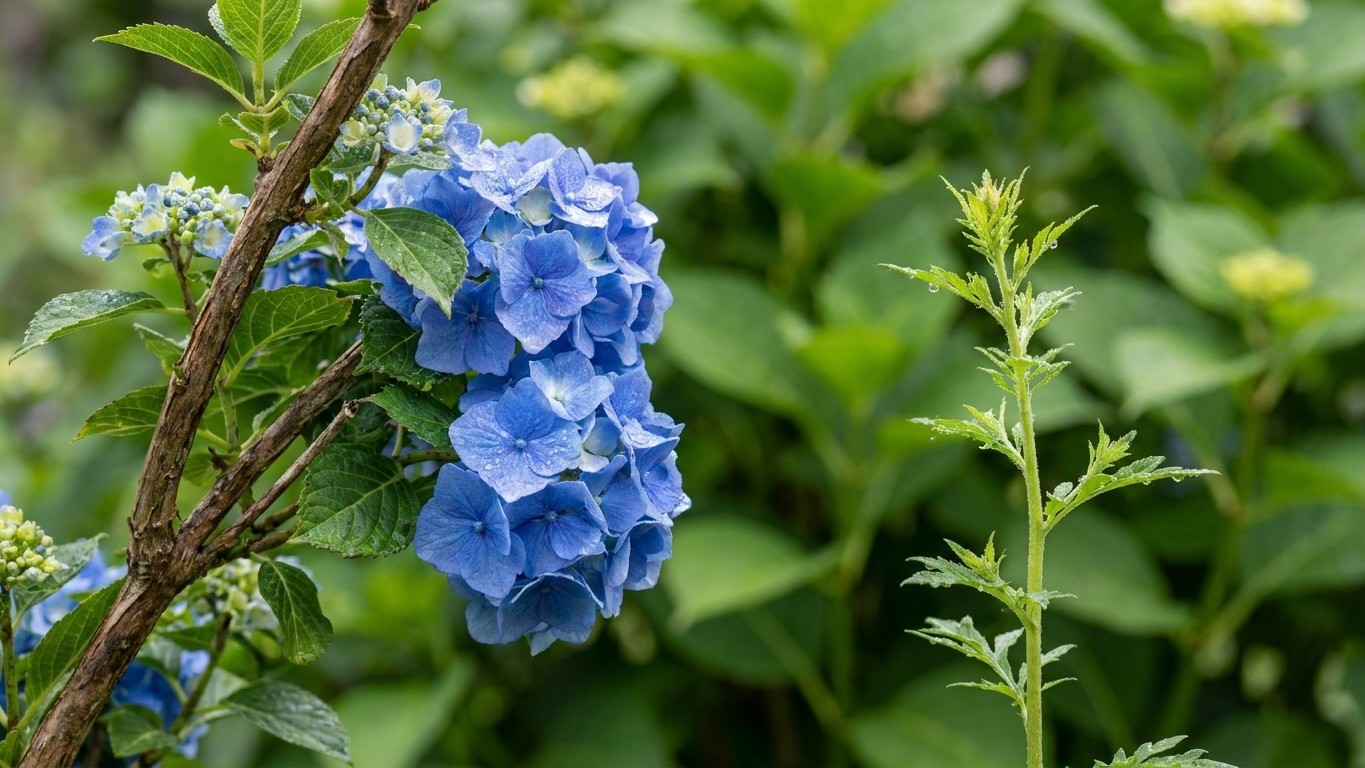

Panicle hydrangeas (Hydrangea paniculata) and smooth hydrangeas (Hydrangea arborescens) are the ones that make it through an Alaska winter, because they flower on new wood grown fresh each spring rather than on stems that have to survive the cold. Bigleaf hydrangeas (Hydrangea macrophylla), the kind most gardeners picture when they hear the name, mostly don’t hold up. Anchorage’s frost-free window runs roughly May 3 to May 12 for the last spring freeze and September 22 to October 1 for the first fall freeze, about 143 days, and that’s the real constraint driving which types work.
What this comes down to in Alaska
Based on the frost window measured at Anchorage (USW00026451), a hydrangea variety has to grow, harden off, and set flower buds inside a season that’s often shorter than 143 days once you subtract the slow, cool start typical of southcentral Alaska. That’s the whole test. Varieties that bloom on wood grown that same spring pass it easily. Varieties that need last year’s stems to have survived winter intact usually don’t, because Anchorage sits at the mild edge of a USDA hardiness range that spans 1a to 8a across the state (USDA Plant Hardiness Zone Map, 1991-2020 normals) — and even at that mild edge, stem dieback below the snow line is routine.
‘Little Lime’
A compact panicle hydrangea that stays under 5 feet and fills out fast because there’s less woody structure to rebuild each spring. It sets its cone-shaped flower heads on new growth well within a single Anchorage-length season, making it one of the more forgiving choices for a short yard bed or a container that gets moved against a wall for wind protection.
‘Quick Fire’
True to its name, this panicle type starts coloring earlier in the summer than most others in its family, which matters when the growing window closes in late September. Gardeners working with Anchorage’s frost dates get a real head start on bloom, since the plant isn’t racing the calendar the way a later-blooming panicle variety would be.
‘Annabelle’
A smooth hydrangea with enormous white mophead blooms, ‘Annabelle’ dies back to the ground in a hard winter and simply regrows from the root each spring, flowering on that new growth. That habit is exactly what makes it reliable here: there’s no old wood to lose, so an Anchorage winter doesn’t cost it a bloom season the way it would a bigleaf type.
‘Limelight’
A larger panicle hydrangea, often reaching 6 to 8 feet, with the same new-wood flowering habit as ‘Little Lime’ but more structure to fill in first. It still finishes within the season at Anchorage’s elevation and latitude, though it wants a slightly earlier start than the compact cultivars to look full by late summer.
‘Pinky Winky’
Another panicle variety, bred for two-toned blooms that shift from white to pink as the season goes on. Because it’s a bigger shrub, it needs more of the growing window to bulk up before flowering, which puts it near the edge of what a shorter-than-average Anchorage summer allows.
‘Endless Summer’
A bigleaf hydrangea marketed for reblooming on both old and new wood. In practice, the “old wood” half of that promise depends on stems surviving winter above the snow line, which is inconsistent even in Anchorage’s relatively mild pocket of the state. When those stems die back, the plant is forced to rely on new growth alone, and it often runs out of season before it flowers well. This is the cultivar where the line between “survives” and “actually blooms” gets blurry.
Working it out for your own garden
Start from the frost window itself rather than a fixed date, because Anchorage’s last spring freeze falls somewhere between May 3 and May 12, and that ten-day spread has to carry through the rest of the math. A panicle hydrangea like ‘Quick Fire’ needs roughly eight to ten weeks of steady new growth after the soil warms before it sets visible flower buds. Counting forward from the early end of the window, May 3 plus eight weeks lands around late June; from the late end, May 12 plus ten weeks lands around late July. Either way, that’s well ahead of the first fall freeze, which arrives between September 22 and October 1. The plant has margin to spare.
Run the same arithmetic for ‘Endless Summer’ and the picture changes. Because it leans on old wood that often didn’t survive the winter, it has to rebuild that structure from the base before it can even start the eight-to-ten-week clock the panicle types get to skip. Add those recovery weeks onto the same May 3-May 12 starting point and the earliest realistic bloom push lands in early-to-mid September, right against the first fall freeze window. Some years it squeaks by. Some years an early freeze at the front edge of that September 22 range cuts it off mid-bloom. That’s the difference between a variety that fits the season with room to spare and one that’s betting on a good year.
For a variety not covered above, the same method works: find how many weeks of new-wood growth it typically needs before flowering, count forward from May 3 and separately from May 12, and see where both estimates land relative to September 22 and October 1. If the later estimate still clears the earlier frost date, it’s a safe bet for Anchorage’s climate. If it’s cutting it close on either end, treat it as a container plant you can move under cover instead of a permanent border shrub.
What changes across the state
Anchorage’s frost window is the mildest reference point Alaska offers for hydrangeas, not the statewide norm. Move north into the Interior, around Fairbanks, and the growing season shortens considerably while winter lows drop into a noticeably colder part of the 1a-8a hardiness range, which squeezes even the fast-blooming panicle and smooth varieties. Move north again toward the Arctic coast and the numbers get harsh enough that outdoor hydrangeas of any kind stop being a realistic planting decision.
Southeast Alaska tells a different story. Juneau and Sitka sit inside a maritime influence off the Pacific that keeps winters milder than their latitude would suggest, closer to the warmer end of the state’s hardiness range than Anchorage is. That coastal buffering is why gardeners there sometimes get away with a bigleaf hydrangea that would struggle in Anchorage’s more continental winter swings.
Elevation matters inside all of these regions too. A yard a few hundred feet higher than the valley floor, or one that sits in a cold-air drainage pocket, can run noticeably colder overnight than a low-lying, wind-sheltered spot nearby, even at the same latitude. None of this changes which species of hydrangea survives, panicle and smooth types remain the safer bet everywhere in the state, but it does change how much margin a gardener has and how far south the bigleaf types can be pushed before they stop being worth the risk.
The mistakes this state punishes
The most common misstep is trusting a warm stretch in April or early May and planting before the soil itself has caught up. Air temperature climbs faster than the ground does in southcentral Alaska, and a hydrangea set into cold, still-thawing soil sits in transplant shock right when it should be building the root system it needs for the short season ahead. Wait until the soil is workable and warming, not just until the air feels warm.
The second mistake is choosing a bigleaf cultivar because it’s the familiar mophead shape from a garden magazine, then being surprised when it dies back every winter and skips flowering. If old-wood survival is the deciding factor for bloom, and Anchorage winters make that survival inconsistent, the plant was never a good match for the site. A panicle or smooth hydrangea delivers a reliable bloom on the same footprint without that gamble.
The third is pushing a large, slow-to-establish panicle variety like ‘Pinky Winky’ into a spot with poor sun exposure or heavy shade, then wondering why it never fills in before frost. In a season this tight, every week of lost growth from a shaded corner is a week the plant doesn’t get back. Give the bigger cultivars full sun and the earliest reasonable start the frost window allows.
Checking this against your county
Anchorage’s frost dates and the state’s 1a-8a hardiness range are a starting point, not a guarantee for any specific yard. Coastal exposure, elevation, and local windbreaks all shift the real numbers for a given property. Before committing a bigleaf hydrangea to open ground or picking a planting date off this page alone, check with the University of Alaska Fairbanks Cooperative Extension Service for local guidance tied to your county.
Common questions
Can bigleaf hydrangeas survive winter in Anchorage?
They can survive as a plant, in the sense that the roots often live on even when the stems die back to the snow line. What they struggle with is reliable blooming, since much of their flower production depends on old wood that doesn’t always make it through winter intact.
What hardiness zone is Anchorage in for hydrangeas?
Alaska spans USDA hardiness zones 1a to 8a statewide, and Anchorage sits toward the milder end of that range, though the FACTS behind this page don’t specify Anchorage’s exact zone number within it. Treat the statewide range as context, not a substitute for a local zone lookup.
Do hydrangeas bloom the same year they’re planted in Alaska?
Panicle and smooth varieties often can, since they flower on new growth and Anchorage’s roughly 143-day frost-free window usually gives them enough time. A young or newly transplanted bigleaf hydrangea is far less likely to bloom its first year, since it’s establishing roots at the same time it would otherwise be building flower wood.
Which hydrangea is hardiest for Fairbanks or the Interior?
The same species that work in Anchorage, panicle and smooth hydrangeas, remain the better choice in the Interior, but this page’s figures are drawn from an Anchorage reference station and don’t cover Fairbanks’ shorter season or colder winter lows directly. Confirm local timing with the Cooperative Extension Service before planting.