
Alberta’s rose season runs on a tight clock: the mean frost-free window is just 117 days, bracketed by a last spring frost that averages May 21 and a first fall frost that averages September 16 at the Calgary Int’l A station. That’s the frame everything else in this guide has to fit inside, from which roses you buy to how you tuck them in for winter.
When to plant Roses in Alberta
The mean last frost date of May 21 comes from Environment and Climate Change Canada’s 1981-2010 climate normals for the Calgary Int’l A station, and it’s worth being blunt about what that number actually means: it’s a mean, not a promise. In roughly half of all years on record, frost showed up later than May 21. Treat it as the midpoint of a risk window, not a green light, and push your planting date a few days past it if the forecast looks unsettled. Northern Alberta, the Peace region, and higher-elevation foothill towns run weeks behind Calgary’s average, so a gardener in Grande Prairie or Rocky Mountain House should expect their own safe window to open later than what this single station reports.
Bare-root versus potted, and why seed starting rarely applies
Almost nobody grows roses from seed in a home garden, and Alberta’s short season is exactly why. Species rose seed typically needs ten to twelve weeks of cold stratification before it will even germinate, and seedlings can take two to four years to reach their first bloom. With only 117 frost-free days to work with, that math simply doesn’t pencil out for most gardeners. The practical routes are bare-root roses (dormant, shipped or sold in late winter) and potted nursery stock that’s already leafed out by the time it reaches garden centers.
Bare-root roses go into the ground as soon as the soil can be worked and the worst frost risk has passed, generally in the days just after that mean May 21 date. Potted roses need a shorter hardening-off period first, since greenhouse-grown foliage is soft and sunburns or frost-nips easily. Set pots outside in a sheltered, partly shaded spot for seven to ten days, bringing them in or covering them if a cold night is forecast, before moving them into their permanent bed. If you’re rooting your own cuttings under lights indoors, start them in late winter, expect six to eight weeks before they’re sturdy enough to pot up, and run them through the same hardening-off routine before transplanting.
Soil and site preparation
Roses want at least six hours of direct sun, and morning sun matters more here than people assume: it dries dew off the leaves quickly, which cuts down on the fungal problems that thrive in prolonged leaf wetness.
Sun, soil texture, and drainage
Soil comes second only to light. Roses dislike wet feet, and Alberta gardeners working heavy clay will need to loosen and amend it well before planting rather than trying to fix things at planting time. A simple drainage check works fine: dig a hole about a foot deep, fill it with water, and see how long it takes to disappear. If water is still sitting there after several hours, the bed needs coarse sand or compost worked in, or a raised bed built up instead.
Bed prep timeline before planting day
Do the heavy amending weeks ahead of planting, not the same afternoon. Working in aged compost or well-rotted manure two to three weeks before you plant gives it time to settle and start integrating into the existing soil structure, rather than leaving a loose pocket around fresh roots. When it’s time to plant, dig the hole roughly twice the width of the root ball or root spread, and space plants two to three feet apart for most shrub and hybrid tea types, wider for larger shrub roses that will spread with age. Crowded roses trap humid air between their leaves, which is one of the easiest ways to invite fungal disease later in the season.
Varieties that suit Alberta
Given a short season and winters that regularly test a plant’s hardiness, three traits matter more than anything else here: how much winter dieback a variety tolerates, how resistant its foliage is to black spot and powdery mildew, and whether it grows on its own roots or is grafted onto a different rootstock.
Traits that matter in a short season
Own-root roses have a real advantage in a climate where cane dieback happens: if the top growth is killed back by a hard winter, what regrows from the base is still the variety you planted. Grafted roses that die back to the ground instead send up growth from the rootstock, which is usually a different, often less ornamental rose entirely. Cold-hardy shrub rose lines bred specifically for northern prairie conditions, along with rugosa roses, tend to need the least winter fuss and shrug off short seasons better than hybrid teas, which were bred for milder climates and generally need serious winter protection here to survive at all.
| Rose type | Winter hardiness | Disease resistance | Own-root or grafted | Best use |
|---|---|---|---|---|
| Rugosa roses | Very high | Strong against black spot | Usually own-root | Hedges, tough sites, hips for late-season interest |
| Cold-hardy shrub roses | High | Generally good | Often own-root | Repeat bloom with minimal winter protection |
| Floribundas | Moderate | Variable by cultivar | Often grafted | Mass color in borders, needs some winter cover |
| Hybrid teas | Low | Variable, often mildew-prone | Usually grafted | Cut flowers, requires committed winter protection |
| Climbing roses | Variable | Variable | Often grafted | Trellises and structures, slower to establish |
No provincial or federal agency in these facts recommends specific cultivars, so treat any variety name at the garden center as a starting point for research, not an endorsement, and ask staff about that specific plant’s known winter performance in your district before buying.
What to plant alongside
Some companion planting for roses holds up, some is closer to folklore.
Good neighbors
Low, drought-tolerant groundcovers like catmint or lavender genuinely help: they draw pollinators, don’t compete hard for water once established, and cover bare soil at the base of the rose without crowding its canopy. Alliums such as chives and garlic are commonly planted near roses on the theory that they repel aphids, but the evidence for that specific effect is thin at best; plant them for their own sake, not as pest control. Marigolds have real, documented value against certain root-knot nematodes in vegetable beds, but that’s a different pest problem than what troubles roses, so don’t expect them to solve an aphid or black spot issue.
Plants to keep away
Avoid planting roses tight against dense hedges or large shrubs that will compete for the same water and nutrients while also blocking airflow, since still, humid air around the leaves is exactly what black spot and powdery mildew need to spread. Keep roses at a distance from other plants that share the same fungal vulnerabilities, like phlox or bee balm, if they’ll be crowded together, since a disease outbreak on one can jump easily to the other when they’re touching.
Watering, feeding and support
Roses want consistent moisture, not frequent shallow sips.
Watering and mulching rhythm
Aim for the equivalent of an inch of water a week, counting rainfall, delivered as a deep soak rather than daily light watering. Water at the base of the plant instead of overhead, since wet foliage overnight is one of the main triggers for fungal disease. A two to three inch layer of shredded bark or straw mulch around the base holds that moisture in, moderates soil temperature swings, and later in the season becomes part of the winter insulation.
Feeding, staking, and pruning through the season
Feed with a balanced fertilizer as new growth starts in spring, and again after the first flush of bloom fades. Stop feeding by mid-to-late summer, well before the mean first frost, so new growth has time to harden off rather than staying soft and vulnerable when cold arrives. Tall shrub and climbing types often need staking or a trellis in Alberta’s open, windy sites, since a whipping wind can loosen roots before they’ve fully anchored. Prune in spring, after frost risk has mostly passed, cutting back winterkilled wood to where the cane shows live, green tissue. Deadhead spent blooms through summer to keep repeat-flowering varieties producing, but stop deadheading in late summer and watch for suckers emerging below the graft union on grafted plants, removing them promptly since they draw energy away from the variety you actually want.
Common problems
Most rose trouble in Alberta traces back to either a fungal disease favoring humid, still air, or one of a handful of insects.
Diseases to watch
Black spot shows up as dark, roughly circular spots on leaves, often ringed with yellowing tissue, and gets worse in wetter years or where plants are crowded and airflow is poor. Pick off and dispose of infected leaves rather than composting them, and space plants to let air move. Powdery mildew coats buds and new growth in a white, dusty film, and tends to appear when cool nights follow warm days, a combination that shows up regularly on the prairies. Prune for airflow and avoid overhead watering to keep it in check. Rust, orange pustules on the underside of leaves, is less common in Alberta’s generally dry climate but can appear in a wet season.
The pests on this list
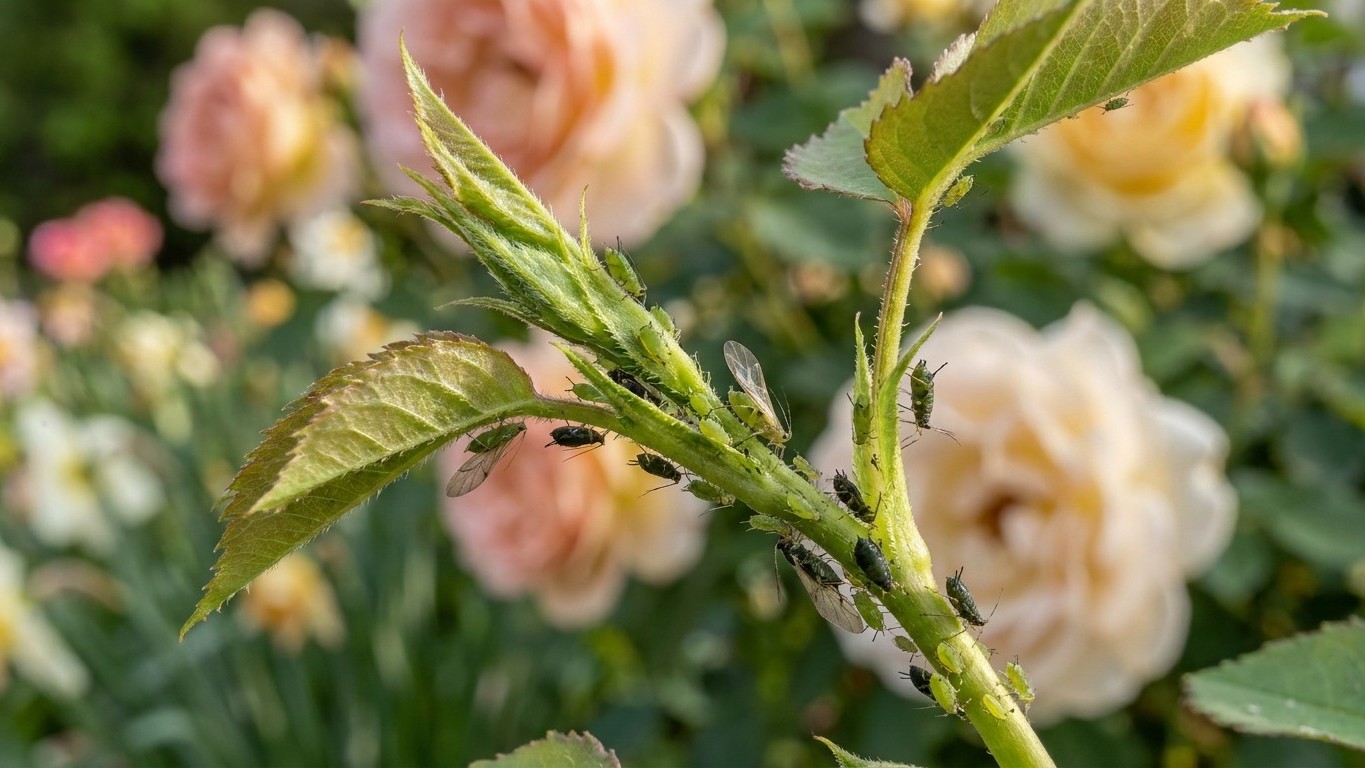
Montana State University Extension’s urban integrated pest management program lists brown marmorated stink bug, grasshoppers, miller moths, social wasps, and thrips as pests found just south of the Alberta border. That’s a state extension list for a neighboring US state, not a provincial one, and no Alberta agency in these facts publishes an equivalent home-garden roster, so treat these as pests worth watching for rather than a confirmed local ranking. Thrips are the one most directly tied to roses: they hide inside buds and streak or distort petals as they feed, showing up as tan or brown flecking on otherwise healthy blooms. Grasshoppers chew ragged holes in leaves and buds, often worse in dry years following a mild winter. Aphids cluster on tender new growth and bud tips; a strong jet of water or encouraging ladybugs usually keeps them from becoming a real problem. Social wasps are mostly a nuisance rather than a threat to the plant itself. Contact your provincial agriculture office for identification if something on your roses doesn’t match these descriptions.
Ripening before the frost comes back
Roses don’t ripen fruit the way a tomato or squash does, but the same underlying question applies: does the plant have enough season left to do what you’re asking of it before the first fall frost, on average September 16, shuts things down. The 117-day frost-free window between May 21 and September 16 is what you’re working with, and unlike an annual vegetable, no published days-to-maturity figure exists for rose cultivars, so there’s no clean countback arithmetic to hand you here.
The arithmetic for your own district
What can be said with the numbers available: a bare-root or potted rose planted right after the mean last frost has the full 117-day average window to establish roots, push top growth, and typically produce at least one bloom cycle, often a second on repeat-flowering types, before growth needs to start hardening off for winter. Own-root cuttings started from scratch that same spring are working with a much thinner margin, since they’re building both a root system and cold hardiness in one short season; giving them a first winter in a sheltered pot rather than the open ground is a reasonable hedge. Anything that buys extra weeks on either end, potted stock given a head start under cover before transplant, a cold frame or row cover extending bloom past the average frost date in fall, or dark mulch warming soil for earlier root activity in spring, effectively stretches that 117-day figure without changing the calendar itself. Because that number comes from a single Calgary station, a gardener in a district with a documented shorter season should shrink this math accordingly rather than borrowing Calgary’s figure outright.
Harvest and end of season
Cut blooms in early morning when stems are full of moisture, using sharp bypass pruners angled just above an outward-facing bud, and set cut stems in water immediately to condition them before bringing them indoors.
Closing down for winter
Deadheading spent blooms through summer keeps repeat bloomers producing, but stop deadheading roughly a month to six weeks before the mean first frost date of September 16, letting any remaining blooms form hips instead. That signals the plant to shift toward dormancy rather than pushing tender new growth that won’t have time to harden off. As frost approaches, water deeply once more before the ground freezes, then build winter protection once a couple of hard frosts have knocked the plant properly dormant: mound soil, mulch, or both over the graft union to a depth of eight to ten inches for grafted roses, and consider wrapping or caging less hardy shrub types. Save major pruning for spring; cutting back hard in fall only invites fresh growth that has no chance of surviving what comes next. Remember that September 16 is itself a mean date from a single Calgary station, so a first frost arriving earlier, especially further north or at higher elevation, isn’t unusual.
Local help
Frost dates, soil conditions, and pest pressure all shift from one Alberta county to the next, and a single Calgary weather station can’t speak for the whole province. For county-level planting dates, soil testing, and local variety performance, Alberta’s agriculture and irrigation office is the right first call.
Common questions
Can roses survive Alberta winters without protection?
Some very hardy shrub and rugosa types can come through with minimal fuss, but most grafted roses, and especially hybrid teas, need mounded soil or mulch over the graft union to survive a typical prairie winter.
What’s the best month to plant roses in Alberta?
Most gardeners plant in the days following the mean last frost date of May 21, though that date is a midpoint, not a guarantee, and northern or higher-elevation districts should plan on a later window.
Do own-root roses do better than grafted roses in Alberta?
Own-root roses tend to recover truer to variety after winter dieback, since regrowth comes from the plant’s own roots rather than a different rootstock, which makes them a practical choice where hard winters are routine.
Can I grow roses from seed in Alberta?
It’s technically possible with species roses, but the ten to twelve weeks of cold stratification needed plus two to four years to first bloom make it impractical for most home gardeners working with a 117-day season.
How do I know if my area has a shorter season than Calgary’s?
Watch your own local frost history and soil-warming pattern in spring; if hard frost regularly lingers past mid-May or returns before mid-September in your district, plan your rose calendar around that instead of the Calgary averages cited here.