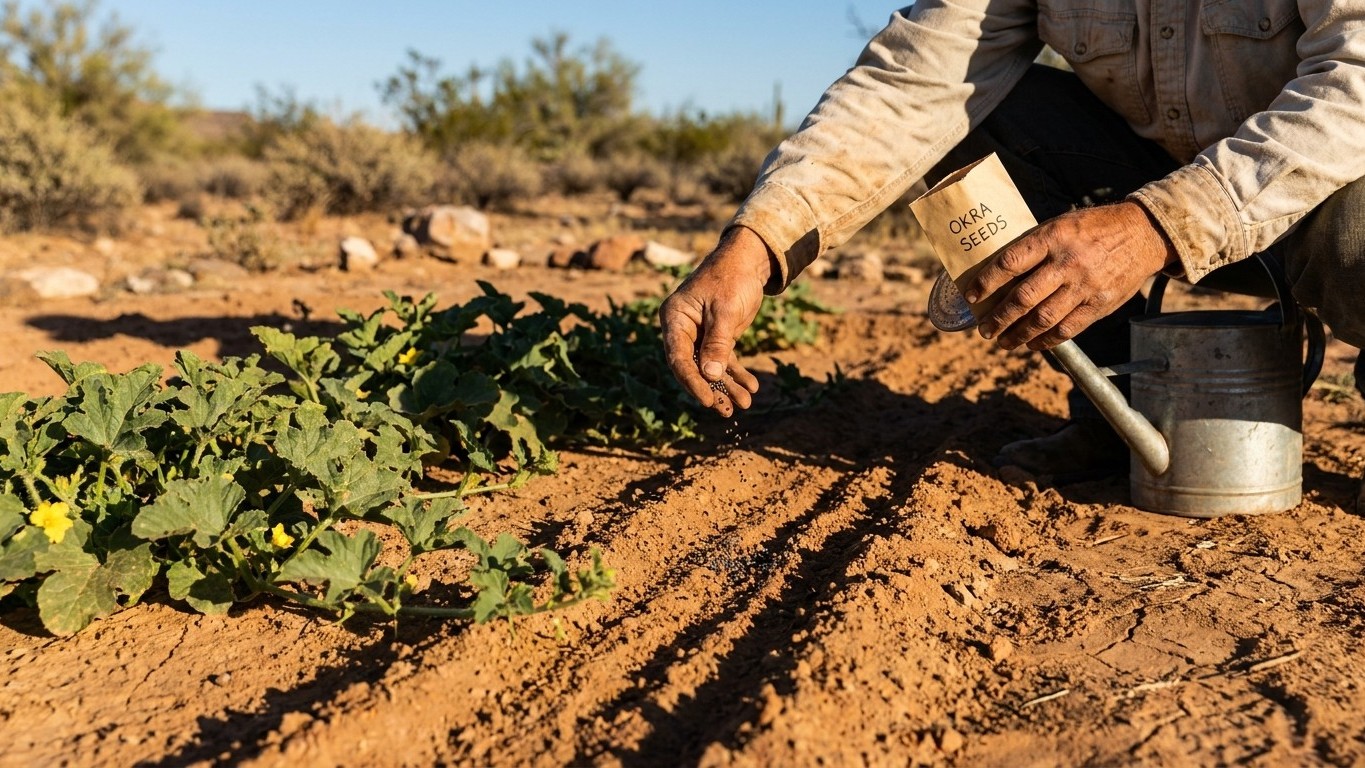

Most of Arizona has no real frost calendar in August, and that’s precisely what makes the month tricky. In the low desert, the limiting factor isn’t cold, it’s heat that hasn’t broken yet, so August is mostly a holding-and-prepping month rather than a planting-everything month. In the high country, August is the tail end of an easy growing window, and elevation, not the calendar, decides how much time is left.
What goes in the ground in August

Arizona doesn’t run on a frost-based planting calendar the way most of the country does. NOAA’s climate normals for the Phoenix station show a freeze in only 6 of 30 recent springs, and the recorded frost-free season there runs the full 365 days. That single fact changes everything about how to read this month: in the low desert, cold isn’t what stops you from planting in August. Heat is. Blossoms drop and fruit refuses to set when nights stay too warm for too long, and that’s the real constraint driving decisions this month, not a frost date on a chart.
So what actually goes in the ground? In the low desert (Phoenix, Tucson, Yuma, and similar low-elevation valleys), late August is when growers start easing back into direct sowing as the worst of the heat begins to loosen its grip. Okra, black-eyed peas, and heat-tough melon varieties can still go into open soil early in the month if they’re already established or being succession-sown. By the back half of August, it’s reasonable to direct-sow the first round of fall crops meant to mature once temperatures drop, things like winter squash and pumpkins timed for a fall harvest, and beans for a quick crop before it cools further.
Arizona’s high country is a different climate entirely, and it does freeze hard, sometimes early. There’s no published frost-window figure here for Flagstaff or the White Mountains specifically, so don’t treat any date you see elsewhere as settled. What’s safe to say: at higher elevations, August is often still inside the growing season, and gardeners there can keep direct-sowing quick-maturing greens, root vegetables, and cold-hardy brassicas while watching nighttime lows closely as the month goes on.
| Region | What August means | Planting action |
|---|---|---|
| Low desert (under roughly 2,500 ft) | Heat, not frost, is the constraint; 365-day frost-free record at the Phoenix station | Hold most new plantings early; direct-sow heat-tough crops and fall squash/beans late in the month |
| Middle elevations | Cooling nights begin; conditions vary widely by site | Watch local extension guidance rather than a fixed date |
| High country (above roughly 6,000 ft) | Still within growing season, but freezes do occur and can arrive early | Continue quick crops; monitor nighttime temperatures |
What to start under cover
In the low desert, the useful mental model isn’t “count back from frost”, it’s “count back from when the heat finally breaks.” Because Phoenix effectively has no reliable fall freeze on record, the constraint on starting seeds under cover is the opposite of most of the country: you’re waiting for things to cool enough for seedlings to survive transplant shock, not racing to beat a freeze. Tomatoes, peppers, and eggplant destined for a fall harvest are commonly started indoors or under shade cloth in August so they’re a manageable size once outdoor conditions ease, typically several weeks out. The exact date that shift happens isn’t published in fixed form here, since it depends on how the season is behaving, so treat any seed-starting math as an estimate you’ll refine by watching the thermometer, not a locked-in schedule.
Two mistakes show up every year. Start too early under cover in relentless heat, even with shade cloth, and seedlings stretch, get leggy, and become rootbound in their trays before it’s cool enough to plant them out, weakening them right when they need strength to establish. Start too late, and there isn’t enough mild weather left before winter chill (in the high country) or the next heat wave (in the desert) to bring a crop to harvest.
In Arizona’s higher elevations, the backward count works closer to how it does elsewhere: seedlings started under cover now are aimed at squeezing in one more harvest, or at getting a head start on crops that will finish as temperatures drop through fall. Because no specific fall-freeze date for the high country appears in verified records here, the safest approach is starting slightly conservative and checking local extension guidance for that county’s typical pattern rather than assuming a number.
What is ready to pick
August harvests in the low desert lean toward things that shrug off heat. Okra, if it’s already established, keeps producing steadily and should be picked young and often, since pods that go much past a few inches get woody fast. Black-eyed peas and heat-tolerant melon varieties planted earlier in summer are finishing up. One harvest that surprises newer desert gardeners: prickly pear fruit, the tuna, ripens during the summer monsoon stretch and is commonly gathered by hand (with care for the fine spines) for jelly and syrup, a genuinely regional crop most garden guides for other states never mention.
Peppers and eggplant that survived the worst of the early summer heat often start recovering and setting fruit again as August progresses, especially once monsoon humidity and rain arrive and moderate daytime extremes somewhat. It’s worth checking these plants for new blossoms rather than assuming they’re done for the season.
In the high country, August is closer to a normal summer harvest window: quick-maturing greens, peas, and early root crops planted earlier in the season are likely coming in. Anyone storing crops from earlier plantings, garlic or onions cured in early summer, for instance, should check them now for soft spots or sprouting before they’re tucked away for longer storage, since a single rotting bulb in a bin can spread trouble to its neighbors.
The jobs that matter this month
Heat management is the single biggest job in the low desert in August, and it pays off directly in what survives to fall. Shade cloth over tender crops, deep and infrequent watering rather than frequent shallow sprinkles, and a thick layer of mulch to keep root zones cooler all reduce stress on plants that are barely hanging on through the hottest stretch of the year. Watering rhythm matters more than volume: roots trained to chase deep water develop resilience that shallow daily watering never builds.
Pest and soil work worth doing now
Spider mites and whiteflies multiply fast in dry heat, so scouting the undersides of leaves regularly catches infestations before they explode. August’s intense sun also makes it a genuinely good window for soil solarization, covering cleared beds with clear plastic to bake out weed seeds and some soil pathogens before fall planting, a technique that works far better here than in milder climates simply because the heat is so extreme.
This is also the month to start clearing spent summer crops and turning that space over for fall, ordering seed for cool-season vegetables before popular varieties sell out, and giving compost piles a turn since the heat accelerates breakdown if there’s enough moisture. In the high country, dormant-season pruning isn’t due yet, but late-summer maintenance, checking irrigation lines, patching fencing before fall storms, and getting a soil test done ahead of fall amendments, all fits naturally into this window.
What not to do in August
The classic low-desert mistake is treating a stretch of monsoon cloud cover or a slightly cooler morning as a sign the heat has broken and it’s safe to set out tender transplants. It hasn’t. A few mild days followed by a return to triple-digit highs will scorch or outright kill young plants that were coaxed into premature confidence. Wait for a sustained shift, not a single comfortable afternoon.
Heavy nitrogen feeding during peak heat stress is another common error. Plants already struggling to manage water loss and temperature don’t need a growth push, they need support to survive; a nitrogen surge at the wrong moment can force soft new growth that wilts and burns faster than the plant can protect it. Hold off on heavy feeding until conditions moderate.
Shallow, frequent watering is a third trap, especially with drip systems left on short daily cycles out of habit. That pattern trains roots to stay near the surface, exactly where soil temperatures spike hardest in August sun. Longer, less frequent soakings that push moisture deeper build the kind of root system that actually survives an Arizona summer.
In the high country, the equivalent error is uncovering cold frames or removing protective cloth too early after a warm stretch, only to have temperatures drop again later in the month. Since no fixed fall-freeze date is published here for those elevations, erring toward keeping protection in place a bit longer costs little and prevents losing a crop to a snap the calendar didn’t warn about.
Checking this against your own county
Arizona’s USDA hardiness zones span from 4b in the high country to 10b in the low desert, a wider range than most entire regions of the country cover, so a statewide answer for August is a starting point, never an instruction. Elevation alone can shift growing conditions by weeks between two towns barely an hour apart. Before committing seed or transplants to the ground, check current conditions and local guidance through the University of Arizona Cooperative Extension, which maintains county-level programs suited to exactly this kind of elevation-driven variation.
Common questions
Does Arizona really have no frost in August?
In the low desert, essentially yes. NOAA’s records for the Phoenix station show a frost-free season of 365 days and a freeze in only 6 of 30 recent springs, meaning August frost there simply isn’t part of the picture. Higher elevations are a different story and do experience real freezes, just not on a fixed schedule published here.
Why does heat matter more than frost for planting decisions?
Because extreme heat stops fruit from setting on many warm-season crops even when the plant itself survives, effectively pausing production for weeks or months. In the low desert, that heat pause plays the role frost plays in colder states, as the main event gardeners plan around.
Is August too late to start a fall garden in Arizona?
Not in the low desert. August is typically when fall crops are started indoors or under cover, timed to be transplant-ready once the worst heat eases later in the season. In the high country, quick-maturing crops can still go in, though the window narrows as the month progresses.
Should I trust a single statewide planting date for Arizona?
No. With hardiness zones ranging from 4b to 10b across the state, a date that works in Phoenix can be meaningless in Flagstaff. Local extension guidance, tied to actual elevation and county conditions, is a more reliable reference than any single statewide calendar.