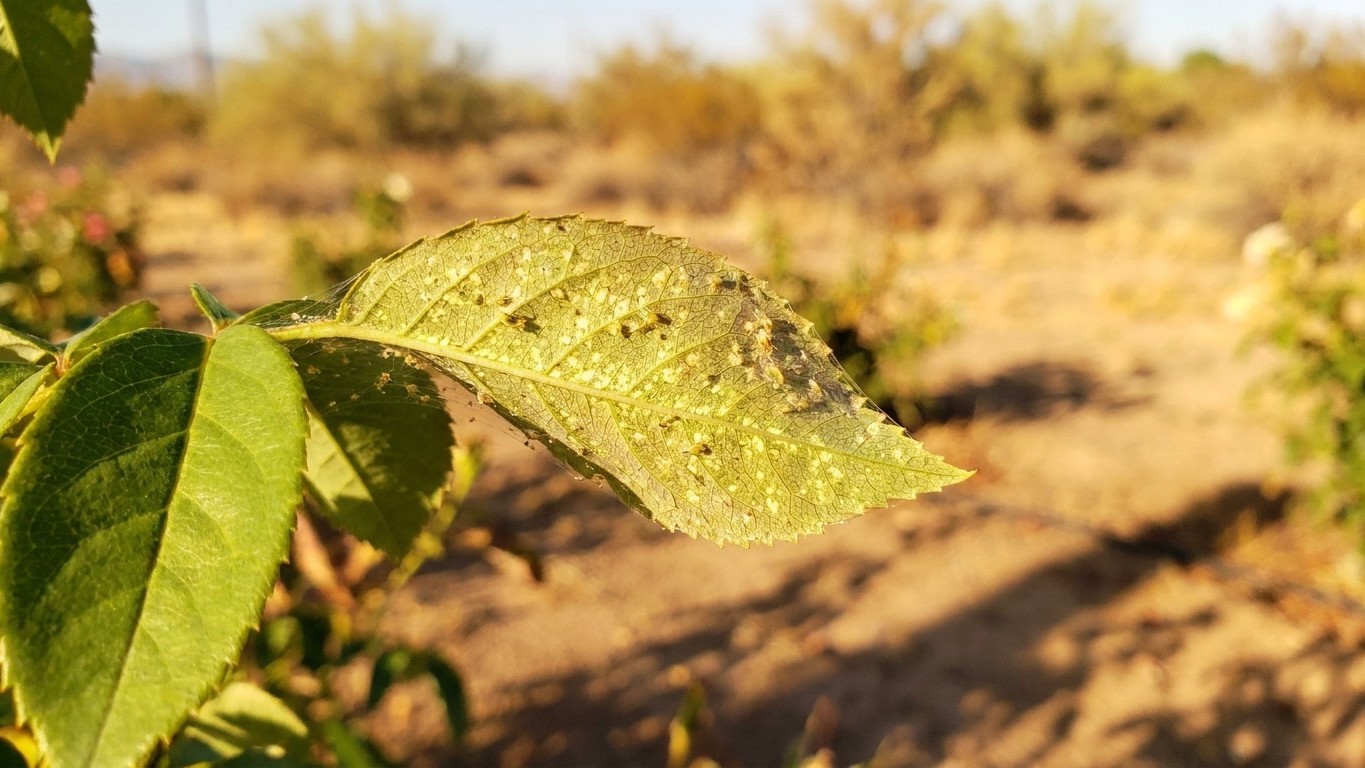

Spider mites hit hardest in Arizona from April through June, and again in September and October, when daytime temperatures sit between 80°F and 100°F and humidity drops below 30%. That combination, hot and bone-dry, lets a single female produce a new generation every 5 to 7 days. Cool down to below 60°F or push humidity above 50%, and reproduction slows dramatically. Understanding that window is the difference between catching an infestation early and watching it wipe out a rose bed in two weeks.
When Spider Mites Show Up in Arizona

Phoenix, Tucson, and the low desert valleys see two distinct surges. The spring wave builds as winter annuals die back and new growth flushes on citrus, roses, and vegetable starts. Mites move from dying weeds onto whatever green tissue is left standing. The fall wave follows the first stretch of dry heat after monsoon season ends, typically mid-September, when plants stressed by the abrupt shift from humid to arid become easy targets.
Higher elevation towns like Flagstaff or Prescott run a different calendar. Their mite pressure peaks later, June through August, tracking the shorter, milder dry season at 5,000 to 7,000 feet. Homeowners in those areas often assume they’re safe because desert pests “stay in the valley.” They don’t. Twospotted spider mites (Tetranychus urticae) and their cousins adapt to whatever microclimate they’re given, including irrigated lawns and shaded courtyards that hold heat longer into the evening.
Why Desert Heat Accelerates Infestations
Spider mites aren’t insects. They’re arachnids, related to ticks and spiders, and their biology runs on a different clock than most garden pests. Research from the University of Arizona Cooperative Extension notes that twospotted spider mite populations can double in as little as three days under ideal desert conditions, versus two to three weeks in temperate climates. That speed is why a plant can look fine on a Monday and show visible bronzing by Friday.
Dust plays a role too. Arizona’s dry, unpaved roadsides and construction sites throw fine particulate into the air constantly, and that dust settles on leaf surfaces. Dusty foliage suppresses the natural predators that would otherwise keep mite populations in check, particularly predatory mites and lacewing larvae. A plant near a gravel driveway or a dirt lot is statistically more likely to host a heavy mite colony than the same species planted in a landscaped, irrigated yard.
Which Arizona Plants Get Hit Hardest
Not every yard plant is equally vulnerable. Citrus trees, a staple in Phoenix and Tucson backyards, are frequent targets, especially lemon and grapefruit varieties stressed by inconsistent watering. Roses run a close second; extension agents across Maricopa County field more spider mite questions about roses than almost any other ornamental. Tomatoes, beans, and cucumbers in vegetable gardens also draw heavy pressure once daytime highs cross 95°F.
Palo verde and mesquite trees, oddly, tend to resist infestation better than exotic ornamentals. Native desert species evolved alongside local mite populations and carry some natural tolerance. That’s a point worth remembering when planning a low-maintenance yard: sticking closer to native and desert-adapted plants doesn’t just save water, it reduces one more pest headache.
| High-risk plants | Roses, citrus, tomatoes, beans, marigolds, junipers |
| Lower-risk plants | Palo verde, mesquite, agave, most succulents |
Spotting an Infestation Before It Spreads
The first sign is almost never a visible mite. It’s a change in leaf color. Stippling, tiny pale or yellow speckles scattered across the leaf surface, shows up before webbing does. Hold a piece of white paper under a suspect branch and tap it firmly. If tiny specks fall and start crawling, or if you see them moving under a magnifying glass, that’s your confirmation.
Webbing is the unmistakable late-stage marker, usually appearing on the undersides of leaves and in the crotches between stems. By the time webbing is visible to the naked eye, the colony has often been established for two to three weeks. Leaves may bronze, curl, or drop entirely. On citrus, a heavy infestation can cause premature fruit drop, which matters if you’re counting on a home harvest come winter.
The Difference Between Spider Mite Damage and Sunburn
Arizona gardeners frequently mistake mite stippling for standard desert sun scald, and the confusion delays treatment. Sunburn tends to appear on the side of the plant facing west or south, following a consistent directional pattern, and it doesn’t spread day to day. Mite damage shows up randomly across the plant and worsens visibly within a week if untreated. When in doubt, the paper test settles it in under a minute.
What Actually Stops Spider Mites in Arizona
Water is the single most effective, most overlooked tool against spider mites in a desert climate. Because these pests thrive in low humidity, a strong, direct spray of water on the undersides of leaves, done every two to three days during peak season, physically knocks mites off the plant and disrupts their webbing. It also raises humidity around the foliage just enough to slow reproduction. This costs nothing and works well on roses, citrus, and vegetable plants when caught early.
For established infestations, horticultural oil and insecticidal soap remain the most reliable low-toxicity options. Both work by disrupting the mite’s outer coating rather than through nerve poisons, which matters because mites build resistance to conventional pesticides fast, sometimes within a single season. Apply either in the early morning or evening, never during peak afternoon heat, since oils and soaps can burn foliage when combined with intense Arizona sun. Full coverage of leaf undersides is non-negotiable; missing even one side of a leaf lets the colony rebuild within days.
Predatory mites, sold commercially as biological control agents, offer a longer-term fix for persistent problems, particularly in citrus groves and larger rose gardens. Species like Phytoseiulus persimilis feed almost exclusively on spider mites and can be released directly onto affected plants. They work best when introduced before populations explode, since predator mites can’t multiply fast enough to catch up once a colony has fully bloomed.
When Broad-Spectrum Pesticides Backfire
Spraying a general insecticide on a mite problem often makes things worse. Broad-spectrum products kill off the predatory insects and mites that naturally suppress spider mite populations, while surviving mites reproduce fast enough to rebound within a week, now with fewer natural enemies around. Extension entomologists across the Southwest have documented this “pesticide-induced outbreak” pattern repeatedly, particularly with pyrethroid sprays applied to ornamental shrubs. If a treatment is labeled for general insect control rather than specifically for mites, it’s the wrong tool for this job.
Preventing Spider Mites Before They Establish
Consistent, deep watering matters more in Arizona than almost anywhere else in the country. Plants under drought stress produce chemical signals that actually attract spider mites, and stressed leaf tissue is easier for mites to pierce and feed on. Checking irrigation timers monthly, especially as seasonal watering needs shift between the spring dry period and monsoon humidity, closes off one of the biggest invitations mites get.
Dust control around vulnerable plants helps too. Hosing down foliage near gravel paths, dirt lots, or unpaved driveways once a week during dry months removes the fine particulate that suppresses natural predators. It’s a small habit that pays off disproportionately given how much airborne dust the low desert generates during a typical dry spring.
Spacing plants to allow airflow reduces the still, hot microclimates mites favor. Roses and vegetable plants packed too close together trap heat and block the kind of air movement that would otherwise disperse mites drifting on wind currents from neighboring yards. A gap of even a foot or two between susceptible plants can measurably lower colonization rates during peak season.
- Inspect leaf undersides weekly from April through June and again in September
- Water deeply and consistently rather than shallow, frequent sprinkles
- Hose down dusty foliage near unpaved surfaces once a week
- Reserve chemical treatment for confirmed infestations, not general prevention
Arizona’s monsoon season, running roughly late June through September, offers a natural reprieve most homeowners don’t recognize as such. The jump in humidity during active monsoon weeks can knock mite populations down on its own, without any intervention. That’s also why the fall surge hits so hard: once the rains stop and humidity crashes back toward single digits, any mites that survived the summer rebound fast on plants that spent weeks acclimating to wetter air. Watching the humidity forecast, not just the temperature, gives a more accurate read on when to step up inspections than the calendar alone.
Related guides
- Spider mites in California: When It Shows Up and What Stops It
- Spider mites in Utah: When It Shows Up and What Stops It
- Spider mites in British Columbia: When It Shows Up and What Stops It
- Spider mites in Colorado: When It Shows Up and What Stops It
- Spider mites in Georgia: When It Shows Up and What Stops It