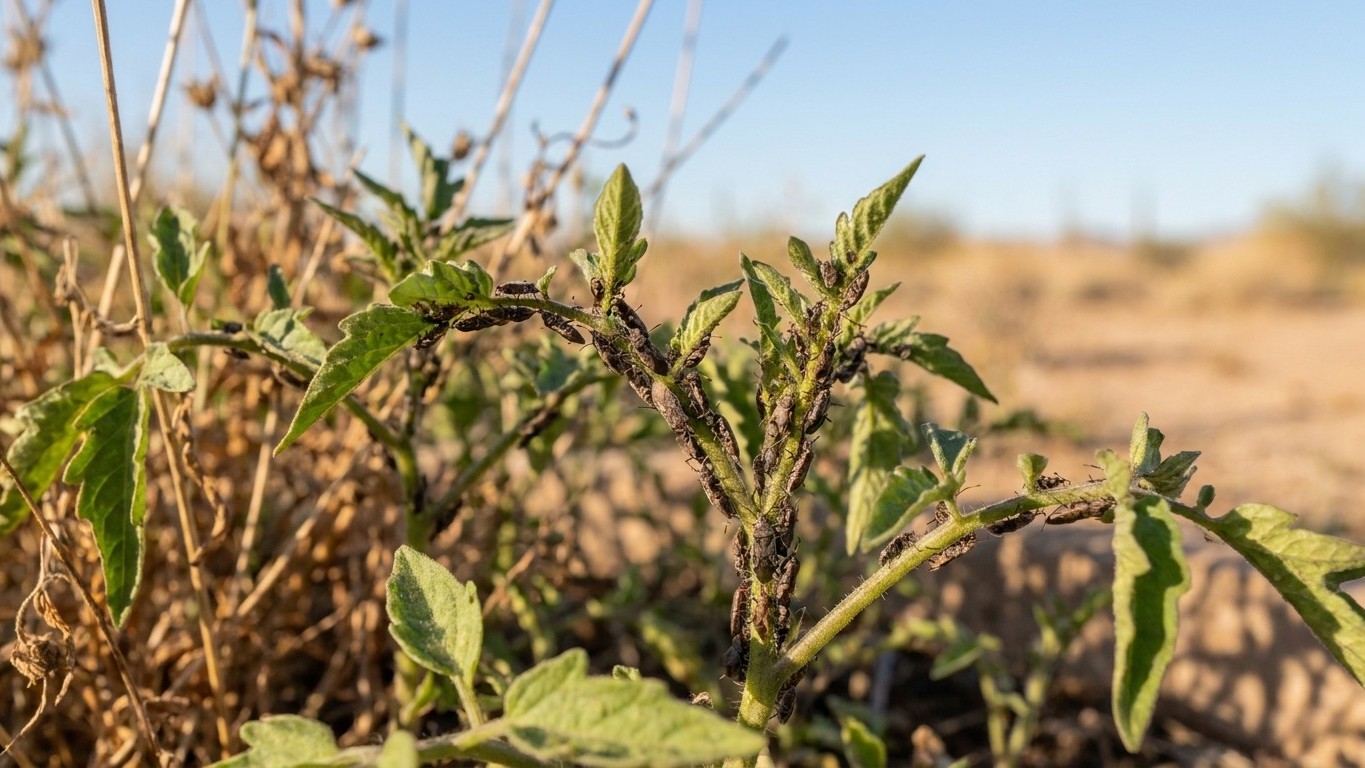

False chinch bugs turn up across Arizona gardens in spring, building on drying winter weeds before shifting onto vegetable seedlings as those weeds die back. Numbers drop once summer heat pushes past the 90s in June. Row covers timed to that window and early weed removal are the two moves that actually change the outcome.
The weeks to watch

Spring is the window, full stop. According to the University of Arizona Cooperative Extension, thrips and false chinch bugs peak in spring and decline as summer heat rises above the 90s in June. That’s the only seasonal marker this source gives for the species, and it’s worth taking at face value rather than trying to squeeze a tighter date out of it.
One flush, not a string of generations
The extension note doesn’t break false chinch bug activity into separate generations the way it does for some of its garden-pest neighbors. Green fruit beetle adults get a summer emergence date, grasshoppers get a spring hatch, squash bugs get an egg-laying window that runs from early spring into midsummer. False chinch bug gets one line: a spring peak, a June decline. If you’re hunting for a second or third flight later in the year, the local extension service simply doesn’t publish one for this insect. The safest reading is a single spring buildup that fades as the desert heats up, not a pest that cycles through the growing season the way some others do.
What “decline” actually means
Decline isn’t the same as disappearance. Numbers thin out as temperatures climb, but a hot early spring can compress the window, and a cool, wet spring can stretch it. Treat the spring-to-June range as the working season, not a fixed start-and-stop date.
Reading the calendar from your last frost

This is one of the rare pest pages on this site where a frost-based calendar doesn’t apply, and it’s worth saying plainly why. Across most of Arizona’s low desert, there effectively isn’t a spring frost to count from. NOAA’s 1991-2020 climate normals for the Phoenix station (USW00023183) list a 365-day frost-free season, and a 32°F reading showed up in only 6 of the last 30 years, when it happened at all it landed between late December and mid January, not in spring.
That changes how a gardener has to plan. Instead of counting weeks forward from a last-frost date, low-desert growers work backward from the June heat threshold that shuts the pest down. The two steps look like this:
- Mark the point in June when daytime highs start holding above the 90s, since that’s the decline trigger the extension service names for this species.
- Count backward to the spring weeks when your seedlings and transplants will be small and vulnerable, and treat that stretch as the active window regardless of what a frost calendar would suggest.
Flagstaff and the rest of Arizona’s high country are a different climate entirely, with hard freezes that make a traditional last-frost calendar meaningful there. But the seasonal note this page is built on doesn’t split its data by elevation, so the honest answer for most of the state is: skip the frost math, watch the June heat instead.
What it attacks, and what the damage looks like

The first sign is usually a seedling that wilts fast, faster than drought stress would explain, sometimes with the stem darkening right at the soil line. Look closer and you’ll often find clusters of small gray-brown insects massed on the stem or crowded under leaves, having moved in from nearby weeds as those weeds dried down. Both nymphs and adults feed the same way, with piercing-sucking mouthparts that draw sap and inject saliva, and it’s that feeding, not chewing damage, that causes the sudden collapse.
Young transplants take the worst of it, since a mass of feeding insects can overwhelm a small plant’s vascular system before it has a chance to establish. Crops commonly affected in home gardens include:
- Cole crops such as broccoli, cabbage, and kale, especially at the seedling stage
- Lettuce and other leafy greens
- Beets and spinach transplants
- Young potato plants
- Ornamentals in the aster family growing near weedy edges
Because the damage traces back to sap loss and toxin injection rather than visible chewing, gardeners often blame heat stress or transplant shock first. Checking for the insects themselves, particularly on stems near the soil line, is the fastest way to rule that out.
How Arizona sits in this pest’s range

This site currently documents the false chinch bug in one territory: Arizona. That’s a narrow footprint by the standards of this cocon, and it puts Arizona near the edge of what’s been mapped here rather than in the middle of a widely-tracked range. It doesn’t mean the insect is rare or Arizona-specific, only that this particular set of pages hasn’t yet built out comparison data from neighboring states.
What that means practically is that a gardener here can’t lean on a multi-state comparison to gauge whether local pressure runs heavier or lighter than elsewhere. The only seasonal detail available comes from the University of Arizona Cooperative Extension itself, drawn from Yavapai County Master Gardener material, which is squarely in-state guidance rather than a neighbor’s data being borrowed. That’s a point in its favor for local accuracy, even if it means the picture stays thinner on regional context than a species tracked across several states would offer.
What actually works against it

Cheapest and most effective first: this is a weed-driven pest, and cutting off the weed supply does more than any product applied after the fact.
- Mow or clear mustard-family weeds and other winter annuals around the garden’s edges before they dry out in late spring. The bugs build their numbers on these weeds first; removing the host plants before they die back keeps the swarm from ever forming next to your vegetables.
- Time transplanting to dodge the weed die-off window. If local weeds are still green, the risk of a mass migration onto seedlings is lower. Pushing transplant dates a week or two later, once surrounding weeds have already dried and been cleared, sidesteps the peak movement.
- Use row covers over new transplants during the spring window. A physical barrier stops migrating adults from reaching the plant, but the timing matters: it has to go on before the weeds dry down nearby, and it has to come off before the covered plants outgrow the fabric or need pollinator access.
- Hand-remove or vacuum small clusters while counts are still low. This only works early; once a swarm has settled in and started feeding in numbers, physical removal can’t keep pace.
- Reflective mulch under seedlings is a common home-garden add-on for sap-feeding insects generally. Some gardeners use it here too, but trial results for false chinch bug specifically don’t offer a clear conclusion either way, so treat it as a minor supplement, not a primary defense.
Once feeding is already underway on an established stand, most of these measures stop helping. A row cover installed after the swarm has arrived just traps the insects inside with the plant, and weed clearing at that point removes a food source that’s already served its purpose. The realistic move at that stage is to pull and discard the worst-hit seedlings and protect whatever transplants go in next.
Common questions
Do false chinch bugs bite people or pets?
No. They feed exclusively on plant sap through piercing mouthparts built for stems and leaves, not skin. Large swarms can be a nuisance simply by their numbers, but they pose no bite risk.
Can I compost plants killed by false chinch bug feeding?
The extension guidance referenced here doesn’t address composting specifically for this pest. As a general precaution with any sap-feeding insect infestation, clearing affected plant debris away from the garden bed, rather than leaving it in place, avoids giving any surviving insects a nearby place to regroup.
Will one bad spring mean the problem repeats every year?
Not necessarily. Because the population builds on weeds that vary year to year with rainfall, a spring with lighter weed growth typically means a smaller false chinch bug buildup the following season, even without any direct intervention.