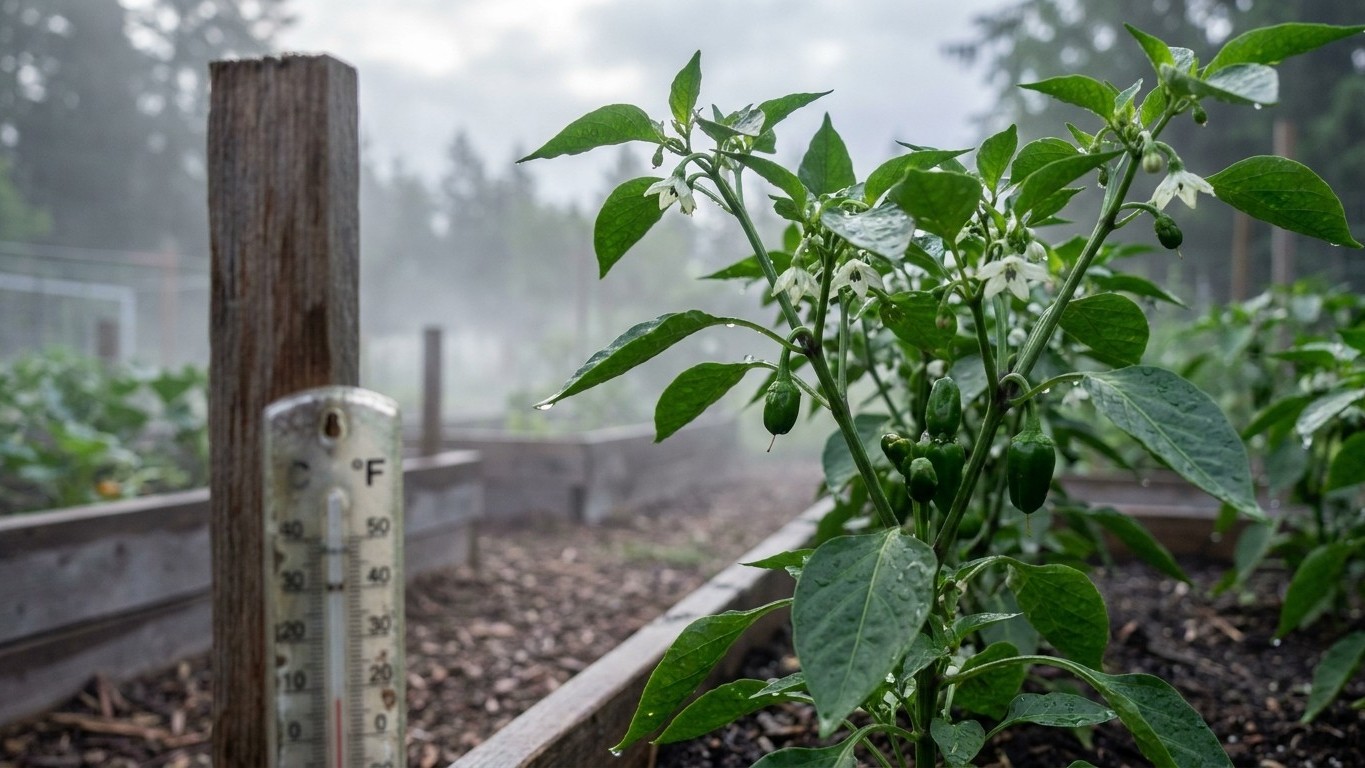

in British Columbia, the biggest threat to pepper fruit set isn’t extreme heat, it’s the opposite. The reference climate station at Vancouver logs zero days a year at or above 90°F, so blossom drop from heat is rare across most of the province. The real risk runs the other way: nights below 55°F stall pollen and cause flowers to fall before fruit ever forms. This site doesn’t track summer night lows, so growers need to watch their own thermometer once plants are in the ground.
The short answer

Zero. That’s the average number of days per year that reach 90°F or higher at Vancouver International Airport, the reference station for British Columbia’s climate normals covering 1981 to 2010. For pepper growers, that number matters because Utah State University Extension identifies 90°F days as one of two thresholds that shut down fruit set entirely: heat that high causes flowers to drop before they ever turn into a pepper. A garden running close to the Vancouver reference numbers essentially never crosses that heat threshold in an average year.
That sounds like good news, and for the hot-end failure it is. But British Columbia covers a lot of ground the Vancouver station doesn’t measure. The Fraser Valley, the Okanagan, and other interior districts run their own weather, often warmer in midsummer than the coast. This site carries the days-above-90°F count only for the coastal reference station, not for every valley in the province, so a grower in a warmer interior pocket needs to check local records rather than assume the coastal zero applies to their own backyard.
The other failure point runs in the opposite direction, and it’s the one most British Columbia growers need to watch more closely: nights that drop below 55°F. According to Utah State University Extension, cool nights below that mark interfere with pollen the same way extreme heat does, and the flower drops without setting fruit. This site does not track summer night minima for any territory, British Columbia included, so there’s no number here to hand a reader for how often that happens in a given county or valley. The only honest answer is that the grower has to watch their own thermometer through the growing season, especially in low-lying spots or near water where nights often run cooler than the daytime high suggests — and getting the timing right from the start, as outlined in When to Start Pepper Seed in British Columbia, gives plants the best chance of flowering during the warmer stretch of summer nights.
That’s the frame for the whole season here: heat stress is a minor concern for most of the province based on the coastal reference data, while cool nights are the more likely reason a pepper plant flowers steadily but sets little fruit. For a deeper look at both failure points, see Why Peppers Fail to Set Fruit in British Columbia. Choosing from among the Pepper Varieties That Ripen in a British Columbia Season can help offset that risk, but neither threshold should be guessed from the calendar or from how far north or south a garden sits. Latitude doesn’t tell you what a given night will do. A thermometer left outside does.
When to start seed here
Working out a seed-starting date for peppers means counting backward from two things that have to happen first: the last frost, and the soil warming to 60°F. Here’s how the arithmetic works using the numbers on record for this province.
- Start with the average last frost date. At Vancouver International Airport, Environment and Climate Change Canada’s 1981-2010 climate normals put the average last spring frost at March 18. That’s a mean date from the station’s climate ID 1108447, not a guarantee. In roughly half of all years on record, frost has arrived after that date, so treating March 18 as a safe planting day is a mistake even in the mildest parts of the province.
- Add a margin before trusting the date. Because March 18 is a midpoint rather than a cutoff, growers planning to transplant close to it should build in extra time instead of moving outdoors right at the average. How much margin makes sense depends on local frost history this site doesn’t track, so check the specific county or valley rather than relying on the coastal reference station alone.
- Wait for 60°F soil, not just frost-free air. Utah State University Extension is specific here: peppers go into the ground once the soil itself reaches 60°F, regardless of whether the air has cleared frost risk. Soil often lags behind air temperature by days or weeks, so a frost-free stretch doesn’t automatically mean the soil is ready. A simple soil thermometer, pushed a few inches down at midmorning, settles this more reliably than any date on a calendar.
- Count back 8 to 10 weeks from that transplant date. Once a realistic transplant date is set, based on frost history plus an actual soil reading rather than the average alone, Utah State University Extension’s window of 8 to 10 weeks indoors gives the seed-starting date. A transplant target in mid-to-late May, for instance, points to a seed-starting window in the first half of March, though the exact date shifts with how each grower reads the first three steps for their own ground.
- Recheck each spring instead of reusing last year’s date. Frost timing and soil warmup shift year to year even at the same address, so this count is worth redoing each season rather than treating it as fixed.
What goes wrong here
Most pepper problems in British Columbia gardens trace back to the two thresholds already covered, plus a couple of related issues that show up once fruit is on the plant.
- Blossom drop from a cool night. Flowers form, then fall off without setting fruit, most often after a stretch of nights running below 55°F, the threshold Utah State University Extension flags as a fruit-set stopper on the cold end. In most British Columbia gardens, this is more likely than heat-driven drop given the reference station’s near-zero count of 90°F days. The remedy is patience rather than intervention: wait for a run of warmer nights before expecting new blossoms to hold, and avoid transplanting too early into soil and night air that haven’t caught up with the calendar.
- Blossom drop from a hot spell. Less likely on the coast based on the reference station’s numbers, but not impossible in interior districts running hotter than the Vancouver normals suggest. Days at or above 90°F push flowers to abort the same way cold nights do. Where a warm spell is forecast, afternoon shade cloth over the row and consistent soil moisture reduce the stress that triggers drop.
- Sunscald on exposed fruit. Peppers with too little leaf cover can blister or develop pale, papery patches on the side facing direct sun, especially during a stretch of strong, unshaded daylight. Keeping the plant’s own foliage intact, rather than pruning heavily, is the simplest fix. Where leaves have already been lost to wind or disease, a light shade cloth over the row during the hottest part of the day protects fruit already forming.
- Blossom-end rot. A dark, sunken patch at the blossom end of the fruit usually signals uneven water delivery rather than a soil nutrient shortage. Peppers that dry out between waterings and then get soaked struggle to move calcium to the fruit consistently. Even, regular watering through a drip line or soaker hose, instead of occasional deep soaks, keeps the supply steady and heads off the problem before it starts.
Checking this against your own county
Every number in this article comes from a single reference station or a national extension resource, not from a survey of every valley and slope across British Columbia. Frost dates, soil warmup, and heat load all vary between the coast, the Fraser Valley, and the Interior, sometimes by weeks rather than days. Before locking in a seed-starting date or a transplant week, check current guidance from the British Columbia Ministry of Agriculture and Food, which tracks regional growing conditions this article can’t cover from a single provincial reference point. Local frost records, current soil temperature readings, and pest or disease pressure specific to a district all shift the picture the general numbers here provide. Treat this article as the starting math, and the provincial ministry, along with any local extension office serving your specific county, as the source that adjusts it for the ground you’re actually planting.
Common questions
Do peppers need full sun in British Columbia?
Yes, peppers need as much direct sun as a bed can offer, generally at least six hours a day, to flower and set fruit reliably. Given the coastal reference station’s near-zero count of days above 90°F, heat stress from too much sun is rarely the limiting factor here, so shading a healthy plant for heat protection is usually unnecessary unless an unusual hot spell is forecast.
Can I transplant peppers before the average last frost date?
Not safely. The March 18 average last frost at Vancouver International Airport is a mean date from Environment and Climate Change Canada’s 1981-2010 normals, meaning frost has historically arrived after that date in roughly half of all years. Transplanting ahead of that risks losing young plants to a late frost even in a mild coastal season.
Why are my pepper flowers falling off without fruit?
According to Utah State University Extension, flower drop happens at both temperature extremes: nights below 55°F or days at or above 90°F. Since British Columbia’s coastal reference station logs essentially no days that hot, a cool night is the more likely culprit in most parts of the province, though interior growers should check both ends against their own conditions rather than assume the coastal pattern applies.
How long after flowering should I expect fruit?
This site doesn’t carry a published day count from flowering to harvest for peppers, so no number is given here. What is documented is the temperature window that has to hold before the flower sets fruit in the first place, the 55°F to 90°F range described above, before any count from flowering to harvest would even begin.