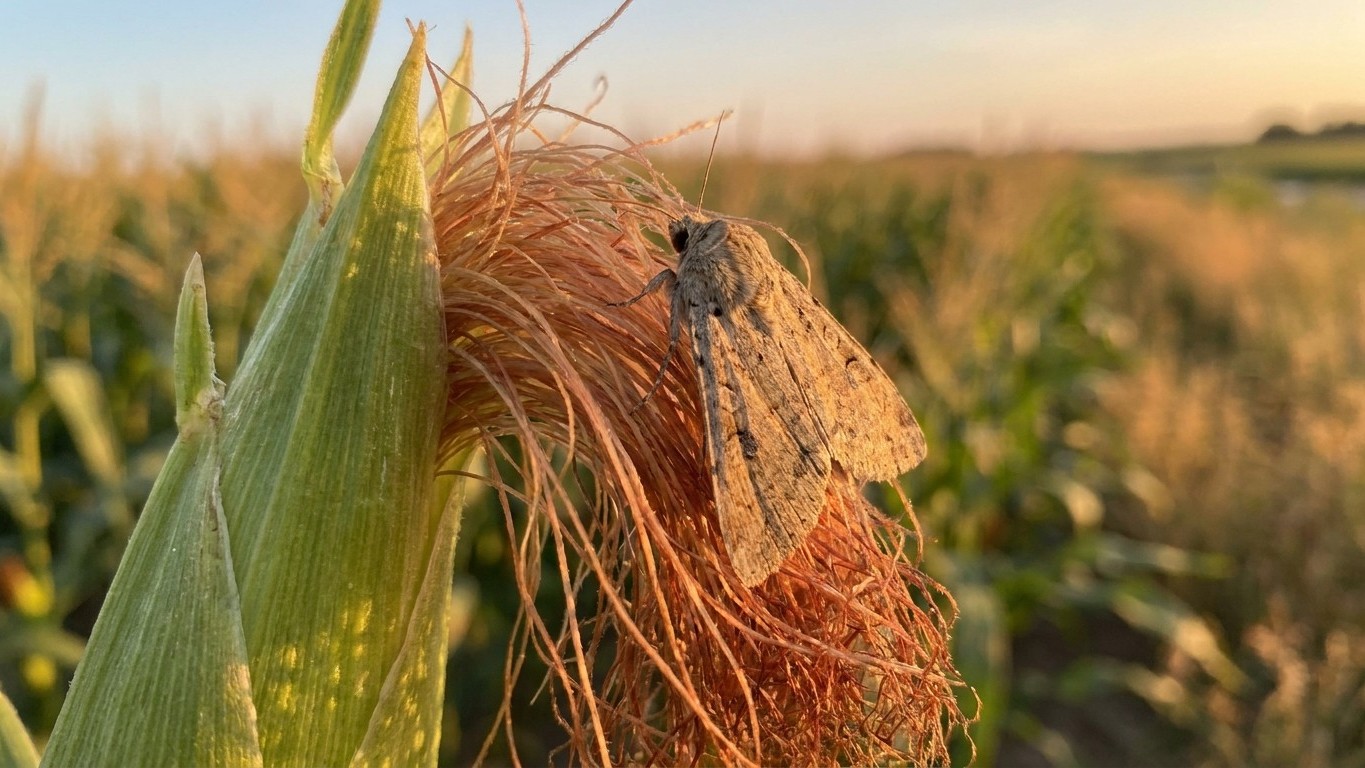

Corn earworm shows up in Georgia earlier than almost anywhere else in the country, and it never really leaves. Thanks to the state’s mild winters, this pest overwinters successfully in southern and coastal counties, meaning growers and backyard gardeners deal with multiple generations from spring moth flights straight through the first frost. The short answer: expect activity from March through November, with the worst damage hitting sweet corn ears during silk emergence in June and again in late summer.
Why Georgia’s Climate Keeps This Pest Active Longer

Corn earworm (Helicoverpa zea) is a cold-blooded insect that survives winter as a pupa buried a few inches underground. In states like Minnesota or upstate New York, that pupa freezes and dies most years. In Georgia, soil temperatures south of the fall line rarely drop cold enough for long enough to kill it off completely. That single difference changes everything about how the pest behaves here.
Instead of relying entirely on moths migrating up from Texas and Mexico each spring, the way northern states do, Georgia gets a head start from its own overwintering population. Add in the fact that this is the same species known as cotton bollworm and tomato fruitworm depending on which crop it’s attacking, and you’ve got an insect with an unusually wide host range and an unusually long season to exploit it.
The practical result is three to four generations per year in most of Georgia, compared to two in cooler parts of the country. Coastal Plain counties, think Tifton, Valdosta, or Waycross, can see activity stretch even further into fall because temperatures stay moth-friendly longer.
When Corn Earworm Shows Up in Georgia
Moth flights track soil and air temperature, not the calendar, which is why timing shifts a bit from year to year. Still, decades of monitoring data give a reliable general pattern for Georgia growers to plan around.
The first moths typically emerge in late March or early April in south Georgia, moving into middle Georgia by mid-April. These early fliers lay eggs on whatever corn is already up, but the real pressure builds with the second generation in June, right when most home gardens and commercial sweet corn plantings are entering silk stage. That overlap between silking and peak moth activity is not a coincidence, it’s the reason silk stage is the single most vulnerable window for any corn crop in the state.
A third wave hits in August, often heavier than the June flight because populations have had all summer to build. Southeast Georgia and the coastal counties frequently see a fourth generation in September and October, feeding on late-planted corn, but also shifting over to other hosts like tomatoes, peppers, and soybeans once corn becomes scarce. This late-season generation is what surprises a lot of home gardeners who think they’re past the danger by Labor Day.
Degree Days Matter More Than the Calendar
Extension entomologists track corn earworm using degree-day accumulation rather than fixed dates, because a warm March can push the first generation two to three weeks earlier than a cold one. For practical purposes, Georgia gardeners can use silking date as their trigger: any time corn silks are emerging, earworm moths are actively searching for that scent, day or night, and egg-laying begins within hours of silk appearing.
Spotting the Damage Before It’s Too Late
The frustrating thing about corn earworm is that the damage is invisible until you’ve already lost the ear. Moths lay single eggs directly on fresh silk. The larva that hatches doesn’t chew its way in from outside, it travels down the silk channel straight to the ear tip, which is exactly where it starts feeding and where it stays protected from most sprays applied after the fact.
By the time a gardener pulls back the husk and finds a tan-to-green caterpillar with dark stripes chewing through the kernels at the tip, the window for prevention closed weeks earlier. A single caterpillar can ruin two to three inches of ear tip, and because the larva is cannibalistic, you’ll almost never find more than one per ear even though multiple eggs were laid.
Beyond corn, Georgia growers see the same larva causing:
- Bollworm damage in cotton bolls, boring in at the base
- Fruitworm feeding in tomatoes, entering near the stem end
- Pod damage in soybeans during pod-fill stage
- Scattered feeding on pepper fruit and okra pods late in the season
Recognizing that overlap matters for anyone rotating crops in a home garden. Planting tomatoes right next to a corn patch doesn’t create a new problem, it just gives the same insect a second buffet table once the corn silk dries down.
What Actually Stops Corn Earworm in Georgia
Control has to happen at the silk stage, before the larva enters the ear, because nothing sprayed afterward reaches it once it’s feeding inside. That single fact drives almost every recommendation Georgia Extension agents give, whether the grower has forty acres or four tomato cages.
Timing and Variety Choice for Home Gardens
Planting sweet corn early enough that silking happens before the heavy June moth flight can dodge the worst pressure, though it’s not foolproof given how long the season runs. Some hybrid sweet corn varieties bred with tighter husks or longer silk channels show modestly better resistance, and gardeners in earworm-heavy counties often see better luck with these than with older open-pollinated types.
Bt sweet corn varieties, which express a protein toxic to caterpillar pests, have become widely available at garden centers across the Southeast and cut down significantly on ear-tip damage without any spray program at all. They’re not perfect against heavy late-season pressure, but for a backyard patch they reduce the workload considerably.
Spray Timing for Conventional Control
For gardeners not using Bt varieties, the standard approach is applying an insecticide labeled for corn earworm every three to five days once silks first appear, continuing through the silking period. Products containing spinosad or Bacillus thuringiensis (Bt) work well for home use and carry less risk to pollinators than broader-spectrum options, since bees are actively working the same corn tassels during this window.
The critical detail most people miss: spraying has to target the silk itself, not the whole plant, and it has to happen before eggs hatch, generally within 24 to 48 hours of egg-laying. Waiting until you see the first caterpillar means you’ve already missed the only window where treatment works.
Natural Predators Do Some of the Work
Georgia’s warm-season insect community includes several predators that keep corn earworm numbers in check without any human intervention. Minute pirate bugs and lacewing larvae feed on earworm eggs directly on the silk, and parasitic wasps in the genus Trichogramma target eggs as well, sometimes reducing hatch rates by a meaningful margin in fields or gardens that avoid broad-spectrum insecticides. Spraying a non-selective product wipes out these allies right along with the pest, which is part of why targeted, silk-stage-only treatments tend to outperform blanket spraying over a full season.
One detail that surprises a lot of Georgia gardeners: the same moths that damage corn in June are frequently the offspring of larvae that fed on wild host plants, including grasses and weeds along field edges, earlier in spring. Keeping mowed buffer strips around a garden plot won’t eliminate the pest, but it does remove some of the early-season breeding sites that let populations build before corn even goes in the ground.
Related guides
- Corn earworm in Alabama: When It Shows Up and What Stops It
- Corn earworm in Tennessee: When It Shows Up and What Stops It
- Corn earworm in Manitoba: When It Shows Up and What Stops It
- Corn earworm in New Mexico: When It Shows Up and What Stops It
- Corn earworm in California: When It Shows Up and What Stops It
- Corn earworm in South Carolina: When It Shows Up and What Stops It