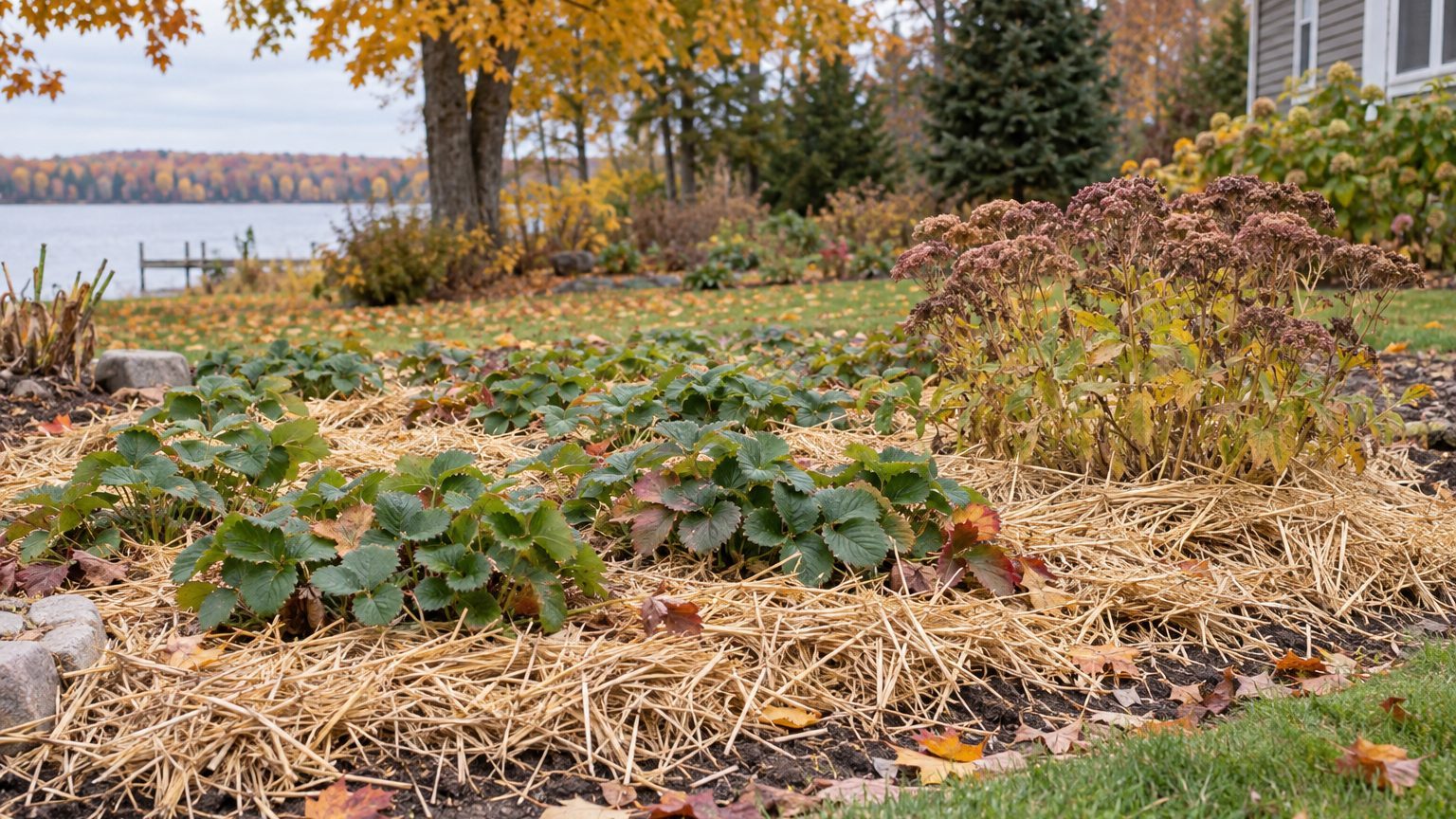

Wait until the ground has started to freeze, then mulch. In Denver, the first fall frost lands between September 30 and October 12 (NOAA NCEI 1991-2020 Climate Normals, 32°F freeze probabilities in the 30-70% band), but that frost is a signal to get ready, not a starting gun. Straw and leaves go on later in the fall, after several hard freezes have chilled the soil. Putting them down earlier causes more trouble than skipping them.
When to put winter mulch down in Colorado
Most gardeners think of mulch as a blanket that keeps plants warm. Winter mulch works differently. Its job is to keep the soil frozen once it freezes, so the ground doesn’t thaw on a sunny afternoon and refreeze that night. Those repeated cycles are what push shallow crowns up and out of the soil. A blanket laid over warm, damp ground does the opposite, holding heat and moisture against the plant.
The cold is real here. NOAA’s NCEI Climate Normals for 1991-2020 put the mean daily minimum of Denver’s coldest month at 18.4°F. That is an average low, not a record low, which means an ordinary January night sits well below freezing. Ground that cold is exactly where mulch pays off. The Front Range also swings hard, with cold snaps followed by bright, dry, mild days, and those swings are what mulch is meant to smooth out.
So the calendar works like this. Denver’s first 32°F freeze arrives between September 30 and October 12 by the NOAA station data (station USW00003017). The mulching window opens after that range has passed and after a run of hard freezes has stiffened the top of the soil. It closes when the ground is frozen solid or deep snow has taken over the insulating work. That leaves a stretch in late fall, well behind the first frost, and it is wider than most people expect. Wait until the soil surface has started to freeze, well after the September 30 to October 12 first-frost range, then mulch.
Elevation moves everything. Denver sits at 5,280 feet on the plains, and the numbers above belong to that reference point. Mountain towns run far shorter seasons and can see frost in July, so their first hard freezes come earlier and their mulching window opens earlier too. The western slope has its own pattern again. If you garden outside the Denver area, check your local dates in First and Last Frost Dates in Colorado and shift the whole schedule to match. Colder places mulch sooner, and spring uncovering comes later.
Depth matters as much as timing. NC State Extension, speaking of weeds, says: “A 2-inch to 3-inch layer of mulch suppresses most annual weed seeds and makes it easy to hand-pull any that do germinate.” Their handbook gives the same order of depth for moisture on trees: “Provide a 3-inch layer of mulch to reduce water loss and maintain uniform soil moisture and temperature around roots.” That is a North Carolina source, so treat it as a ceiling to respect, not a Colorado-specific recipe. More is not better. For general mulching technique around shrubs and trees, Mulching Without Killing the Plant covers the details.
Strawberries
Strawberry plants form a compact crown at soil level, and that crown holds next year’s flowers. It has almost no insulation of its own. Bare cold can kill it outright, and freeze-thaw heaving can lift it so its roots dry out in a winter wind. Colorado’s low humidity makes the second problem worse, because an exposed crown loses moisture even when the air is freezing.
What to use and how deep
Clean straw is the standard choice. Wheat or oat straw that is free of weed seed and herbicide residue is the best bet. Hay is a poor substitute because it is full of seed and you will be weeding it out all summer. Whole, unshredded straw stays fluffy, sheds water and lets air move through. Avoid anything that packs into a wet mat.
For depth, stay in the range the Extension quote supports: 2 to 3 inches over and around the crowns. Straw looks deeper than it is when you first spread it, then settles, so lay it loosely and resist the urge to keep adding. A thick, compressed pile smothers the crowns as surely as bare cold would kill them. The same logic applies when you mulch between rows to hold moisture and keep berries clean later, which Growing Strawberries covers in more depth.
Timing in fall
Follow the same rule as everything else. Denver’s first frost range is September 30 to October 12, and the straw goes on after that, once the ground has begun to freeze. Plants need a chance to harden off in the cold. A frost or two is useful, and it triggers the plant to go dormant. Covering strawberries while the soil is still warm keeps them growing when they should be shutting down. At higher elevations, where frost arrives earlier, the straw goes on earlier as well.
Pulling it back in spring
Uncovering is the step people forget. Once new growth starts, and you may see leaves turning pale yellow under the straw, begin raking it off the crowns and into the aisles. Do it gradually rather than in one afternoon. Leave the straw nearby, because Colorado springs can throw a hard freeze after plants have started to grow, and you will want to pull it back over the plants on those nights. Rake the straw off the crowns as soon as new growth starts, but keep it on hand for late frost. The last-frost dates in the Colorado frost guide will tell you how long to stay ready.
Perennials and borderline plants
Not every perennial needs winter mulch. Established, hardy plants in a well-drained bed handle Colorado winters on their own, and many of them dislike a wet blanket. The plants that benefit are the ones with the least margin for error.
Hardiness is where to start. The USDA Plant Hardiness Zone Map (2023 edition, based on 1991-2020 normals) places Colorado in zones 3b to 7b. That is a statewide range, so your yard could sit in almost any of them, depending on elevation and location. The zone is built on a single variable, the average annual extreme minimum temperature, so it tells you about survival in the coldest snap, not about how much your soil freezes and thaws. Look up your own zone before deciding which plants are borderline. A plant rated to the edge of your zone is borderline. So is anything you planted this year.
The plants most likely to earn a layer of mulch:
- Perennials planted this fall or last spring, whose roots have not yet anchored the crown
- Shallow-rooted plants prone to heaving, such as coral bells and garden mums
- Plants rated at the cold limit of your zone
- Semi-woody herbs and other perennials that struggle in cold, which is covered in Getting Perennial Herbs Through the Winter
Plants that hate wet crowns, like lavender and many Mediterranean-type herbs, need a light hand. They can rot under a thick, moisture-holding mulch, so keep it thin and away from the stems, or skip it if your soil drains fast.
The shape of the mulch matters as much as the depth. Spread a ring around the plant, not a pile on top of it. Pull the material back from the crown and stems so the base stays visible and can breathe. Keep to the 2-inch to 3-inch range from the NC State handbook. Anything deeper piles moisture against the plant, and that is how a ring becomes a volcano.
Timing is the same as for strawberries. Mulch perennials after the ground has started to freeze, not during the September 30 to October 12 first-frost range. In a garden well above Denver’s elevation, that shifts earlier, and the spring pull-back shifts later.
What goes wrong
Most winter-mulch failures trace back to one of four mistakes, and each one leaves a recognizable mark.
Mulching too early. Soil that is still warm under a thick layer stays damp and mild. Crowns can rot, and plants that should be going dormant keep pushing growth that the first hard freeze then kills. The sign is soft, dark crowns or new leaves in late fall. The fix is patience: hold off until after the September 30 to October 12 frost range and the first solid freezes.
Mat and rot. Whole leaves, especially big ones like maple, and wet grass clippings can pack into a slick layer that holds water against plants. Under it you will find slimy, foul-smelling material and dead crowns. Choose loose material such as straw, or shred leaves first, and stay within 2 to 3 inches.
Rodents. Voles and mice like the shelter of a deep, dense mulch. They tunnel through it, and by spring you may find chewed crowns or bark girdled at the base of young trees. Keep mulch pulled back from trunks and stems, do not pile it high, and do not lay it down until the weather has turned cold, since animals move in early when it is still mild.
Forgetting to uncover. Straw left on strawberries too long blanches new growth and slows the plants, and it keeps the soil cold and wet. Check the crowns as spring arrives and rake the straw aside once growth begins.
Common questions
Should I mulch strawberries right after the first frost?
No. In Denver the first frost falls between September 30 and October 12, per NOAA NCEI 1991-2020 Climate Normals. Strawberries need some cold to go dormant, so the straw goes on after that range passes and the ground has begun to freeze. Colder, higher places frost earlier, so their window opens earlier too.
What is the best mulch for strawberries in Colorado?
Clean, weed-free straw is the usual pick because it stays loose and sheds water. Apply it in the 2-inch to 3-inch range that NC State Extension cites for weed suppression. Skip hay, which brings in weed seed, and avoid anything that mats down when it is wet.
Do all perennials need winter mulch?
No. Established plants that are hardy for your zone usually do fine without it. Mulch helps new plantings, shallow-rooted plants prone to heaving, and anything at the edge of your USDA zone. The 2023 USDA map spans zones 3b to 7b across Colorado, so check your own location rather than assuming.
When should I take the mulch off in spring?
Start once new growth begins, particularly on strawberries, and do it gradually. Rake the straw into the aisles instead of hauling it away, and be ready to pull it back over plants if a hard freeze returns. The Colorado frost-date guides can help you judge how long that risk lasts where you live, and you can find more regional advice in the Colorado guides.