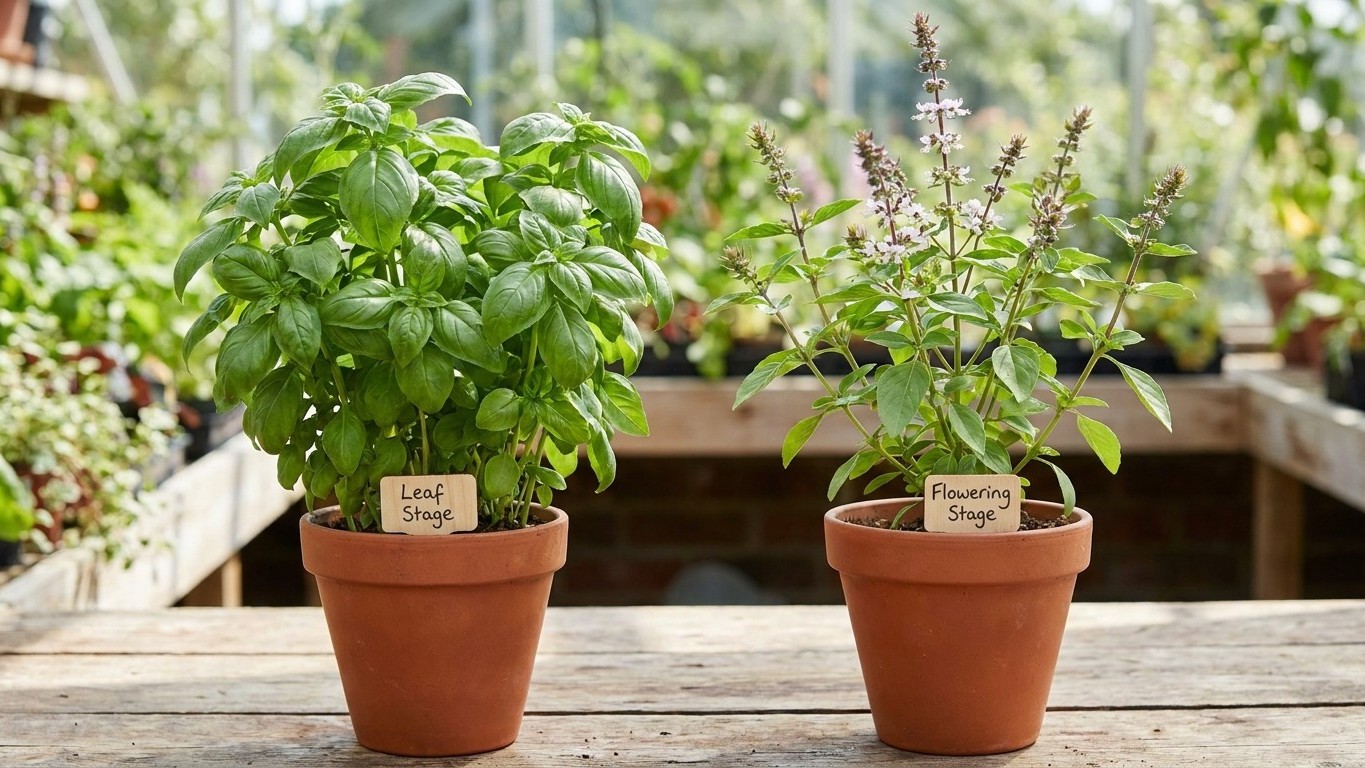

Pinching off basil flowers does not make the plant bushier. According to Utah State University Extension, that move actually backfires: it “encourages flowers to form in the axils of the leaves thus reducing the yield of the plant.” The gesture that works is different, earlier, and rarely mentioned in the usual pinch-your-basil advice passed around at garden centers.
The short answer
Utah State University Extension draws a hard line between two actions that most gardeners treat as the same thing. Removing leaves from the plant before it ever flowers forces new growth: “Regular leaf removal before flowers form will force the plant to grow more leaves and branches.” That’s the technique that produces a fuller, more productive plant. Pinching the flower heads after they’ve already appeared is a different action entirely, and it does the opposite of what people expect.
Once a flower spike shows up on a basil stem, the plant has already shifted its energy toward reproduction. Snipping that flower off doesn’t reset the plant back to leaf-growing mode. Instead, the plant responds by pushing out more flower buds in the leaf axils, the little pockets where a leaf meets the stem. More flowers means less leaf, and leaf is the entire reason anyone grows basil in the first place. So the timing is Everything: leaf removal has to happen before the flower forms, not after.
This distinction matters because flowering itself isn’t random. The Extension office is specific about the trigger: “High summer temperature and water stress causes basil to flower and set seed. Off flavors develop and plants stop leaf production.” Flowering, is a stress response, not a natural stage the plant is supposed to pass through on a schedule. A plant that’s watered consistently and never allowed to dry out or bake in extreme heat will flower far less, which means there’s far less need to fight it after the fact.
The practical fix is preventive rather than reactive. Utah State University Extension recommends “planting basil every other week” and avoiding stress on the plants to keep them from flowering too quickly. That staggered planting schedule means that as one batch starts to bolt under summer heat, a younger batch is already coming up behind it, so the kitchen supply never depends on rescuing a stressed, flowering plant.
Basil goes into the ground or into pots after the last frost of your area, whether you’re starting from seed or from Transplants. There’s no universal calendar date for this. It depends entirely on your local frost line, and pushing basil outdoors before that point risks losing the whole planting to a late cold snap.
What actually decides it
Leaf removal versus flower pinching
The confusion between these two actions is understandable because both involve cutting something off the plant with scissors or a knife. But the mechanism behind each is different. Leaf removal, done while the plant is still in a vegetative state, signals the plant to branch out and replace what was lost with more stem and more leaf. Flower pinching happens after the plant has already committed hormonally to reproduction, and cutting the flower head doesn’t undo that commitment. It just relocates the flowering effort to the axils. A gardener who has been told for years to “pinch the flowers to keep basil leafy” is following advice that describes the wrong gesture at the wrong moment.
Heat and water stress as the real trigger
Flowering in basil isn’t a switch that flips at a certain plant age. It’s a stress signal. Extended heat combined with inconsistent watering pushes the plant to set seed as a survival strategy, since a stressed annual plant’s priority shifts to reproducing before it dies. That’s why the Extension guidance calls for 1 1/2 inches of water per week, delivered consistently enough to prevent wilting, which “slows growth, damages roots, and stunts plants.” A basil plant that never experiences that wilt cycle has far less biological reason to bolt.
Nitrogen demand, unlike beans or peas
Anyone who has grown beans or peas knows those crops fix their own nitrogen from the air and actually suffer from extra fertilizer. Basil works the opposite way. Because the entire point of growing it is harvesting leaves, and leaf growth is nitrogen-hungry, Utah State University Extension is direct about it: “Basil requires some additional nitrogen to sustain rapid leaf growth.” Once plants reach harvestable size, the recommendation is to sidedress with 1-2 tablespoons of fertilizer every 2-3 weeks per 10 feet of row, or feed potted basil weekly. Skipping this step because it worked for a different crop in the same garden bed is a common and avoidable mistake.
How to do it
- Sow after last frost. Plant seeds or transplants after the last frost date for your area. Seeds germinate best in soil that’s 75-85°F and take about 10-14 days to sprout. Transplants take 4-6 weeks to reach a workable size before they’re ready for the garden.
- Sow shallow. Seeds go just 1/8 inch deep, covered lightly with soil. Keep the surface consistently moist during germination since a seed that shallow dries out fast if watering lapses.
- Thin in two passes. Once seedlings emerge, thin to 3-4 inches apart, keeping the larger seedlings and removing the weaker ones. Continue thinning as the plants grow until they stand a full 12 inches apart. The thinned seedlings aren’t waste: eat them or transplant them into another spot.
- Choose full sun and airflow. Pick a site with good air circulation and as much direct sun as possible. Basil grown in full sun develops more essential oils and better flavor than shade-grown basil, so this isn’t just about growth speed.
- Feed for leaf production. Use an all-purpose soluble fertilizer regularly, especially if pinching plants back for more leaves or growing in containers. Once harvestable, sidedress with liquid nitrogen at the rate the plant’s growth demands, feeding potted basil weekly.
- Water on schedule. Supply about 1 1/2 inches of water per week, keeping the soil from drying out between waterings to avoid the stress that pushes the plant toward flowering.
- Weed shallowly. Basil doesn’t compete well with weeds, so keep the bed clean while seedlings are establishing. Cultivate shallowly and avoid root pruning, since disturbed roots add stress.
- Harvest at 6-8 leaves, and cut hard. When a stem carries 6-8 leaves, use a sharp knife or scissors to remove enough stem to leave only 2-4 leaves behind, cutting just above a leaf node. That’s most of the visible growth gone in one cut, and that’s exactly what forces the plant to branch from the node instead of just growing taller.
- Rotate which plants you cut. Alternate the plants harvested so the garden keeps producing a steady supply rather than stripping everything on the same day.
What goes wrong
- Pinching flowers instead of removing leaves early. Waiting until flower buds appear and then pinching them off doesn’t restore leaf growth. It pushes the plant to set more flowers in the leaf axils, cutting yield further. The fix is to remove leaves regularly before any flower forms in the first place, and to keep planting new batches every other week so a flowering plant isn’t your only supply.
- Letting plants dry out or bake in heat. High temperature combined with water stress is the direct trigger for flowering and off flavors. Consistent watering at roughly 1 1/2 inches per week and avoiding wilt cycles keeps plants from bolting early.
- Freezing leaves plain. Basil leaves frozen loose turn mushy on thawing and lose much of their flavor. That method simply fails for basil, unlike many other herbs. The workaround is freezing whole leaves inside ice cubes, or turning the harvest into pesto and freezing that in ice cube trays instead. Frozen basil holds its quality for 3-6 months either way.
- Drying in direct sunlight. Sun exposure during drying degrades the leaves. Tying stems into bunches and hanging them indoors or in a shady spot lets them dry in 5-10 days. Any leaves that haven’t fully dried can finish in an oven at 150-200°F for 3-5 minutes, then get packed into an airtight jar for a shelf life of about a year.
- Crowding plants and inviting fungal disease. Basil shoot blight causes leaf spots, premature leaf loss, and dark streaks on older stems. The remedy is spacing, the same 12-inch final spacing used for thinning, which keeps air moving and foliage dry.
- Overwatering into root rot. Soggy soil invites root rot. Avoid overwatering, rotate crops between seasons, and solarize the growing area if the problem has shown up before.
- Ignoring chewing pests. Japanese beetles and grasshoppers leave visible holes in leaves. A ground treatment aimed at the immature stage developing underground handles the source, while garden fabric covers plants against the adults. Slugs cause similar leaf damage and are best managed by avoiding the moist conditions they favor.
Common questions
Does cutting flowers off basil ever help?
Not according to Utah State University Extension. Once a flower has formed, removing it doesn’t push the plant back into leaf production. It tends to encourage more flowers to form at the leaf axils instead, which reduces overall yield. The useful move is removing leaves before flowering starts, combined with staggered plantings so stressed, flowering plants aren’t the garden’s only source of basil.
How much of the plant should I cut when harvesting?
Once a stem carries 6-8 leaves, cut enough stem away to leave only 2-4 leaves behind, cutting just above a leaf node. It looks like an aggressive cut, but that’s what triggers branching at the node and keeps the plant producing more stems over the season.
Does basil need fertilizer the way beans or peas do?
No, and it’s the opposite situation. Beans and peas fix their own nitrogen and can be harmed by extra feeding. Basil is grown for its leaves, which demand steady nitrogen to keep producing quickly, so regular feeding with an all-purpose soluble fertilizer, plus sidedressing every 2-3 weeks once the plant is harvestable, actually supports the yield instead of working against it.
Can I freeze fresh basil to preserve a big harvest?
Freezing whole leaves loose in a bag doesn’t work well. They turn mushy once thawed and lose much of their flavor. Freezing whole leaves inside ice cubes, or making pesto and freezing that in ice cube trays, holds quality for 3-6 months. For a longer shelf life without freezing, drying the leaves out of direct sun keeps them usable for about a year.