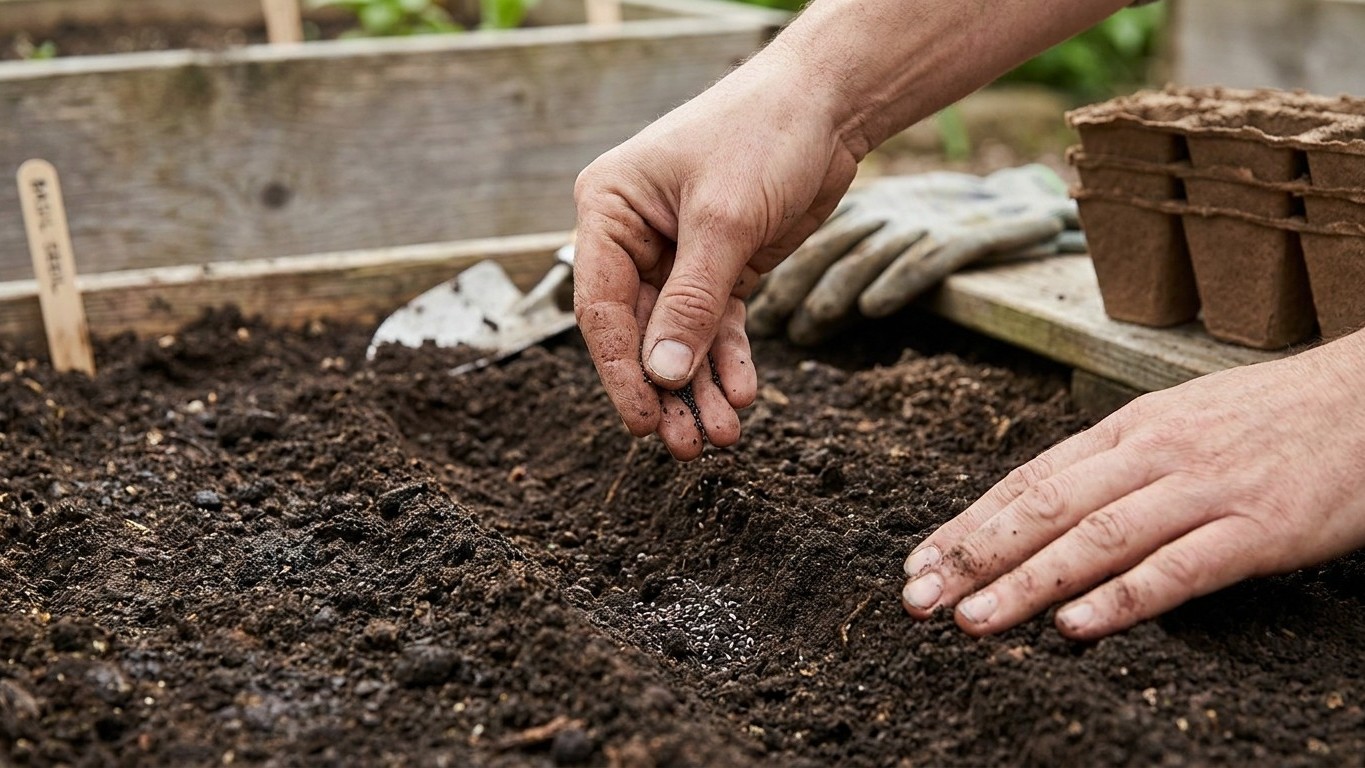

An eighth of an inch. That’s how deep basil seed goes into the soil, and it goes in only after the last frost of the season has passed where you garden, never on a fixed calendar date. Basil has no cold tolerance at any stage, seed or seedling, which makes the frost line the only trigger that matters for planting, whether your yard sits in a mountain valley or a coastal lowland.
The short answer
Utah State University Extension’s guide Basil in the Garden puts it plainly: sow basil seeds 1/8 inch deep, cover lightly with soil, and water regularly so the surface never dries out. That’s the whole depth instruction, no more, no less. Bury the seed any deeper and it may never push through; leave it fully exposed and the surface dries before a root can form.
The frost rule applies whether you start from seed or from transplants. The Extension guide notes that transplants take 4-6 weeks to grow to size, so if you’re starting basil indoors, you count backward from your area’s last frost date, not from a page on a calendar. Direct-sown seed follows the same rule from the other direction: it goes into the ground only once that frost risk has passed.
Germination itself has its own trigger. Basil seed sprouts fastest when soil Temperature sits between 75-85 F, and even then it takes about 10-14 days to break the surface. That window matters more than the shallow depth in practice, because cold soil simply refuses to sprout the seed no matter how correctly it’s sown. A gardener who plants right on the frost line but into soil that hasn’t warmed yet is often just waiting out those two weeks for nothing.
Site selection belongs in this same short answer, even though it plays out later in the season. Basil planted in a spot with weak sun and poor airflow won’t fail outright, but it changes what you get from the plant. That distinction, along with the mechanics behind germination, thinning, and feeding, is where the real decisions get made.
What actually decides it
Soil temperature, not the calendar
A frost date on paper tells you when the air stops threatening to kill the plant. It says nothing about whether the soil underground has actually warmed to the 75-85 F range basil seed needs to germinate. Many gardeners sow the moment the frost risk clears and then wonder why nothing happens for weeks. The seed isn’t dead, it’s just sitting in soil that hasn’t caught up yet.
Two rounds of thinning, not one
Common advice treats thinning as a single pass. Utah State University Extension describes two distinct stages: thin seedlings to 3-4 inches apart as soon as they emerge, keeping the larger plants, then keep thinning as the season goes on until the final stand sits 12 inches apart. Skipping the second round crowds mature plants together, which cuts the airflow they need later.
Full sun decides flavor, not just size
Basil grown in full sun develops more essential oils and better flavor than basil grown in shade, according to the Extension guide. This isn’t a growth-rate note, it’s a flavor decision made at planting time. A shaded basil plant can still grow tall and leafy; it just won’t taste like much.
Nitrogen, unlike beans and peas
Readers coming from bean or pea growing guides often carry over a habit of going light on nitrogen, since legumes fix their own. Basil doesn’t. It’s a leafy herb that draws on nitrogen to keep producing foliage, so the low-nitrogen approach that suits beans works against basil instead of for it.
Leaves versus flowers: the pinching myth
Standard garden advice says to pinch basil flowers to keep the plant bushy and productive. Utah State University Extension draws a sharper line than that. Removing leaves before any flower has formed does make the plant branch and produce more foliage. But pinching the flowers once they’ve already appeared does the opposite: it encourages more flowers to form in the leaf axils, which reduces yield rather than boosting it. The common advice misses this timing distinction entirely, treating leaf removal and flower removal as the same gesture when they trigger opposite outcomes.
How to do it
- Choose the site first. Pick a spot in full sun with good air circulation around the plants; both decisions get made before a single seed goes into the ground, and both affect flavor and disease pressure for the rest of the season.
- Wait for the last frost. Sow seed directly, or set out transplants, only after the last frost has passed in your area. If starting transplants indoors, count back 4-6 weeks from that same frost date.
- Sow at 1/8 inch. Cover the seed lightly with soil, no deeper, so the small seed has enough reserve to push through.
- Water to keep the surface from drying. Water regularly through the germination window; the soil surface can’t be allowed to dry out while seed is trying to sprout at that 75-85 F range, over the 10-14 days it typically takes.
- Thin the first time at 3-4 inches. Once seedlings emerge, thin them to 3-4 inches apart, keeping the larger plants and removing the rest. Thinned seedlings can be eaten or transplanted elsewhere rather than wasted.
- Keep thinning to 12 inches. Continue thinning as the plants grow until the final stand sits 12 inches apart, giving each plant the airflow it needs.
- Feed nitrogen as growth continues. Basil needs nitrogen to keep producing leaves, unlike nitrogen-fixing crops grown nearby.
- Remove leaves before flowers form, not after. To keep the plant branching and productive, take leaves off before any flower buds appear. Once flowers show up, leave them; pinching at that stage backfires. The real fix for a plant that’s starting to flower is preventive: stagger successive sowings through the season so a fresh batch is always coming along, rather than trying to rescue one plant that’s already stressed into bloom.
What Goes Wrong
- Sowing before the soil has warmed. Seed sits in cold soil and never reaches the 75-85 F range it needs; the fix isn’t patience, it’s waiting for both the frost and the soil temperature before sowing at all.
- Burying the seed too deep. Anything deeper than 1/8 inch and the seedling may never surface; the fix is covering lightly, barely enough to hide the seed from view.
- Letting the surface dry out. A dry crust during the 10-14 day germination window stalls the seed even in warm soil; the fix is watering regularly enough that the surface stays consistently damp, not soaked.
- Skipping the second thinning. Plants left at 3-4 inches apart all season crowd each other and lose airflow; the fix is continuing to thin until the stand reaches 12 inches apart.
- Growing basil in shade for a bigger-looking plant. Shade produces more leaf mass with less flavor, since full sun is what raises the essential oil content; the fix is a full-sun site from the start, not a rescue later.
- Crowding plants against a wall or fence for shelter. Poor air circulation invites fungal problems regardless of sun exposure; the fix is choosing an open site with airflow around the plants, not just around one plant.
- Pinching flowers expecting more leaves. This is the failure that trips up gardeners who learned the trick on other herbs; pinching basil flowers after they’ve formed pushes more flowers into the leaf axils and cuts yield. The fix is removing leaves earlier, before bloom, and sowing a new round of seed instead of trying to reverse a plant that’s already flowering.
- Treating basil like beans or peas on nitrogen. Going light on nitrogen because that’s the habit from legume beds starves basil of what it needs to keep making leaves; the fix is feeding it as the leafy crop it is.
Common questions
Can I plant basil before the last frost if I cover it at night?
Utah State University Extension’s guidance is to plant seeds or transplants after the last frost, not to work around frost with covers. Basil has no cold tolerance at any growth stage, and cold soil alone stalls germination even if the air temperature is managed.
How long does basil actually take to come up?
About 10-14 days, provided soil temperature sits in the 75-85 F range. Cooler soil pushes that timeline out further, which is often mistaken for a germination failure when it’s really just a temperature problem.
Should I pinch basil flowers to keep it bushy?
No. Pinching flowers once they’ve formed encourages more flowers in the leaf axils and lowers yield. The branching effect people are after comes from removing leaves before any flower appears, not from pinching blooms afterward.
Does basil need fertilizer the way beans and peas do?
It needs more, not less. Beans and peas fix their own nitrogen and are often grown light on feed; basil is a leafy herb that depends on nitrogen to keep producing foliage, so the same low-nitrogen habit that works for legumes works against basil.