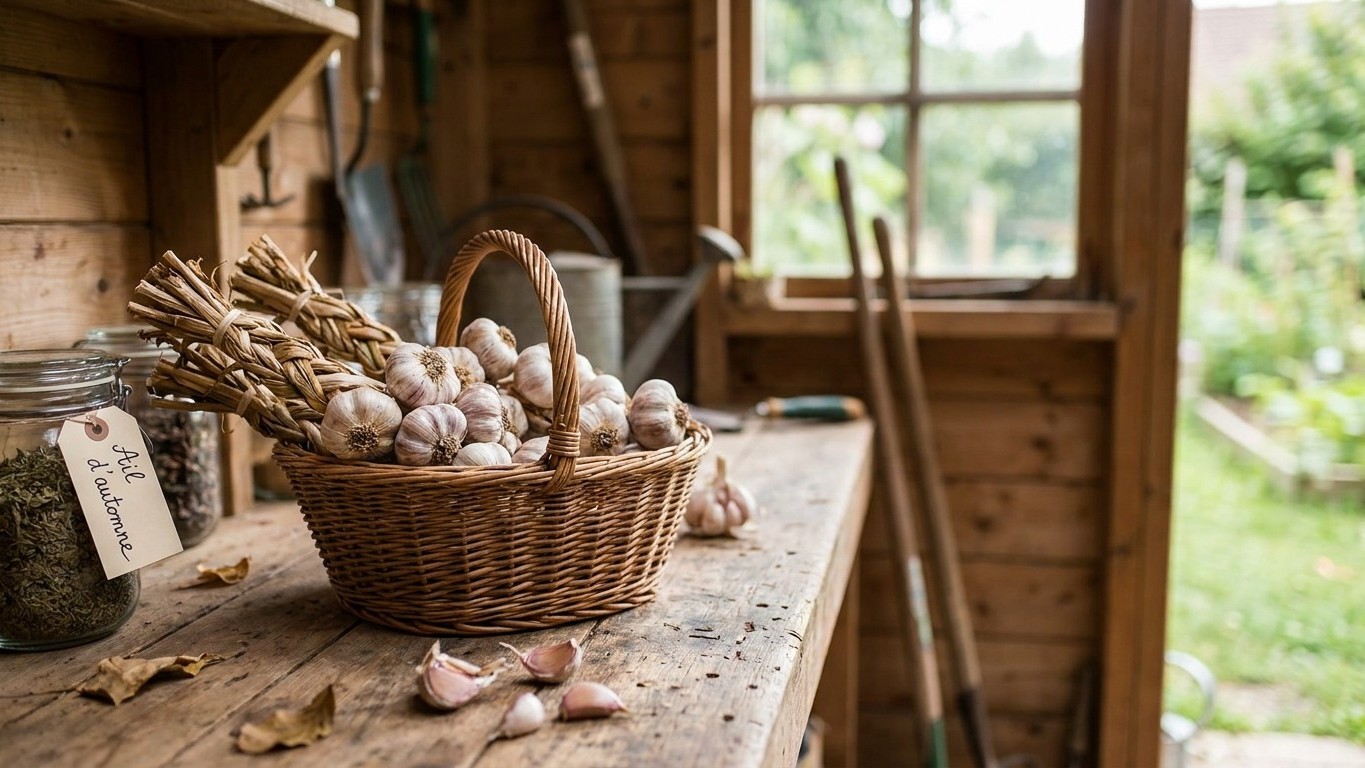

Refrigerating garlic ruins it because the cold and moisture trick the clove into breaking dormancy: it sprouts early, the flesh goes soft and rubbery, and the papery wrapper turns damp and moldy well before you meant to use it. The same thing happens to a bulb left on a humid counter near the stove. The fix is to store fully cured garlic in a cool, dark, dry spot with airflow around it, loose in mesh or paper, never sealed in plastic and never chilled.
Why this matters for garlic

Get storage wrong and you lose the harvest you spent nine months growing, not at some distant date but within a few weeks of putting the bulb away. A clove that sprouts in the pantry is not dead, but the green shoot inside pulls sugar and moisture out of the surrounding flesh, so the cloves around it turn spongy and bitter even if they never touch a fridge. The damage shows up fast enough that a grower usually blames the batch, the variety, or bad luck, when the real cause is where the bulb sat for the past month.
This is different from a planting mistake, where a shallow clove or a late cover crop does not reveal itself until the following summer. Storage failures are quick to appear and, more usefully, quick to fix. A bulb that starts sprouting in week three tells you something about the spot it is in, and moving the rest of the batch to a drier, darker shelf that same week can save what is left. The stakes are the whole harvest, since garlic does not ripen again once pulled, and a soft, green-sprouted bulb is not coming back to firm, dry storage condition no matter how it is treated afterward.
When to do it
Long-term storage only starts once curing has finished, not on a calendar date. A bulb is ready to move into storage when the outer wrapper has gone fully papery and dry, the neck (for hardneck types) has tightened down hard, and the roots have shriveled to thin dry threads. Pulling garlic into storage before this stage traps moisture inside the wrapper and invites mold within days, regardless of climate.
Curing itself typically runs several weeks in a warm, shaded, airy spot after the bulbs are lifted, and the exact length depends on humidity, air movement and how thick the wrapper started out. Growers in humid regions often need longer curing time and better airflow to get the neck fully closed than growers in dry inland climates, where a garage or covered porch dries bulbs quickly. Do not rush this stage to hit a fixed number of days; judge by the neck and wrapper, not the calendar. If you are unsure whether your bulbs are cured enough, your state or county extension office can describe the local curing window in more detail, since humidity swings enough from one region to the next that no single timeline fits everywhere.
Once cured, garlic goes straight into its storage spot rather than sitting around loose on a counter. The step before this one, growing and Harvesting the bulb itself, is covered in Growing Garlic if you have not pulled your crop yet.
How to do it
Set up the storage spot first
Garlic keeps longest somewhere cool, dark, dry and ventilated, not cold. A pantry shelf, an unheated closet, a cellar stair, or a garage that does not freeze all work, as long as light stays out and air can move around the bulbs. Skip the refrigerator entirely for whole bulbs meant to be eaten over the following months. Sealed plastic bags and airtight containers are the other common mistake: trapped humidity condenses on the wrapper and mold starts before you notice anything is wrong.
Choose a container that breathes
Mesh bags, loosely woven baskets, cardboard boxes with holes cut in the sides, or paper bags with the top left open all let moisture escape instead of pooling around the bulb. Softneck varieties, the kind with pliable stems, can also be braided into strands and hung, which keeps bulbs separated and easy to inspect one at a time; the technique and which types actually hold a braid are covered in Braiding Garlic: Which Types Can Be Braided, and When to Do It. Hardneck varieties, with their stiff woody stem, do not braid and are better stored loose in mesh or shallow crates stacked with gaps for airflow.
Sort before you store
Set aside any bulb with a soft spot, a bruise, or a wrapper that is still damp. One bad bulb in a crate can spread mold to its neighbors within a couple of weeks, so a five-minute sort at storage time saves the rest of the batch. Keep your largest, cleanest bulbs separate if you plan to replant cloves the following autumn, since seed stock does best stored under the same cool, dry, dark conditions as eating garlic, not refrigerated.
Wrapper thickness at harvest has a lot to do with how well a bulb stores, and that thickness is shaped partly by what the soil supplied while the bulb was still growing. If your bulbs came out of the ground with thin, tearing wrappers this year, the fix usually starts in the bed rather than in the pantry, which is why Soil for Garlic: What to Add in Autumn, and What to Leave Out is worth reading before your next planting.
| Method | Best for | Airflow | Typical hold time |
|---|---|---|---|
| Mesh bag on a shelf | Both types, loose bulbs | Good | Longer than sealed storage |
| Braided strand, hung | Softneck only | Very good | Long, easy to monitor bulb by bulb |
| Cardboard box with holes | Bulk storage | Moderate | Shorter than mesh unless checked often |
| Sealed plastic bag | Nothing, avoid | None | Spoils within weeks |
| Refrigerator | Nothing, avoid | None, humid | Sprouts within weeks |
What goes wrong
Sprouting is the most common failure, and it shows up within a couple of weeks of a bulb sitting somewhere too cold or too humid, the refrigerator being the classic cause. The tell is a green shoot pushing up through the top of the clove, visible as soon as you peel back the outer wrapper. Once you see it, use that bulb first since the clove quality only drops from there.
Mold is the second failure, and it tends to show later, sometimes a month or more into storage, starting as a soft, darker patch under the wrapper that smells sour rather than sharp. Mold spreads to neighboring bulbs in a shared bag or box, so catching it early and pulling the affected bulb out matters more than treating it once it appears.
Shriveling and mites
A third failure is the opposite problem: bulbs stored somewhere too dry and too warm shrivel and lose weight, the cloves going papery and light rather than firm. This shows up gradually over a couple of months and is less destructive than mold, since a shriveled bulb is still edible, just past its best.
Garlic bulb mites are a less common but real problem in stored garlic, showing as a fine dusty residue around the base of the clove and a slightly hollow, chalky texture inside. They spread through a batch quickly in warm storage, so any bulb showing this should be discarded rather than kept alongside sound ones.
How this changes across the country
Storage itself, once garlic is cured and indoors, does not change much by climate, since the goal everywhere is the same cool, dark, dry, airy spot. What changes by region is how easy that spot is to find and how long curing takes to get there. A grower in a humid Gulf Coast state like Louisiana or coastal Georgia typically needs more active airflow, a fan in the curing space and a longer stretch of warm weather to fully dry the neck and wrapper, compared with a grower in an arid state like Arizona or New Mexico, where garlic often cures fast in a shaded, breezy garage without much extra effort.
Cold-winter states also tend to have naturally good storage spots close at hand: an unheated mudroom, a root cellar, or an attached garage in a place like Minnesota or Vermont often sits in a cool range for most of the storage season without any management. In milder winter states such as coastal California or the Southeast, an interior closet or a pantry away from the kitchen’s heat and humidity does the same job, though it takes more deliberate choosing since the whole house may run warmer than a stored bulb prefers. The right storage spot is one you can check on without needing to change your heating or cooling setup, and that spot looks different in a Phoenix apartment than it does in a Vermont farmhouse.
Because curing conditions vary so much by regional humidity and growing season length, a state or county extension office is the most reliable place to check how long curing typically takes where you garden, rather than relying on a single national number that will run short in a humid year and long in a dry one.
Common questions
Can I freeze garlic instead of storing it?
You can, but frozen garlic turns soft and is best used only in cooked dishes, not raw or as a base for oil infusions. Peel and chop cloves first, then freeze them in small portions, since a whole frozen bulb turns mushy once thawed and does not slice or mince cleanly.
Why did my stored garlic turn green or blue inside a clove?
A blue-green tint inside a clove is usually a harmless reaction between the garlic’s natural compounds and trace minerals, often triggered by age or slight bruising, and it is not the same as mold. The clove is still fine to eat if the texture and smell are normal; discard it only if it is also soft or sour-smelling.
Can I store garlic in olive oil at room temperature?
No. USDA food safety guidance warns that garlic held in oil at room temperature can create conditions for the bacteria that causes botulism, since the oil blocks air the bacteria would otherwise need to be kept in check. Keep any garlic-in-oil mixture refrigerated and use it within a short window, and treat it as a different category from whole bulb storage entirely.
My garlic is sprouting but still firm. Is it safe to eat?
Yes, sprouted garlic is safe to eat, though the green shoot can taste bitter and is usually removed before cooking. Split the clove, pull out the green sprout with the tip of a knife, and use the rest as normal; the flavor of the surrounding clove will be a little milder than it was before sprouting started.