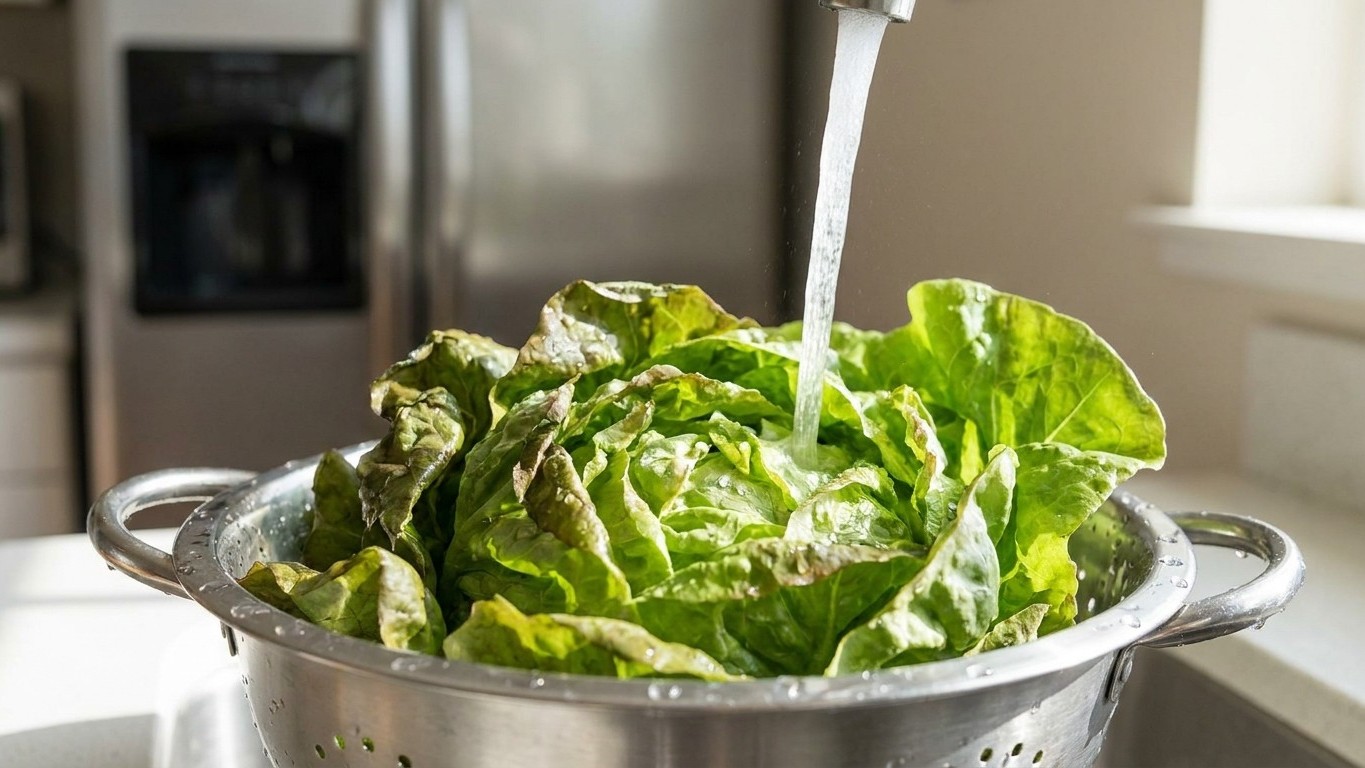

Bitter lettuce leaves can be partly rescued after harvest. Utah State University Extension notes that washing and refrigerating the leaves for a day or two will dissolve much of the bitterness caused by heat or uneven watering. It’s a genuine fix, not a myth, though it works on flavor only, not on the tough texture or slowed head growth that the same stress often leaves behind.
The short answer
Bitterness in lettuce comes almost entirely from two field conditions: heat and inconsistent watering. Utah State University Extension states plainly that “high summer temperatures reduce growth, decrease quality, and cause bitter or off flavors to develop.” Once that bitterness has set in during the plant’s life in the garden, the leaf itself has changed at the cellular level. But the compounds responsible for the sharp, unpleasant taste are water-soluble to a degree, and that’s the loophole the fix exploits.
The remedy is specific and comes straight from the same source: “Wash and store the leaves in the refrigerator for a day or two. Much of the bitterness will disappear.” Notice the wording. Not all the bitterness. Not a guarantee of restoring the lettuce to what it would have tasted like if it had grown under cooler, steadier conditions. Just a meaningful reduction, enough in most cases to make a harvest edible and even pleasant instead of something you toss in the compost pile.
This puts bitter lettuce in a different category from most garden disappointments. A head that bolted and turned woody can’t be un-bolted. A plant stunted by root damage won’t suddenly catch up. But flavor chemistry, at least in this one case, has some give to it after the knife has already done its work. That’s worth knowing before you decide a rough patch of hot weather has ruined your whole planting.
The catch is that the fix is a rescue operation, not a substitute for growing lettuce correctly in the first place. Utah State University Extension frames the advice this way: “Avoid water stressing the plants and growing lettuce in temperatures above 80 F.” The refrigerator trick shows up as the second half of that same sentence, the backup plan for when the first half didn’t happen. Treat it as damage control, useful on the days you need it, not a reason to let the garden bed dry out or bake through July without a second thought.
So the short answer holds up: yes, you can fix bitter lettuce after picking, to a real and useful extent, by washing the leaves and letting them sit cold for a day or two. What you can’t do is skip the growing conditions that kept the bitterness from developing in the first place, and that’s where the next section picks up.
What actually decides it

Two separate stresses drive bitterness, and they don’t always show up together. Knowing which one is at play changes how you manage the bed for the rest of the season.
Heat above the plant’s comfort zone
Utah State University Extension is specific about the number that matters: “Lettuce grows best when temperatures do not exceed 75 F.” Above that threshold, growth slows, quality drops, and bitter or off flavors start to build in the leaf tissue. The same source notes that lettuce tolerates cold far better than heat, adding that “temperatures down to 32 F do not seriously damage young plants.” That asymmetry explains why lettuce is treated as a cool-season crop rather than a summer staple. A light frost is a minor inconvenience to a young lettuce plant. A stretch of days over 80 F is a flavor problem it can’t outgrow.
Moisture that swings instead of staying steady
The second driver is watering that goes from dry to soaked and back again rather than staying level. Utah State University Extension states that “moisture fluctuations will cause leaves to become tough, slow head development and contribute to off-flavors.” This is a separate mechanism from heat stress, though the two often overlap in the same garden bed during a hot week, since dry soil heats up faster and dries out again sooner after watering. A plant swinging between drought and flood is putting energy into surviving the stress rather than building tender, mild-tasting leaf tissue.
Why the fix only touches one of the two
The refrigerator soak addresses the chemical bitterness left behind by these stresses, not the physical toughness that moisture swings cause. That’s the boundary of the repair. A leaf that’s gone tough from irregular watering will still be tough after a day in the crisper drawer, even if it tastes less sharp. The two problems, flavor and texture, arrive together but don’t leave together.
How to do it
- Start by locating your own last frost date, since every timing step in lettuce growing counts backward or near from that single point rather than from a calendar month.
- If you’re starting seeds indoors for transplants, count back 5 to 6 weeks from your last frost date and begin them then, giving the seedlings enough time to size up before they go outside.
- Set transplants into the garden near your last frost date rather than ahead of it. Lettuce tolerates cold well as a young plant, but “near” the frost date, not weeks before it, is the timing Utah State University Extension supports for moving seedlings outdoors.
- If you’re direct-seeding instead of transplanting, sow 2 to 3 weeks earlier than the transplant date, since direct-seeded lettuce goes into the ground ahead of when transplants would be set out.
- Once seedlings or direct-seeded rows are up and growing, keep the soil evenly moist rather than letting it dry out between waterings. This is the step that prevents the tough, off-flavor texture that moisture swings cause later.
- Watch the weather as temperatures climb. Once daytime highs push consistently above 75 F, growth and quality both start to slip, and above 80 F is the point Utah State University Extension flags for active water-stress management.
- Harvest during cooler parts of the day when possible, since the plant’s internal temperature at cutting time affects how quickly it will show heat stress on the counter.
- If a harvest still tastes bitter despite steady watering, wash the leaves and refrigerate them for a day or two before deciding the crop is a loss. Much of the bitterness will fade in storage, even though the fix won’t undo tough texture from earlier moisture swings.
Utah State University Extension separates lettuce into four types: crisphead, butterhead, cos or romaine, and leaf lettuce, each with its own set of named varieties in the source material. Choosing among the four types matters more for texture and heat tolerance in the garden than any specific variety detail, since the source gives no days-to-maturity figures or size ratings for the varieties it lists.
What goes wrong

- Transplanting too early, before the last frost date. Lettuce seedlings handle cold reasonably well, but Utah State University Extension’s timing puts transplants near the last frost date, not ahead of it. Reset your calendar to that anchor point rather than guessing at an earlier date based on the plant’s frost tolerance alone.
- Letting soil dry out between waterings during a hot stretch. This is the exact moisture fluctuation the source flags for causing tough leaves and off-flavors. The remedy is prevention: a consistent watering schedule that doesn’t let the bed swing from dry to saturated. Once the stress has already happened, the refrigerator soak can pull back some of the flavor loss, but it won’t restore lost tenderness.
- Harvesting a crop that grew through a heat spike and assuming it’s ruined. Before composting a bitter-tasting head, wash the leaves and refrigerate them for a day or two. Utah State University Extension is direct about the outcome: much of the bitterness will disappear, which often turns a written-off harvest into a usable one.
- Confusing the flavor fix with a texture fix. Refrigerating washed leaves addresses the bitter compounds, not the toughness that moisture stress causes. If a harvest is both bitter and tough, expect the soak to improve taste while the texture stays as it is. That’s a difference worth knowing before you judge whether the fix worked.
- Growing lettuce through temperatures above 80 F without adjusting care. This is the specific threshold Utah State University Extension names for active stress. Once forecasts push past it, tightening the watering schedule and harvesting earlier in the day both help limit how much bitterness develops in the first place.
Common questions
Does the refrigerator trick work on every type of lettuce?
Utah State University Extension’s guidance on washing and chilling to reduce bitterness applies to lettuce generally rather than to one type over another. The mechanism, drawing out water-soluble bitter compounds, isn’t described as varying by type in the source.
How long should washed leaves stay in the refrigerator?
The source specifies a day or two. That short window is what the guidance covers, not a longer soak or extended cold storage period.
Can I prevent bitterness instead of fixing it after the fact?
Yes, and it’s the better outcome. Utah State University Extension ties bitterness to two preventable conditions: temperatures above 80 F and water-stressed plants. Even watering and attention to the 75 F growth threshold do more for flavor than any after-harvest fix.
Should I direct-seed or transplant if I want to avoid bitter lettuce?
Either method works, since bitterness is driven by growing conditions rather than by how the crop was started. Direct-seeded lettuce goes in 2 to 3 weeks earlier than transplants, but both should be managed with even watering and attention to heat once temperatures climb toward the 75 F to 80 F range Utah State University Extension identifies.