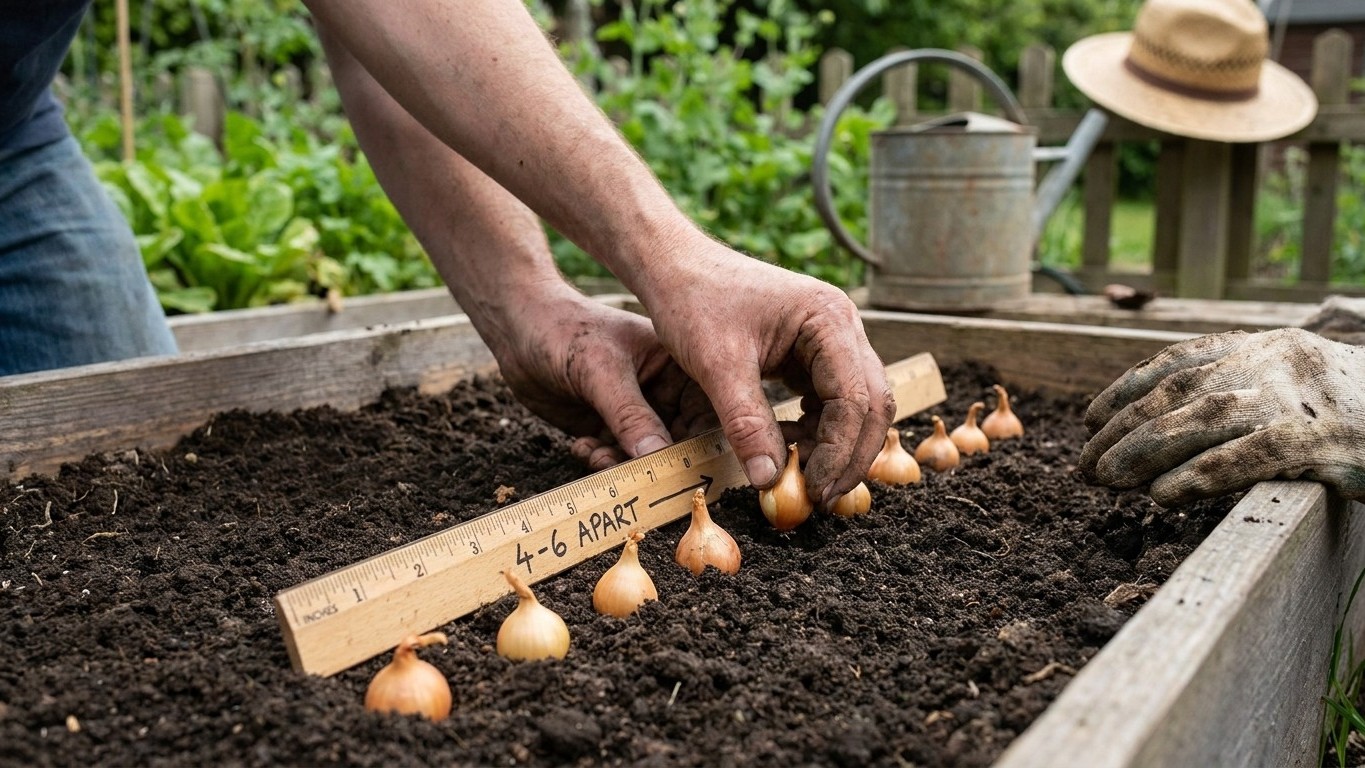

That row of onion sets lined up in your hand right now is where this decision actually gets made, not in some chart on the seed rack. Plant them close together and you’ll pull a bed full of small, tidy bulbs come harvest. Space them out and you’ll get fewer bulbs, but each one will swell bigger. Decide which of those two outcomes you actually want before you push a single set into the soil, because the spacing you choose locks that trade in for the whole season.
How Far Apart to Plant Onions
There is no single correct spacing for onions. The real question is whether you want a lot of onions or a few big ones, and the answer changes which distance you use. Both are legitimate goals and both produce a full bed at harvest, just in different shapes.
Onions have shallow, sparse roots compared with most vegetables you grow. They don’t range out looking for water and nutrients the way a squash vine or a tomato does. That means every onion in the row is drawing from a small pocket of soil right around its own base, and it competes hard with whatever is growing next to it, whether that’s another onion or a weed seedling.
Set the bulbs close together and each one has less room to swell. It stays small, but the bed’s total weight at harvest stays high because you’ve packed more bulbs into the same square footage. Space them wide and each bulb has room to push outward without hitting its neighbor, so it grows larger. Fewer bulbs fit in the row that way, and the total harvest by weight can end up lower even though each individual onion is bigger.
Deciding which trade you want
A bulb needs room to swell without pushing against the plant next to it. Once two bulbs touch, they stop rounding out and start flattening against each other, which is the lopsided shape you see in a badly crowded row at harvest. That’s not disease or bad luck. That’s two onions that ran out of room at the same time.
If you’re growing onions for soup, for the freezer, or for pickling whole, small bulbs from a tighter planting work fine and you’ll get more of them. If you want large onions for slicing or for showing off at the table, give the row more room and accept fewer bulbs total. Neither spacing is wrong. The decision is really about what you plan to do with the onions once they’re out of the ground.
How to do it

The spacing decision only matters if you carry it through consistently down the whole row. A row that starts tight and drifts wide by the far end gives you an uneven harvest, some bulbs crowded and small, others with room they didn’t need.
Mark, plant, and hold the line
- Decide size versus yield first, before you touch a set or a seedling.
- Run a string line down the row so you have a straight reference to work from.
- Pick one spacing distance for the whole row and stick to it, rather than eyeballing each plant.
- Set each onion at that same distance, resisting the urge to squeeze in “just a few more.”
- Leave the same distance between rows as you use within the row, since roots compete in every direction, not just along the line.
If you started from seed and the row came up thicker than planned, thin it while the seedlings are still small. Pull every other plant where the row is crowded and use the pulled ones fresh, as scallions, rather than composting them. This is the moment to fix a spacing mistake. Waiting until the bulbs have started swelling means the roots are already tangled and thinning does more damage than good.
Adjust as they grow
Weed right up against the row by hand for the first several weeks. Onions can’t outcompete weeds for the little root space they have, so a few weeks of chickweed or grass growing unchecked right at the base does more damage to bulb size than a slightly tight spacing ever would. If you chose the wider spacing, you’ll have bare soil between plants for a while. That gap is worth filling with something quick, and it’s exactly where a companion planting decision belongs. See What to Plant Next to Onions for what works in that space without competing for the same root zone.
Keep the soil evenly moist while the bulbs are actively sizing, then ease off as the tops start to yellow and fall over. Watering is a separate decision from spacing, but the two interact: a crowded row with poor airflow holds moisture at soil level longer than a wide one, which changes how carefully you need to manage the last few weeks before harvest. Watering Onions Without Ruining Storage covers that timing in detail.
What goes wrong
Small, misshapen bulbs
If bulbs come out small even though you gave them generous spacing, the cause usually isn’t the spacing itself. It’s weeds or uneven watering that ate into the room you gave them. Check the row: if weeds crowded in against the base for even a few weeks mid-season, that’s almost certainly the answer. There’s nothing to fix after the fact except harvest what you have and weed harder and earlier next season.
If bulbs come out flattened or lopsided on one side, that’s two neighbors that grew into each other. It happens in tight rows where the spacing was closer than the mature bulb size needed. Once you see it at harvest, there’s no fixing that batch. Use the flattened ones first, since they tend to store less well than round, evenly formed bulbs, and adjust the spacing wider next time you plant that same distance.
Rot and poor airflow
A badly overcrowded row sometimes shows a different problem: bulbs that look fine at the shoulder but feel soft or rot from the neck down once pulled. Tight spacing keeps the soil surface shaded and slow to dry between waterings, and onions sitting in that damp micro-climate for weeks are more prone to rot starting at the neck. If you catch it before harvest, pull the affected bulbs immediately and use them right away rather than trying to cure them for storage. They won’t keep.
For the rest of the row, cutting back on watering earlier than you normally would, and making sure the tops have fully flopped over before you pull anything, cuts down on how many bulbs come out with soft necks. A crowded bed just needs that airflow and drying window managed more carefully than a wide one does, since the plants themselves aren’t giving the soil surface any help drying out on its own.