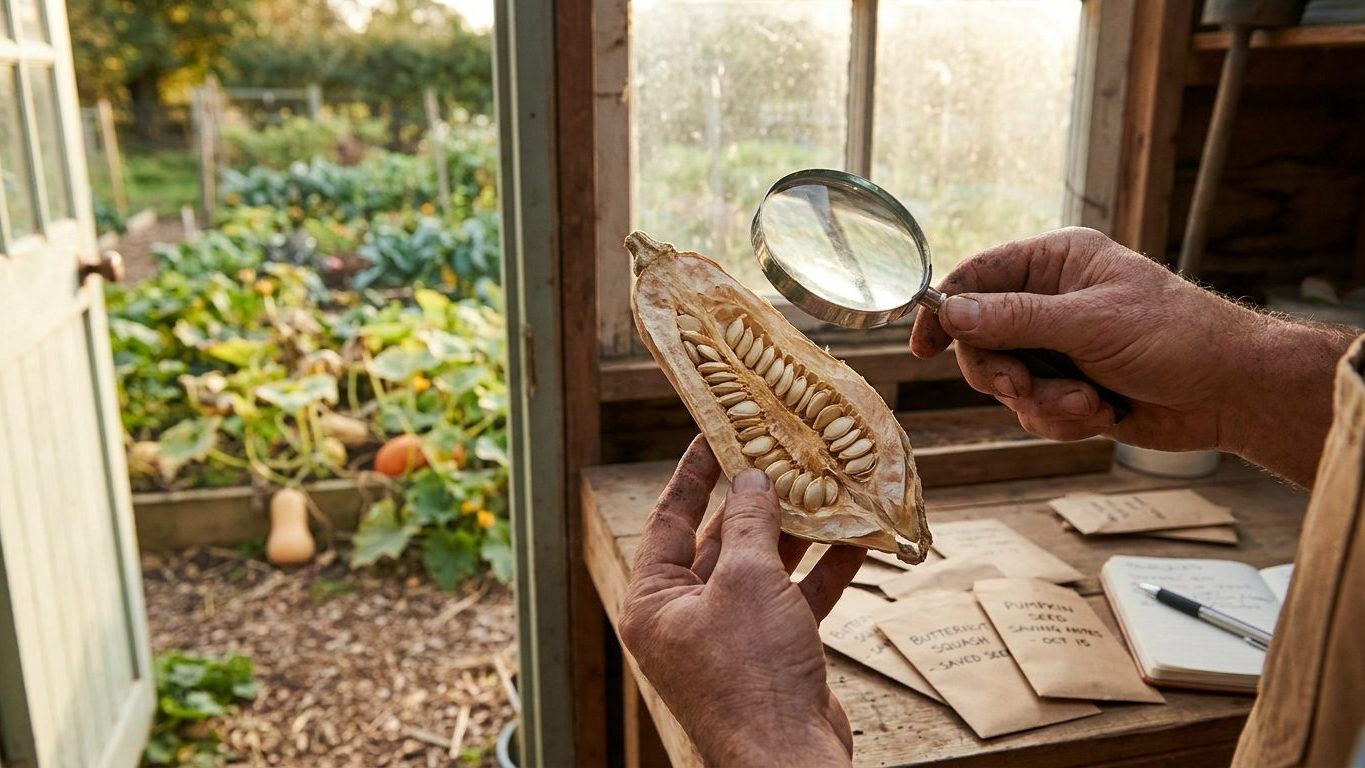

Saving seed from a Winter Squash is straightforward until two different types grow in the same patch. Crossing happens between varieties of the same botanical species, not between species, and the surprise never shows up in the fruit you harvest this year. It shows up next year, in the plants grown from that saved seed.
What is actually going on

Home gardens usually hold squash from four separate botanical species, even though nothing on the plant tag says so. Cucurbita pepo, Cucurbita moschata, Cucurbita maxima, and Cucurbita argyrosperma (sometimes labeled mixta) each contain a mix of squash types, and a few carving pumpkins, that look nothing alike but share the same flower structure and the same open door to cross-pollination. Bees move between blossoms of the same species without checking whether the fruit looks like an acorn, a zucchini, or a jack-o’-lantern. Species is a genetic boundary, not a visual one, and that mismatch between what a squash looks like and what it actually is causes most of the confusion.
A cross does not touch the fruit you pick this season. The flesh, the skin color, the shape, all of that comes from the mother plant’s own genetics, formed before pollination ever mattered to the eater. What a stray pollen grain from a neighboring variety changes is the genetic content of the seed sitting inside that fruit, and that change stays invisible until someone plants those seeds the following spring. That’s the one-year lag that trips up even experienced gardeners: this year’s harvest tastes and looks exactly as expected, and the seed saved from it looks exactly as expected too, right up until it grows into something that clearly isn’t the parent variety.
This is also where winter squash and pumpkins get tangled up, and they shouldn’t be. A winter squash is grown to be eaten, cured, and stored through the cold months. A carving pumpkin is grown for a firm shell meant to hold a shape, not for the flesh inside. But several carving pumpkin types belong to Cucurbita pepo, the same species as acorn squash, delicata, spaghetti squash, and summer squash like zucchini, which means a pumpkin patch and a squash bed sitting near each other can cross freely even though the two crops are grown for completely different purposes. If pumpkin-specific questions come up (fair weigh-offs, hollowing techniques, decorative varieties) that’s a separate subject covered on this site’s pumpkin pages, not here.
Before any seed goes into a saved packet, the fruit itself needs a look. A soft spot, a patch that weeps when pressed, or a moldy stem area ends the question regardless of how the rest of the squash looks; that fruit isn’t a candidate for eating or for seed saving, full stop. Appearance elsewhere on the fruit doesn’t override one bad spot.
In the garden
The species groupings below cover what typically shows up in a home vegetable garden, and what tends to go wrong when two members of the same group grow near each other without any isolation.
| Species | Common types in home gardens | What goes wrong without isolation |
|---|---|---|
| Cucurbita pepo | Acorn, delicata, spaghetti squash, most summer squash (zucchini, yellow crookneck), most carving pumpkins | An acorn squash grown near zucchini or a carving pumpkin looks unaffected this year, but seed saved from it and replanted next season can throw squat, tough-necked, oddly colored fruit that resembles neither parent cleanly. |
| Cucurbita moschata | Butternut types, some tan-skinned tropical pumpkin types | Two different butternut varieties planted a few rows apart will cross without any visible sign; seed saved from either line drifts in maturity date and skin color over a couple of generations. |
| Cucurbita maxima | Hubbard, buttercup, banana squash, many giant show pumpkins grown for weigh-offs | A hubbard planted beside a giant maxima pumpkin (grown for size, not eating) can cross; seed saved from the hubbard for a keeping squash line ends up carrying genetics aimed at bulk, not flavor or storage quality. |
| Cucurbita argyrosperma (mixta) | Cushaw types | Less common in home gardens, so the risk mostly appears where a gardener grows cushaw alongside a moschata type from seed obtained regionally; crossing here is less frequent but not impossible. |
None of this means two squash of different species will cross into each other. A butternut and an acorn squash sit in different species, and left to their own devices they don’t interbreed, which is genuinely good news for anyone growing a mixed bed. The trouble is entirely within-species, between varieties that often look completely unrelated.
Keeping seed true requires one of three approaches: grow only one variety per species each season, separate varieties by real distance (guides vary, some suggesting a few hundred feet with a hedge or windbreak between plantings, others recommending far more in open, flat country with strong pollinator traffic), or hand-pollinate a blossom and bag it before bees ever reach it. Skipping all three and simply hoping the plants were “far enough apart” is the step that turns a seed-saving project into a guessing game.
What it depends on where you are
How much any of this matters shifts with the length of the growing season, the local pollinator population, and the humidity a saved seed has to cure in, and none of those are the same from one region to the next. A shorter season can mean a moschata variety barely finishes ripening its seed before frost, leaving a saver with underdeveloped seed regardless of whether a cross happened. A longer, hotter season with heavy native bee activity raises the odds of cross-pollination simply because more pollinators are moving between more open blossoms on more days.
Rainfall and humidity during curing matter just as much, since a saved seed dried in a damp climate faces a higher mold risk than one dried somewhere arid, and that’s a separate issue from whether the seed is genetically true. A gardener in a humid coastal state and one in a dry inland valley are managing two different curing problems even if they’re growing the exact same variety.
None of this is something a general guide can pin down responsibly, and that’s the honest answer rather than a workaround. Local frost dates, typical pollinator activity windows, and humidity during the curing period are all regional facts, and the right source for them is a state’s own cooperative extension service, along with the state-level guides on this site that address growing conditions specific to a given region. A seed-saving plan built around a generic isolation distance or a generic curing timeline, instead of local conditions, is a plan built on the wrong information from the start.
The mistake that costs the most
The single costliest error is judging species by appearance instead of by botanical fact. A gardener who grows an acorn squash on one side of the garden and a zucchini on the other assumes, reasonably but wrongly, that two vegetables looking that different must be biologically unrelated and safe to save seed from side by side. They’re both Cucurbita pepo. So are many carving pumpkins. So is spaghetti squash. The visual gap between a smooth green zucchini and a ribbed orange acorn squash tells you nothing about whether their flowers can cross, and bees don’t consult appearance before moving pollen between them.
The cost of this mistake isn’t visible immediately, which is exactly what makes it expensive. The fruit harvested that fall looks and tastes like the acorn squash it’s supposed to be. The seed saved from it looks like ordinary acorn squash seed. It’s only the following season, when that seed is planted and grows into something with the wrong shape, the wrong skin texture, or a flavor that misses the mark, that the cross becomes obvious, and by then an entire growing season, and sometimes years of careful seed-saving on a favorite line, has been spent finding out.
The fix costs almost nothing by comparison: before saving seed from any winter squash, find out its species, not just its type, and check what else in the garden, or in a neighbor’s garden within pollinator range, belongs to that same species. One variety per species per season is the simplest guarantee. Hand-pollination and bagging is the answer for anyone who wants to grow more than one variety of the same species and still trust the seed packet at the end of the year.