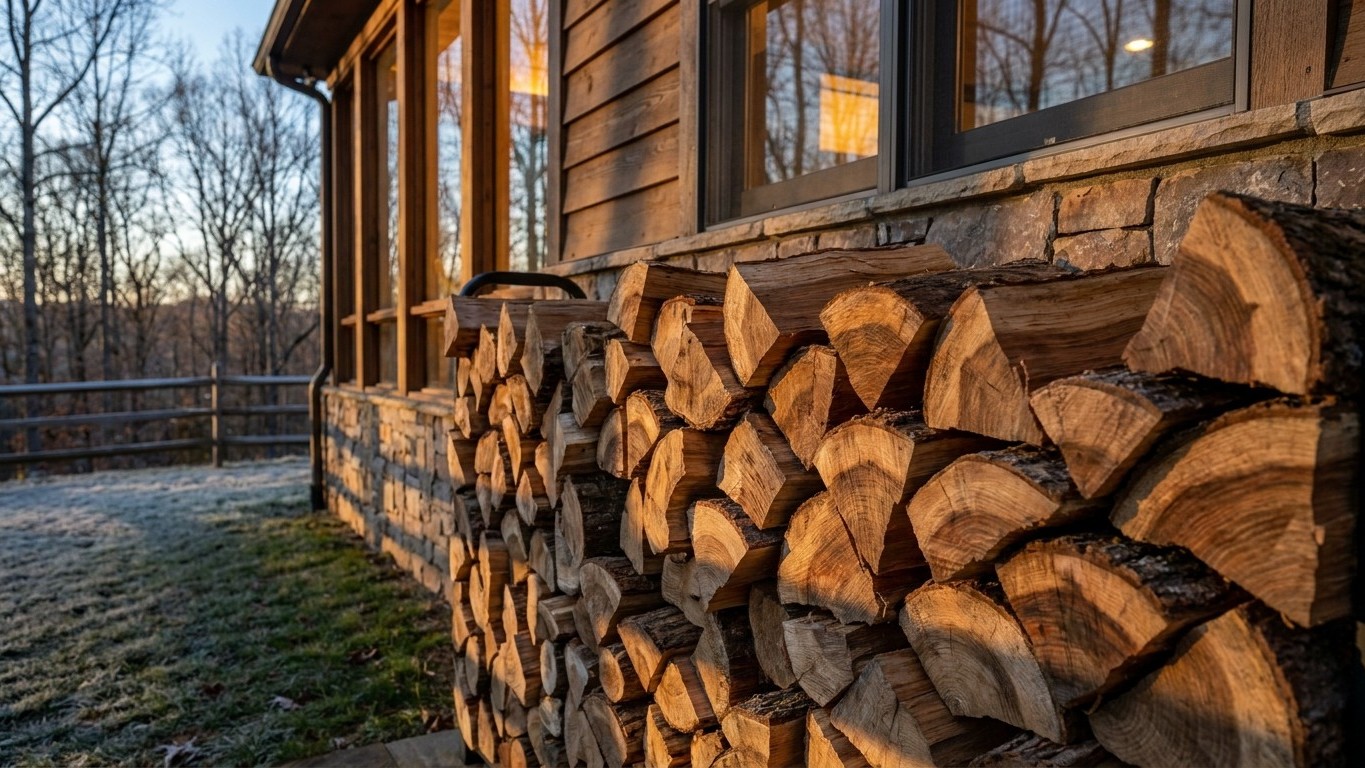

Firewood in Georgia isn’t a survival question, it’s a comfort question. With average lows in the mid-30s during the coldest month at the state’s reference station, most homes need a wood that burns clean and steady for evening fires and cold snaps, not a fuel source that has to carry a house through months of hard freeze. That changes which species make sense and how much you actually need to buy.
How cold it actually gets here

The number that matters is 35.6°F. That’s the average daily minimum temperature during Atlanta’s coldest month, according to NOAA’s NCEI Climate Normals for 1991-2020. Not the record low, not some scary historical outlier, but the typical low you’d expect to see on an ordinary night in the depths of winter. It’s a mild figure, and it tells you something specific: Georgia winters dip below freezing regularly, but they don’t stay there.
That single degree number sits right at the edge of two different worlds. It’s cold enough that a house without supplemental heat will feel it, especially overnight and especially in older homes with drafty windows or minimal insulation. But it’s far from the deep, sustained cold that forces households in Minnesota or Maine to burn wood as their primary defense against the season. A Georgia household stacking firewood isn’t preparing for weeks of subzero nights. It’s preparing for a string of nights in the 20s and 30s, interrupted by stretches of much milder weather.
Geography inside the state matters too, even though the reference figure comes from Atlanta. North Georgia, up toward the mountains, runs consistently colder than the coastal plain and the areas around Savannah or Valdosta. If you’re in Blairsville or Dahlonega, expect more nights below freezing than the statewide reference suggests. If you’re near the coast, expect fewer. The 35.6°F figure is a solid planning anchor for the middle of the state, but it’s not a promise for every county.
What this means practically: firewood in Georgia is mostly about heating a room, taking the chill off a cold evening, or supplementing a furnace or heat pump during the coldest weeks. It’s rarely the only thing standing between a family and a dangerous night. That doesn’t make the choice of wood unimportant, it just reframes the stakes. You’re optimizing for a good, steady fire on a genuinely cold night, not stockpiling against a months-long siege. Keep that distinction in mind, because it changes how much wood is worth buying and how picky you need to be about species.
Which woods are worth the effort here
Density decides how much heat a cord actually delivers, because a cord is a fixed volume, 4 feet by 4 feet by 8 feet, or 128 cubic feet, whether you fill it with a light wood or a heavy one. According to Michigan State University Extension, a cord of well-seasoned hardwood produces roughly 20 million BTU, which works out to about the same heat as 145 gallons of #2 fuel oil or 215 gallons of LP gas. That average number moves a lot depending on which species fills the stack and how dry it is, so treat it as a benchmark, not a guarantee for any particular load you buy.
Given Georgia’s moderate cold figure, the honest advice is that density matters, but it doesn’t matter as much here as it would in a harder climate. In a state where the average winter low sits in the mid-30s, a dense hardwood is genuinely useful for the handful of nights that actually get cold and for keeping coals alive overnight without reloading the stove every few hours. A lighter wood still has its place, it’s easier to split, easier to get burning fast, and perfectly adequate for the milder stretches that make up most of a Georgia winter, when you just want a fire going for an evening rather than a heat source carrying the house through the night.
One species worth naming directly is red oak, because it comes up specifically in how seasoning works here. Red oak’s cell structure makes it slower to dry than most other hardwoods, so if you’re buying or cutting it, plan on more time stacked and covered before it’s ready to burn, not less. A load of red oak that looks seasoned after a single summer may still be carrying more moisture than a lighter species cut at the same time.
Beyond that, the honest answer for most Georgia buyers is that local availability decides as much as any species comparison. A dense hardwood you can’t find seasoned, or can only get green with a promise it’ll be ready by winter, is worse than a more modest wood you can actually buy dry and ready to burn. Ask any seller directly how long the wood has been split and stacked before you commit to a truckload, because that answer matters more than the species name on the invoice.
How much wood a winter takes
There’s no honest published number for “how many cords Georgia needs,” and anyone offering one without asking about your house is guessing. Three things decide the real answer: how cold your specific location actually gets, how well your house holds heat once it’s warm, and whether that firewood is doing the main job of heating or just supplementing a furnace or heat pump on the coldest evenings.
The cold figure sets the floor. A household in the mountains of north Georgia, seeing more nights near or below freezing than the Atlanta reference suggests, will burn noticeably more wood over a season than a household on the coastal plain working from the same size stove. That’s the climate variable, and it’s the one you can check against your own local weather history rather than a statewide average.
The house variable is where most of the real difference actually shows up. A poorly insulated home, one with old single-pane windows, gaps around doors, or minimal attic insulation, can burn through roughly double the wood that a tightly sealed, well-insulated home uses in the exact same winter, in the exact same town, with the exact same stove running. That’s not a small rounding error, it’s the single biggest lever most homeowners have, and it costs nothing to check: a drafty room where curtains move on a still day is burning your firewood before it ever reaches the stove.
The third variable is intent. A household using a wood stove as decorative supplemental heat for a few evenings a week needs a fraction of what a household relying on wood as its primary heat source through January and February needs, even in the same house on the same street. Before buying a season’s worth of firewood, answer those three questions honestly: how cold does it actually get where you live, how tight is your house, and is this wood carrying the heating load or just supporting it. The answer moves the number more than any species chart ever will.
Drying wood in this climate
Seasoning matters more than species almost everywhere, and Georgia is no exception. Per Michigan State University Extension, firewood needs to burn at 20 percent moisture or less to give up its heat efficiently. Green wood, freshly cut, can carry over 60 percent moisture, and every bit of that water has to boil off inside the firebox before the wood contributes any usable heat. That’s energy you paid for in wood, spent boiling water instead of warming your house.
Georgia’s humid summers work against fast drying compared to a drier climate out west, but they don’t make seasoning impossible, they just make the process slower and less forgiving of shortcuts. Split wood, stacked so air can move freely through and around it, and kept off the ground and ideally covered on top, usually reaches that 20 percent target after one full summer of exposure. The mechanism that actually dries wood is air movement and time, not direct sun, which is why a stack shoved against a fence in full shade with good airflow will often out-dry a stack sitting in blazing sun but packed too tightly for air to circulate.
Red oak breaks that general timeline, as noted above, because its cell structure resists drying more than most hardwoods. If red oak makes up part of your stack, budget extra months beyond what you’d expect from a lighter species split and stacked at the same time.
Tie this back to Georgia’s mild cold figure and one mistake shows up constantly: wood cut and split in spring for the coming winter is very often not actually ready by the time cold weather arrives. A single Georgia summer, even a hot and sticky one, doesn’t guarantee 20 percent moisture by November if the wood wasn’t split small enough or stacked loosely enough for real airflow. The safest approach for anyone burning wood this winter is to be burning wood that was split and stacked at least a full year ago, not wood that was still standing as a tree this spring.