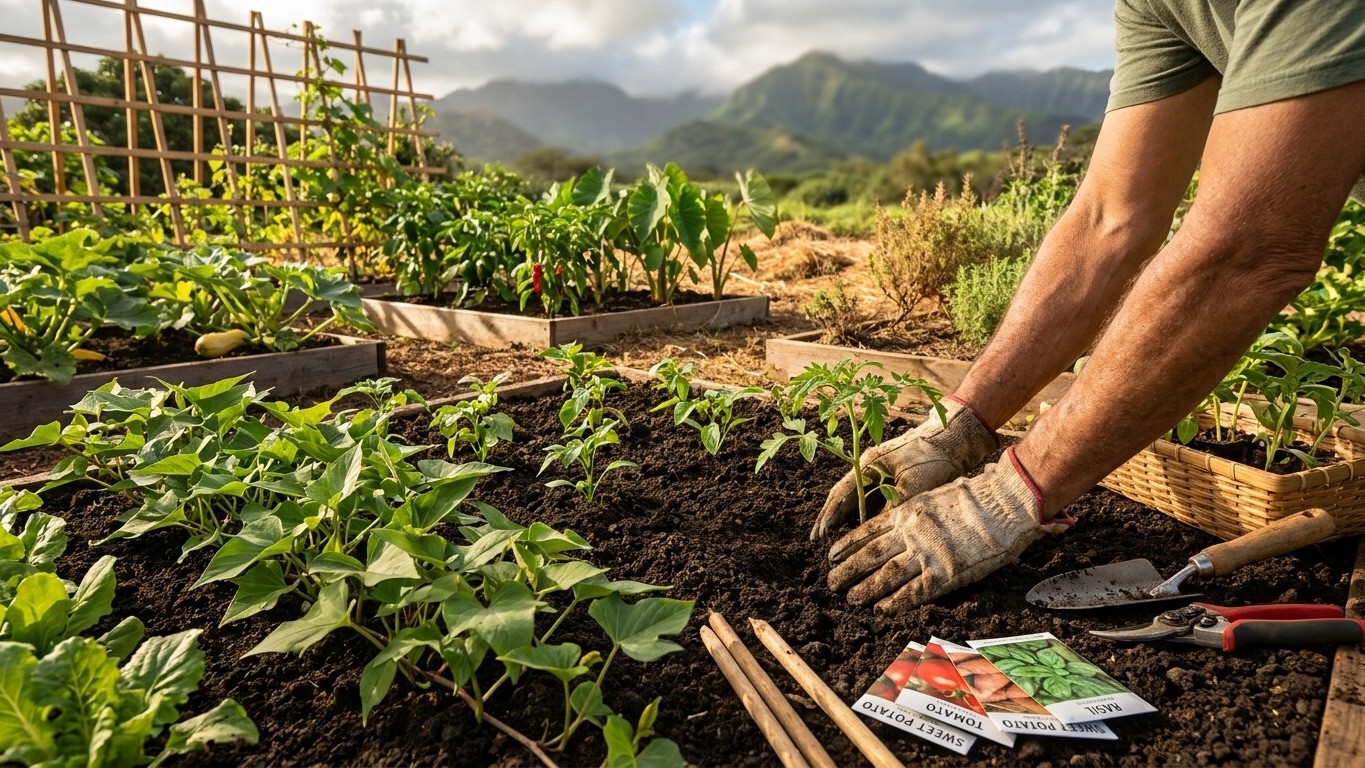

September in Hawaii means planting continues almost exactly as it did in August: warm-season vegetables, tropical roots and vine crops go into the ground statewide, because there is no frost date to plan around. The real questions are which elevation band you garden in and whether you’re on the wet windward side or the dry leeward side, since those two factors decide what thrives this month far more than the calendar does.
What goes in the ground in September

Most of the continental planting calendar runs on frost. Hawaii’s doesn’t. NOAA’s 1991-2020 Climate Normals for the Honolulu station show zero days per year at or below 32°F, and every freeze percentile in that dataset comes back not-computable, because freezing simply doesn’t happen at the elevations where people garden. Frost only shows up on the summits of Mauna Kea, Mauna Loa and Haleakala, thousands of feet above any vegetable bed. So the planting decision in September isn’t “how many weeks until frost.” It’s elevation, rainfall pattern, and which side of the mountain you’re on.
The USDA Plant Hardiness Zone Map places the islands across zones 9a through 13a, a wider range than almost any other state carries, driven entirely by elevation. Sea-level coastal gardens sit at the warm end of that range and stay in warm-season mode year-round. Upcountry gardens, the kind found around Kula on Maui or Waimea on Hawaii Island, sit hundreds to thousands of feet higher, run noticeably cooler at night, and land closer to the cool end of the range, which opens the door to crops that struggle at sea level.
Windward exposure adds the second variable. Windward slopes catch trade-wind rain almost daily and support crops that want consistent moisture. Leeward slopes stay dry for months at a stretch and depend on irrigation, which rewards crops that tolerate drought once established.
September planting by zone
| Growing zone | September conditions | What to plant now |
|---|---|---|
| Low elevation, windward (wet) | Warm, humid, frequent rain | Taro, sweet potato, cassava, banana keiki, ginger |
| Low elevation, leeward (dry) | Hot, dry, irrigation-dependent | Beans, corn, melons, squash, peppers, tomatoes |
| Upcountry / high elevation | Cooler nights, drier air | Lettuce, brassicas, carrots, beets, peas |
Nothing here is a gamble the way a mid-September tomato transplant would be in Minnesota. The risk in Hawaii isn’t cold, it’s putting a wet-loving crop like taro into a leeward garden with no irrigation, or setting delicate seedlings out into a windward downpour before they’ve hardened off.
What to start under cover
Without a frost date to count backward from, Hawaii gardeners count backward from something else: the shift into the wetter windward season, or the point at which upcountry nights start cooling enough to favor cool-season crops. Seeds started under cover in early September are ready to transplant by mid to late October, right as upcountry areas ease into their coolest, most lettuce-friendly stretch of the year.
Start under cover this month:
- Brassicas (cabbage, broccoli, kale) for upcountry fall gardens
- Lettuce and other leafy greens, which bolt fast in low-elevation heat but do well started in shade and moved upcountry or into afternoon shade
- Tomato and pepper successions, started in trays to skip the seedling stage most vulnerable to slug damage during heavy rain
The two failure modes look different here than on the mainland but land in the same place. Start too early in low light under a shade cloth or covered porch, and seedlings stretch into leggy, weak-stemmed plants before there’s anywhere ready to put them. Start too late, particularly for upcountry brassicas, and the transplants miss the cool window entirely, going into the ground just as temperatures climb back up and bolting or stalling before they head up. Trays started indoors or under 30-50% shade cloth, watered lightly and consistently, hold better than anything left exposed to a September downpour.
What is ready to pick
September harvest reflects what went in during the warm, settled stretch of summer. Sweet corn planted in July is tasseling and filling out; a ripe ear shows plump, milky kernels when you pierce one with a fingernail. Beans planted in successions since spring keep producing if picked every two to three days, since letting pods mature and yellow on the vine signals the plant to stop flowering.
Tomatoes, peppers, cucumbers and summer squash planted earlier in the season are all in full production at low elevation. Melons started in June or July are approaching ripeness; a cantaloupe slips free from the vine with light pressure when ready, while watermelon is better judged by the dulling of the skin’s sheen and a hollow sound on a thump than by any fixed day count.
Tropical staples run on their own longer clocks. Papaya bears nearly year-round at low elevation, with fruit ready when the skin starts turning from green to yellow at the blossom end. Sweet potato and taro planted months earlier are bulking underground through September; taro corms are typically checked by scratching back a little soil near the base rather than pulling the whole plant to test. Banana bunches that flowered in the spring are often filling out and nearing harvest, judged by the rounding of the fingers rather than color alone.
Stored onions and garlic, if grown upcountry, are worth a check this month for any that have gone soft at the neck, since Hawaii’s humidity speeds up storage rot compared to drier mainland climates.
The jobs that matter this month
September sits near the peak of the Central Pacific hurricane season, and that single fact should drive more of the month’s garden work than the planting list does. Tall crops like corn, papaya and staked tomatoes need their stakes and trellises checked and reinforced now, before a tropical system rolls through rather than after. Loose fencing, wobbly trellis frames and top-heavy banana stalks are the things that go down first in a storm, and they’re far easier to fix on a calm afternoon than in the aftermath.
Mulching matters differently depending on which side of the island you’re on. Leeward gardens need a thick mulch layer now to hold moisture through the dry stretch; windward gardens need mulch pulled back slightly from stems to avoid rot when the rain picks up. Watering rhythm should follow the same split: leeward beds need a consistent irrigation schedule rather than occasional heavy soaks, while windward beds may need nothing at all beyond what the trade winds deliver.
Succession sowing keeps beans, corn and salad greens coming rather than arriving all at once. Every two to three weeks is a reasonable interval for beans and corn at low elevation, where the growing season doesn’t stop the way it does on the mainland.
Pest scouting deserves a walk-through after every heavy rain, since fruit flies, aphids and slugs all spike following wet spells. Fallen or damaged fruit should come off the ground promptly, since it’s one of the biggest drivers of fruit fly populations in home gardens. Soil testing and compost turning round out the list, both worth doing now while the garden isn’t demanding constant attention.
What not to do in September
The most common mistake isn’t planting the wrong crop, it’s planting the right crop in the wrong exposure. Taro or other wet-loving crops set into a leeward garden without an irrigation plan will struggle within weeks, no matter how warm and inviting the air feels. The reverse mistake happens too: melons and beans set into a windward garden during a wet stretch often rot at the root before they ever fruit, simply from staying too wet for too long.
Skipping storm prep is the second big error. Waiting until a tropical system is already forecast to stake tomatoes or secure a trellis leaves too little time, and plants staked in a hurry rarely get tied as securely as ones staked calmly a week earlier.
Nitrogen timing trips up more gardeners than it should. Heavy nitrogen feeding on tomatoes, peppers or beans that are already setting fruit pushes leafy growth at the expense of the fruit itself, and it’s an easy mistake to make when a plant looks like it wants feeding. A phosphorus-leaning fertilizer, or simply easing off nitrogen once flowering starts, keeps energy going into the crop rather than the foliage.
Finally, uncovering shade cloth or row cover too early after a calm stretch invites sunburn on leafy greens and seedlings that haven’t hardened off, since Hawaii’s midday sun at low elevation is intense enough to scorch tender leaves within hours.
Checking this against your own county
Everything above is a starting point, not an instruction sheet for one specific garden. Elevation alone can shift these windows by weeks between a coastal lot and an upcountry lot fifteen minutes up the same road, and windward-versus-leeward exposure can matter just as much as elevation does. Before committing a season’s worth of seed to any of these dates, check conditions with the University of Hawaii’s CTAHR Cooperative Extension Service, which tracks local rainfall patterns, pest pressure and variety recommendations down to the district level.
Common questions
Does Hawaii ever get frost in home gardens?
No. NOAA’s 1991-2020 Climate Normals show zero days per year at or below 32°F at low elevation, with every freeze percentile marked not-computable. Frost occurs only on the highest volcanic summits, well above any garden.
Why does Hawaii have such a wide USDA hardiness zone range?
The USDA Plant Hardiness Zone Map places the islands across zones 9a to 13a, a spread driven by elevation rather than latitude. A few thousand feet of elevation gain can shift a garden from tropical warmth to noticeably cooler, frost-free nights.
What’s the difference between windward and leeward gardening in September?
Windward slopes catch regular trade-wind rain and favor moisture-loving crops like taro and sweet potato with little irrigation. Leeward slopes stay dry and depend on a consistent watering schedule, favoring crops like beans, corn and melons that tolerate drier soil once established.
Is September a risky month for hurricanes in the garden?
September falls near the peak of the Central Pacific hurricane season, which is a strong reason to secure stakes, trellises and top-heavy plants like banana and papaya well before any storm is forecast rather than after.
Gardeners who plant by the Moon can check the September 2027 moon planting calendar, a tradition rather than a proven method.