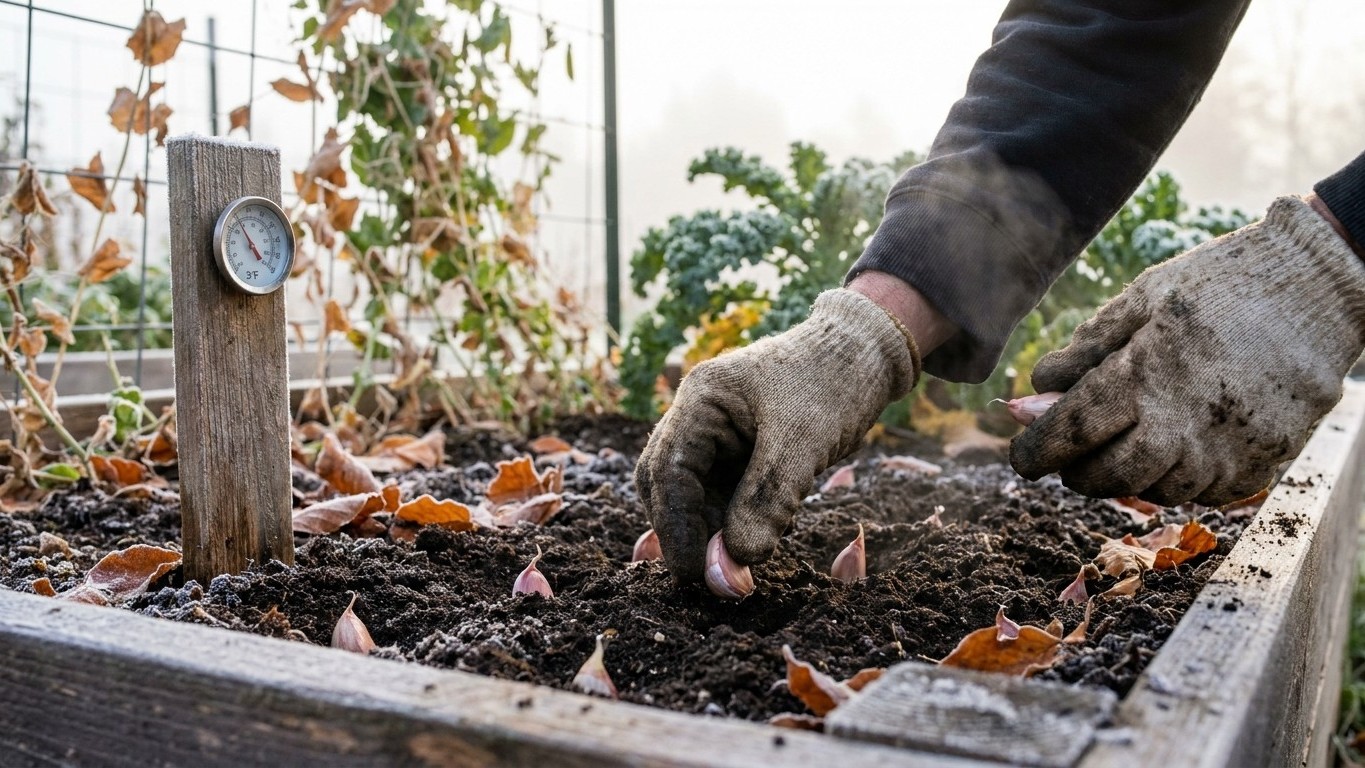

October in Idaho straddles the average first fall frost window for the Boise area, October 7 to October 21, so the safe answer changes depending on which side of that window your own calendar sits. Garlic and shallots can still go into workable ground. Hardy greens and peas planted earlier may still be producing. Gardeners in higher counties, already well past their own frost date, are better served moving into bare-root planting, cold frames, and the season’s first dormant-season chores.
What goes in the ground in October

The calendar says October, but the ground doesn’t follow it. Temperature decides, not the date. In the Boise area, the average first fall frost falls somewhere between October 7 and October 21, based on NOAA’s 1991-2020 climate normals for station USW00024131. That means the first half of the month can still be workable on the valley floor, while the back half has likely already delivered a killing frost to anything tender. Higher-elevation counties across the state, and much of the panhandle north of the Treasure Valley, typically see that first frost weeks earlier; some mountain valleys are done with frost-free growing by mid-September.
What survives this window matters more than what’s printed on a seed packet’s back label. Garlic and shallots are the safest bet of the month. Cloves and bulbs pushed into workable soil now will root before the ground locks up and reward you with an early start next summer. These hardy alliums don’t much care whether the air is 70°F or 35°F during the day, as long as the soil itself hasn’t frozen solid.
Cold-tolerant greens sown earlier in the season, spinach, mache, and some lettuces, can often take a light frost and keep producing into the month, especially under a cold frame or a low tunnel. Peas are more of a gamble this late; they need enough remaining warm days to flower and set a crop, and by October that window has usually already closed across most of the state.
Idaho’s USDA Plant Hardiness Zones run from 3b up to 7b, according to the 2023 USDA Plant Hardiness Zone Map built on 1991-2020 averages. That’s one of the widest zone spreads of any state, and it’s the reason a planting decision that works in the Boise reference area can be flatly wrong sixty miles away at a higher elevation.
| Region type | General position in the 3b-7b range | What October usually looks like |
|---|---|---|
| Low valley floors (Treasure Valley, Boise area) | Upper end of the range | First frost often still ahead in early October |
| Northern panhandle valleys | Middle of the range | Frost has usually already arrived by early October |
| High mountain valleys and higher elevation ground | Lower end of the range, 3b-4b | Growing season for tender crops already over well before October |
What to start under cover
By October, starting seeds for an open-ground harvest barely makes sense anywhere in Idaho. The math runs the wrong way once the light and warmth start dropping this fast. Instead, “starting under cover” this month means sowing into a cold frame, an unheated hoop house, or a bright windowsill, with the goal of either a late fall harvest or a head start held over the winter to resume growth as daylight lengthens.
Count backward from the first fall frost window, October 7 to October 21 in the Boise area, rather than from a date on the wall. Fast-growing greens like spinach, mache, and mizuna need roughly four to six weeks of decent light and temperature to reach a pickable size. Sown right at the start of October under cover, they can still reach a usable size before growth all but stops for winter. Sown in the back half of the month, in most of the state, they’ll sit as small seedlings until late-winter light returns.
The two ways this goes wrong are opposite problems. Start too early relative to your own frost date and the seedlings size up while there’s still enough warmth for pests and disease to move fast under cover, or they bolt and turn bitter before the short days even arrive. Start too late and you end up with weak, spindly seedlings that never build the root mass to survive a real cold snap, cover or no cover.
Garlic doesn’t fit this category at all. It goes straight into open ground, covered afterward with mulch rather than a frame, which is why it belongs on the outdoor planting list instead of here.
What is ready to pick
October is one of the few months where the harvest list and the frost date argue with each other. Winter squash, pumpkins, and any potatoes still in the ground need to come out before a hard freeze reaches the soil, ideally with the squash cured in a warm spot for a week or two afterward to toughen the skin for storage. Apples and pears in most of the state are finishing their harvest window; fruit left on the tree past a hard frost tends to soften fast and store poorly.
Brassicas are the exception that benefits from cold rather than suffering from it. Kale, Brussels sprouts, and some cabbages actually sweeten after a light frost converts stored starches to sugar, so there’s a real case for leaving them in the ground a little longer instead of rushing to pick before the first cold night.
In counties already well past their frost date and into the first real cold spell, the fresh outdoor harvest thins out fast. That’s when a cold frame carries the household: mature greens sown in September, plus any spinach or lettuce that made it through October’s start-under-cover window, keep producing in a way open ground simply can’t.
Stored crops need a hands-on check this month, not a glance. Squash with a soft spot, potatoes going green or sprouting, and onions that feel soft at the neck should come out of storage and get used first. One going-bad squash in a bin will take its neighbors down with it faster than most gardeners expect.
The jobs that matter this month
October rewards the gardener who treats it as prep season, not downtime. Garlic and shallot beds should get a layer of mulch right after planting, both to buffer the first hard freezes and to cut down on frost heaving through winter. Any tender crops still hanging on, from the last tomatoes to squash vines, need row cover ready to throw on for a mild-frost night, with the understanding that cover buys days, not weeks, once the season turns.
Fruit trees and cane berries are heading into their pruning window, though full dormant pruning is safest once the leaves are down and growth has genuinely stopped rather than the moment the calendar flips. Cutting too early, while sap is still moving, invites disease into fresh wounds. A light cleanup of obviously dead or damaged wood is fine now, with the heavier structural pruning saved for deeper dormancy.
Soil testing pays off more in October than almost any other month, because there’s time for lime or amendments to work into the ground before spring planting without the rush of a compressed spring schedule. Turning finished compost into beds now, rather than waiting, gives it a full winter to integrate.
Seed catalogs for the next growing season start circulating in fall, and the varieties gardeners actually want, especially regionally adapted ones bred for short-season Idaho counties, tend to sell out well before spring. Ordering now, even loosely, beats discovering a favorite variety is gone come planting time.
Tool maintenance is the job nobody schedules and everybody regrets skipping: cleaning soil off blades, sharpening pruners and hoes, and oiling anything with a moving joint before it sits unused for months. Beds and fencing damaged over summer are easier to repair now, on dry ground, than after the first real snow.
What not to do in October
The classic October mistake is trusting a warm afternoon over the calendar. A stretch of 70°F days in early October can feel like summer isn’t over, and that’s exactly when gardeners get talked into direct-sowing something warm-season or leaving tender plants uncovered overnight, right before a clear, still night drops temperatures well below freezing. Daytime air temperature tells you almost nothing about what the thermometer will do after sunset once the sun angle is this low.
Uncovering row covers or cold frames too early after a mild spell is the same mistake in reverse. One warm week doesn’t mean the frost risk has passed for the season. In most of Idaho, once the first fall frost window opens, more cold nights tend to follow it in fairly short order rather than one and done.
Feeding nitrogen this late is a mistake that shows up weeks later rather than immediately. A dose of high-nitrogen fertilizer in October pushes soft, fast new growth on perennials and woody plants right when they should be hardening off for winter, and that soft growth is exactly what a hard freeze kills first, sometimes taking the whole plant’s winter survival odds down with it.
Leaving winter squash and pumpkins in the field past a hard freeze is another common regret. Frost on the vine doesn’t hurt a mature squash much, but a hard freeze that reaches the fruit’s skin shortens storage life dramatically, even if the squash looks fine coming off the vine.
Checking this against your own county
Everything above is built around the Boise area’s own frost data. Idaho’s geography makes that a starting point, not an instruction: elevation alone can shift a frost date by weeks, the panhandle’s lake-moderated valleys behave differently than the high desert of the south, and mountain valleys tucked between ranges can run a full growing season behind a low river valley sixty miles away.
Before acting on any date in this article, check it against local numbers. The University of Idaho Extension publishes county-level guidance and a planting calendar built for Idaho’s actual range of climates, and it’s the better source once you know which side of the state, and which elevation, your own garden sits on.
Common questions
Is it too late to plant garlic in Idaho in October?
No. October is generally the prime window for planting garlic across most of Idaho, since cloves need several weeks of root growth before the ground freezes hard. Get cloves in as early in the month as the soil is workable, then mulch heavily.
What is Idaho’s coldest hardiness zone, and does it change October planting?
Parts of Idaho sit in USDA zone 3b, the coldest end of the state’s 3b-7b range, according to the USDA Plant Hardiness Zone Map. Gardeners in those colder zones should assume their own first frost arrived well before the Boise-area window of October 7 to October 21.
When does the first fall frost typically hit the Boise area?
NOAA’s 1991-2020 climate normals for station USW00024131 put the average first fall frost between October 7 and October 21. That’s a range, not a single date, and it describes the Boise reference area specifically rather than the whole state.
Should I harvest winter squash before or after the first frost?
Before a hard freeze, if possible. Winter squash and pumpkins tolerate a light frost on the vine without much damage, but a hard freeze that reaches the fruit’s skin shortens storage life considerably. The safer approach is harvesting ahead of any forecast hard freeze, then curing the squash in a warm, dry spot for a week or two.
Gardeners who plant by the Moon can check the October 2026 moon planting calendar, a tradition rather than a proven method.
Related guides
- What to Plant in Idaho in January
- Idaho Planting Calendar
- What to Plant in Idaho in May
- What to Plant in Idaho in November
Elsewhere? See what to plant in October in every state and province.