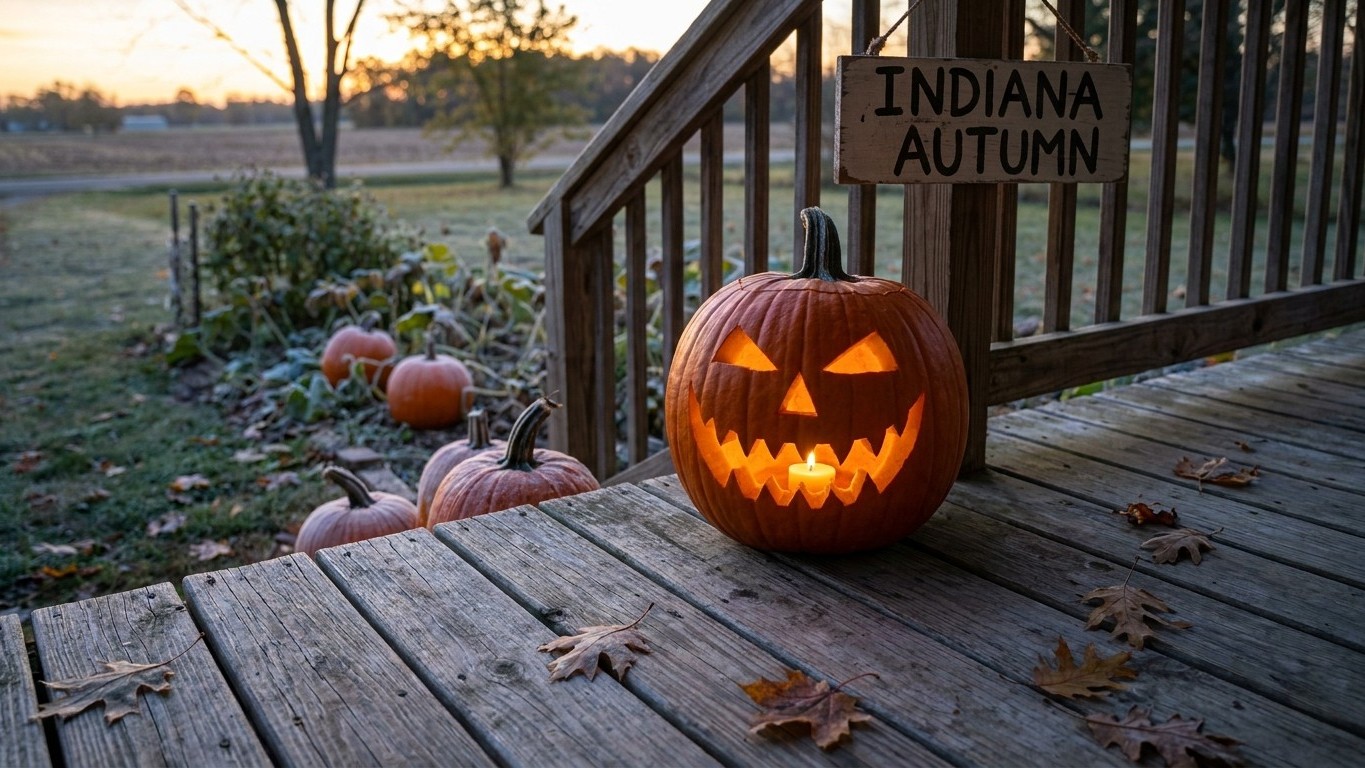

Indianapolis sees its average first fall frost somewhere between October 21 and October 30, which puts it right on top of Halloween, not weeks ahead of it. That timing changes how you should think about carving. A pumpkin left out on an Indiana porch through the end of October isn’t just racing against rot, it’s racing against a freeze that could show up before trick-or-treaters ring the bell.
The short answer

Around here, the mean first frost date sits in that October 21 to October 30 window, according to NOAA’s 1991-2020 climate normals for the Indianapolis station. That’s an average, not a promise, so some years the cold holds off and some years it arrives a week early. But averages matter for planning, and this one lands close enough to Halloween that you can’t treat the two dates as unrelated.
What that means in practice: if you Carve a Pumpkin too early in October, it may sit through a hard freeze before the big night, and freeze damage on a cut pumpkin shows up fast as soft, collapsing flesh around the openings. If you carve too close to Halloween itself, you’re cutting it fine on prep time, but you sidestep most of that frost exposure.
The workable window for most of Indiana is roughly 2 to 4 days before Halloween. That gives you enough lead time to actually carve a design without rushing, while keeping the finished pumpkin’s exposed flesh out of the weather for as short a stretch as possible. If you’re farther south in the state, where Purdue notes fall frost tends to land later by a couple of weeks compared to the north, you have a little more breathing room and could push carving closer to a week out. If you’re up near the Michigan line, lean toward the tighter end of that window.
None of this is about the pumpkin going bad from age alone in just a few days. It’s about matching your carving date to the specific climate risk this state carries in late October, which, as the next section lays out, is a cold-weather problem, not a heat problem.
Frost or heat: which one gets it here
The cold end
A whole pumpkin stores best between 45 and 50 degrees Fahrenheit, according to University of Illinois Extension. Indiana’s late October air routinely drops below that band overnight, and the state’s coldest month averages a daily minimum of 20.9 degrees Fahrenheit at the Indianapolis reference station. That figure describes deep winter, not Halloween week, but it shows how quickly this state’s temperatures fall once autumn turns, and it’s a signal that unheated outdoor storage stops being reliable well before the calendar says winter.
The real risk for a porch pumpkin in Indiana is a freeze, not sustained cold in general. A single overnight dip to 32 degrees Fahrenheit or below can rupture cell walls in the pumpkin’s flesh, and once that happens, thawing brings on rapid softening. That’s the mechanism behind the “frost right before Halloween” problem: it’s not a slow chill, it’s one bad night.
The warm end
Heat isn’t the concern here the way it might be in a Gulf Coast state carving pumpkins in warmer autumn air. Indiana’s late-October daytime highs occasionally push a whole pumpkin above that 50-degree upper storage limit on an unseasonably warm afternoon, especially if it’s sitting on a sunlit porch step. That’s a minor, short-term issue, easily fixed by moving the pumpkin into shade, and it doesn’t carry the same damage risk as a freeze. In this state, cold is the variable that decides your timing, not heat.
- An unheated garage or breezeway. These spaces track close to outdoor temperatures without the wide overnight swings of an open porch, and they stay dark, which slows softening.
- A basement or cellar away from the furnace. Basements often sit naturally near that 45-50 degree Fahrenheit range through fall, but keep the pumpkin at least a few feet from any heating equipment or vent.
- A covered porch, only if you’re watching the forecast. This works fine until a frost advisory shows up for the region, at which point the pumpkin needs to come inside for the night or get covered.
- Away from the fruit bowl and the potato bin. Ripening apples, potatoes, and tomatoes give off ethylene gas that speeds up aging in a stored pumpkin, so keep it in its own space.
- Out of direct sun. Even mild autumn sun through a window or on a porch can push a pumpkin above the safe storage range for part of the day.
Checking this against your own county
Indiana stretches far enough from north to south that a single statewide frost date is only a starting point. Purdue Extension is the authority for local conditions, county by county, and their frost and growing season data will tell you whether your area tends to run earlier or later than the Indianapolis normals used here. Reach them at extension.purdue.edu.
This matters most if you’re near either edge of the state. Southern Indiana counties typically see frost arrive later in fall than the Indianapolis reference point, sometimes by two weeks or more, which shifts the whole carving window later too. Northern counties trend the opposite direction. Your county extension office can also answer questions specific to local pumpkin patches and harvest timing, which affects how much stem, and how much shelf life, your pumpkin has left by the time you bring it home.
Common questions
How long does a carved pumpkin actually last?
No extension service publishes a number for this, and the widely repeated claims about carved-pumpkin lifespan or preservation tricks don’t come from research sources. What is published is guidance on the whole, uncarved pumpkin: keep it intact, stored between 45 and 50 degrees Fahrenheit, and it holds for three to six months. Once you cut it open, treat the carved pumpkin as a short-term display piece and carve close to the day you plan to show it.
Does the stem length matter when I’m choosing a pumpkin?
Yes. University of Illinois Extension recommends picking a pumpkin with 1 to 2 inches of stem still attached. The stem functions as a seal over that part of the pumpkin, and once it breaks off, that exposed area becomes a likely spot for early spoilage. Never carry or lift a pumpkin by its stem, since that’s exactly the kind of stress that snaps it.
Is a frost the same thing as a freeze?
Not quite, and it matters for how you plan. A frost refers to ice crystal formation on surfaces, which can happen even when air temperature readings stay just above 32 degrees Fahrenheit near the ground. A hard freeze specifically means sustained temperatures at or below 32 degrees Fahrenheit, which is the threshold that actually damages pumpkin flesh through cell rupture. The frost date used for planning purposes tracks freeze risk broadly, but the two aren’t identical events.
What should I avoid storing my pumpkin near?
Ripening fruit and certain vegetables, specifically apples, potatoes, and tomatoes. University of Illinois Extension notes these release ethylene gas as they ripen, and that gas accelerates aging in a nearby pumpkin. A pumpkin stored in the same bowl as your countertop apples will age faster than one kept in its own space, regardless of temperature.