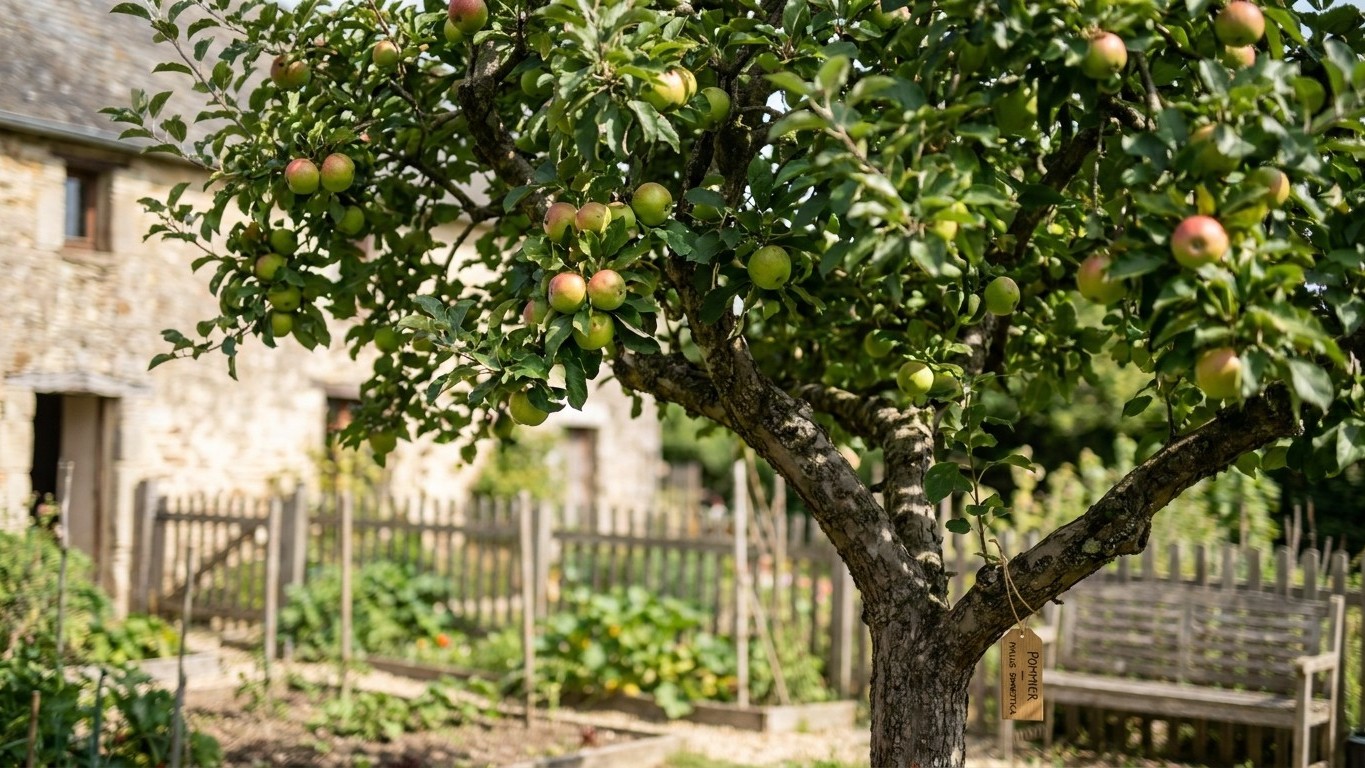

Iowa apples are ready when the fruit’s stage matches the calendar window set by frost, not by a fixed date on the wall. Early varieties near Des Moines finish well before first fall frost (October 14 to October 25), while winter apples picked at full maturity can hold in cold storage for months. The right pick date and the right storage method depend on which variety is on the tree.
When apples are ready to pick in Iowa
The calendar page means less than the tree itself. Apple harvest timing is read off fruit stage: background skin color turning from green to yellow, easy separation from the spur, seeds turning brown. Those signs shift a little every year depending on how spring and summer temperatures ran, so growers who watch the tree instead of the date get it right more often.
Two numbers anchor the whole Iowa season. The last spring frost near Des Moines falls between April 12 and April 24, based on NOAA’s 1991-2020 climate normals for that reference station. The first fall frost arrives between October 14 and October 25, from the same source. Everything that happens on the tree, from bloom to final harvest, sits inside that roughly six-month window. Growers further north in Iowa, or in low-lying river valleys where cold air pools, should expect both dates to shift earlier in fall and later in spring. Iowa State University Extension’s county-level records, built from 1950-2021 data, run about four days later in spring and ten days earlier in fall than the airport station figures used here, so treat the dates above as the mild end of the range, not a guarantee.
Winter hardiness is the other filter, and it’s a different question from bloom timing. The mean daily minimum temperature in Iowa’s coldest month, based on Des Moines climate normals, is 13.8°F. That number decides which apple varieties survive the winter standing in the ground at all, regardless of when they flower. It is not the record low for the year, just the average nightly floor in January, and it’s cold enough that any variety planted here needs a solid winter hardiness rating, not just good flavor.
Because that winter is genuinely cold, chill accumulation (the hours of cold needed to break dormancy properly in spring) is rarely in short supply here. That removes a trade-off that gardeners in milder states have to weigh: a low-chill variety breaks dormancy on less accumulated cold, so it blooms early, which then exposes the blossoms to that April frost window. Iowa’s winters supply plenty of chill for standard and high-chill varieties, so there’s no reason to plant a low-chill type here, and doing so would only pull bloom earlier into frost risk without any benefit. For a full rundown by variety, see our Iowa apple varieties guide and the seasonal Iowa apple growing calendar.
Which ones keep, and which must be eaten
Not every apple picked in Iowa is meant for the root cellar. Early-season varieties ripen while summer heat is still around, and their flesh breaks down fast once picked, sometimes within a week or two at room temperature. Late-season, or “winter,” apples ripen closer to that October frost window and have thicker skin and denser flesh built to hold through the cold months. Picking an early apple and expecting it to store like a late one is one of the most common mistakes home growers make.
The general pattern holds across most apple-growing regions, Iowa included. Varieties that finish ripening close to the first frost window tend to store the longest, often for months rather than weeks, provided they go into cold, humid storage promptly after picking.
| Ripening group | Typical window relative to frost dates | Storage behavior |
|---|---|---|
| Early | Well before October 14 | Best eaten fresh, short shelf life |
| Midseason | Approaching the October 14-25 window | Moderate keeper, weeks not months |
| Late / winter | At or near first fall frost | Longest keeper, suited to cold storage |
Variety choice matters as much as timing. Some apples are bred and selected specifically for storage life, holding firm texture and flavor over an extended period in the right conditions, while others are bred for early flavor and simply aren’t built to last. Checking a variety’s ripening group before planting, rather than after a disappointing harvest, saves a season of frustration. Our guide to Iowa apple varieties breaks down which types locally sold nursery stock tends to favor for each ripening group, and the main Iowa apple growing hub covers site selection and planting basics for anyone starting from bare ground.
One more detail worth flagging: fruit picked slightly underripe, with seeds still pale, generally stores longer than fruit left on the tree until fully soft, even within the same variety. That’s a harvest-timing decision, not a variety decision, and it applies whether the tree is a backyard tree in Des Moines or one further north.
Storing them through a Iowa winter
Getting apples into storage right after picking matters more than almost any other step. Fruit left in a warm garage for a few days before it goes into cold storage loses a meaningful chunk of its shelf life before the clock even starts. The target is a spot that holds close to freezing, ideally in the 30-35°F range, with enough humidity that the fruit doesn’t shrivel.
An unheated garage or an insulated shed can work in much of Iowa, but that same 13.8°F average nightly low in the coldest month that decides whether a tree survives winter is also cold enough to freeze stored apples solid if they sit in an uninsulated space with no buffer. Freezing ruins texture even if the fruit doesn’t visibly rot right away. A basement, root cellar, or an insulated cooler in an attached garage generally holds a steadier temperature than a detached, unheated structure once outdoor lows drop into the teens.
A few practical habits make a real difference over a long Iowa winter:
- Store apples separately from potatoes and other vegetables, since apples release ethylene gas that speeds up spoilage in nearby produce
- Check stored fruit every couple of weeks and pull anything showing soft spots, since one spoiling apple accelerates decay in the ones around it
- Keep humidity up with a damp cloth or an open container of water nearby if the storage space runs dry
- Avoid stacking fruit more than a couple of layers deep to reduce bruising and pressure spots
Growers without a root cellar or spare refrigerator space often split the difference: eat the earlier, shorter-keeping varieties first, straight through fall, and reserve the limited cold storage space for the late varieties that actually reward the effort. That approach lines up naturally with the ripening order described above, since the last apples off the tree are also the ones built to last into winter.
Practical note: If a hard freeze is forecast and stored apples are sitting somewhere unheated, moving them to an interior room for a night or two, even a hallway or closet, is usually enough to avoid freeze damage until the cold snap passes. Iowa State University Extension’s county offices can advise on local storage conditions and variety-specific keeping quality for anyone unsure about a particular tree.
What goes wrong here
The most common failure in Iowa orchards isn’t disease or pests, it’s timing mismatched to the two frost windows described earlier. A tree that blooms before the last spring frost date has passed, whether because of an unusually warm early spring or because it’s a low-chill variety poorly suited to this climate, risks losing its entire blossom set to a single cold night between April 12 and April 24.
On the other end of the season, fruit left on the tree too long chasing extra sweetness runs into the first fall frost window of October 14 to October 25. A hard freeze on unpicked fruit can turn the flesh mealy and shorten storage life dramatically, even if the apple looks fine on the outside. Picking a few days early and letting the fruit finish ripening indoors is almost always the safer trade than gambling on a few more days of tree time this late in the season.
Winter hardiness failures show up differently. A tree that survives most winters can still suffer trunk or graft-union damage in a year when temperatures drop well below that 13.8°F coldest-month average, particularly young trees with thin bark and shallow root systems. Wrapping trunks and mulching the root zone heavily going into winter reduces that risk, especially for the first two or three winters after planting.
Storage losses, meanwhile, usually trace back to one of two causes: fruit that went into storage bruised or already past peak ripeness, or a storage space that swung too far from that 30-35°F target in either direction. Neither problem is fixable once the fruit is in the crate, which is why picking and sorting deserve as much attention as the storage setup itself. Anyone building out a home orchard from scratch will find planting and site-selection basics in the Iowa apple growing hub.
Common questions
What month do apples ripen in Iowa?
There’s no single month that fits every variety. Early types finish well before the first fall frost window of October 14 to October 25, while late varieties ripen right around that window. Reading fruit stage, not the calendar, gives a more reliable pick date each year.
How long do Iowa apples keep in storage?
It depends heavily on the variety and the ripening group. Late-season varieties picked at proper maturity and moved promptly into cold, humid storage keep the longest, while early varieties are best eaten within a couple of weeks of picking. No single storage-length figure applies to every apple.
Can low-chill apple varieties grow in Iowa?
They can survive, but they’re not the better choice here. Iowa’s cold winters already supply plenty of chill hours for standard and high-chill varieties, so a low-chill type would only bloom earlier and face more risk from the April frost window, without any real advantage.
Does an unheated garage work for storing apples over winter?
Sometimes, but not reliably once outdoor lows drop into the teens, which is close to the region’s coldest-month average of 13.8°F. A basement, root cellar, or insulated space holds a steadier temperature and is the safer bet for apples meant to last into late winter.