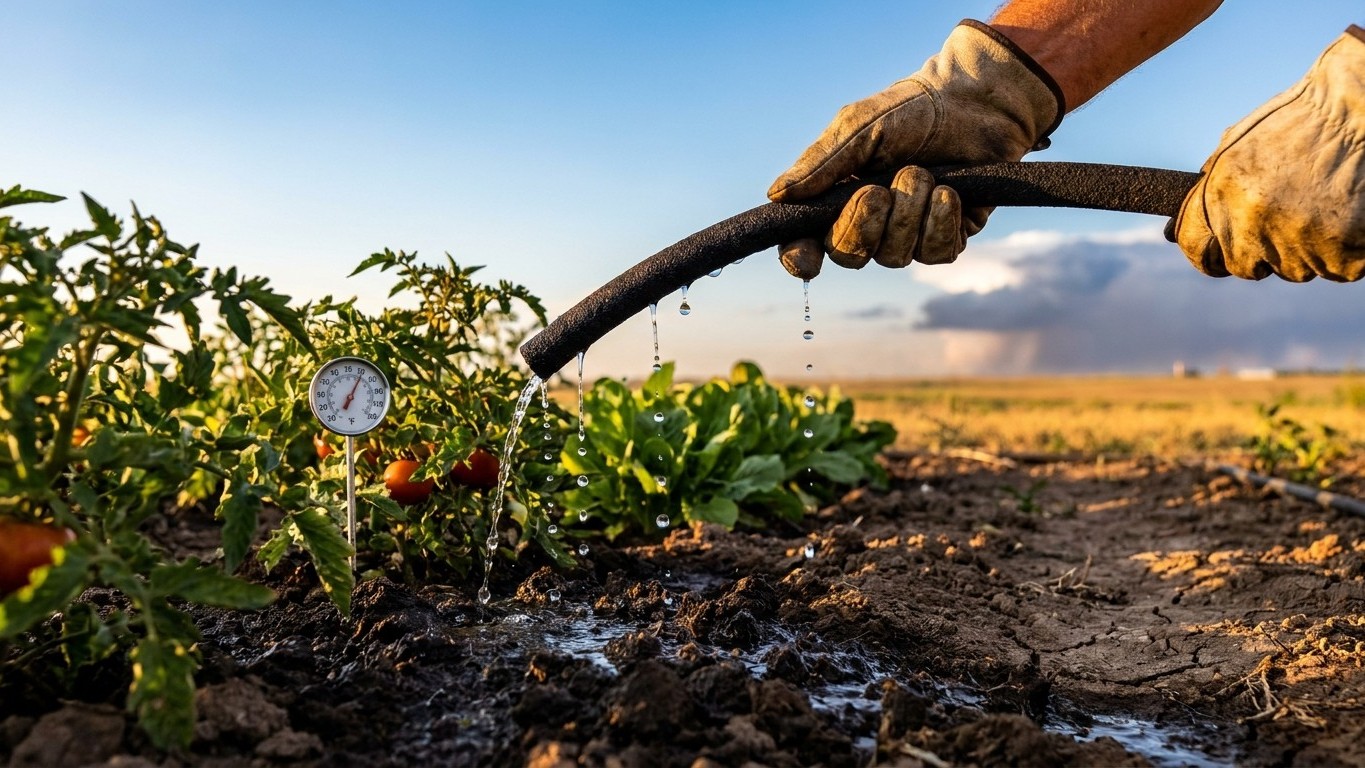

Kansas summers hand gardeners just enough rain to look sufficient on a chart, then take much of it back with heat before roots ever use it. The fix isn’t more water overall, it’s a deliberate rhythm: deep soakings timed to the soil and the thermometer, not left to chance or a garden hose habit.
What changes here

Kansas gets 3.98 inches of rain in July, its driest summer month, and the reference station used for these normals reaches 90 degrees or hotter on 57.6 days a year. Put those two numbers side by side and the message is simple: on paper there’s nearly enough rain to cover a garden bed, but the heat load is high enough to burn much of it off before it ever reaches a root system.
The arithmetic makes this concrete. A vegetable bed or a perennial border generally wants about an inch of water a week. July has roughly 4.4 weeks (31 days divided by 7), so 3.98 inches spread evenly works out to just under 0.9 inch of rain per week on average. That leaves only a sliver, around a tenth of an inch, for the gardener to carry themselves if the month behaved like a steady drizzle. It doesn’t. July rain in Kansas tends to arrive as a thunderstorm that dumps water fast, and fast rain runs off a dry surface instead of soaking down to root depth. Add 57.6 days of 90-degree heat pulling moisture straight back out of the topsoil, and the real gap a gardener needs to fill is larger than that simple division suggests.
Soil texture decides how far that inch actually travels. On sandy ground, water drains through quickly, so an inch delivered today may be gone from the root zone within a day or two, useful but short-lived. On heavy clay, the same inch can sit in the soil for the better part of a week, holding moisture longer but also holding it too long if more is added before it’s used, which drowns roots instead of feeding them. Kansas gardeners see both soil types depending on where they are in the state, so knowing which one is under a particular bed matters more than any general rule about how much to water.
How to water when it matters
The method that works on Kansas ground is deep, infrequent watering at the base of the plant, done in the morning. Each part of that has a reason behind it. Deep watering pushes moisture down several inches, which trains roots to grow downward chasing it, away from the surface where they’d otherwise bake during those 90-degree afternoons. Infrequent watering lets the soil surface dry between sessions, which keeps roots motivated to keep growing down rather than staying shallow and lazy near a constantly damp top layer. Watering at the base instead of overhead sends water straight to where it’s needed and skips the leaf, which matters more in a state that isn’t short on heat to dry things fast but still benefits from avoiding wet foliage. Morning watering gives the plant hours to take up moisture before the day’s heat peaks, instead of losing a chunk of it to evaporation under a noon sun.
Knowing when to water starts with checking the soil, not the sky. A finger pushed two inches down, or a trowel lifted to check below the surface, tells the real story: if it’s dry at that depth, it’s time to water, no matter how the top half-inch looks or how recently a storm rolled through.
- Push a finger or trowel two inches into the soil near the plant’s base; if it comes up dry, water that day.
- Water early, ideally between 6 and 9 a.m., aiming the hose or soaker line at the base rather than over the leaves.
- Deliver roughly one inch of water per week as a starting point, split into one or two deep sessions rather than daily light sprinkling.
- On sandy soil, shorten the interval to every three or four days since the water moves through fast; on heavy clay, stretch it toward once a week and check for standing water before adding more.
- Lay down two to three inches of mulch around the base to slow evaporation between waterings, especially through a July stretch that only brings 3.98 inches of rain on its own.
That one-inch-a-week figure is a place to start, not a rule carved in stone. The only way to know if it’s enough on a specific patch of Kansas soil is to check with a finger a day or two after watering and adjust from there.
What goes wrong
The daily sprinkle
A quick dose from the hose every evening feels responsible, but it wets only the top inch or two of soil. Roots follow the water, so they stay shallow, right where the day’s heat bakes them hardest. It’s the single costliest habit in a state that logs 57.6 days a year at 90 degrees or above.
Watering the leaves at night
Wetting foliage after sundown leaves it damp for hours with no sun or breeze to dry it. Fungal problems move in on that overnight moisture, and by morning the plant is dealing with disease pressure instead of just thirst.
Trusting a passing storm
A thunderstorm can look generous and still leave the top half-inch of soil wet while everything below stays bone dry, especially on ground that’s already hardened from heat. The only way to know is the same finger test used before any scheduled watering, not a glance out the window.
Skipping the mulch
Bare soil under a Kansas sun gives back moisture almost as fast as it’s applied. A layer of mulch is the cheapest defense against that loss, and leaving it off means watering effort spent fighting evaporation instead of feeding the plant.
Local help
K-State Research and Extension is the state’s land-grant extension service and a solid resource for soil-specific watering guidance. Watering restrictions during dry spells vary by city and water district, so check with a local water provider for current rules before setting a summer watering schedule.
Common questions
How much should I water during a Kansas dry spell?
Start with about an inch of water a week delivered in one or two deep sessions, then check soil moisture two inches down and adjust based on whether it’s sandy or clay-heavy.
What time of day is best for watering in Kansas?
Early morning, roughly 6 to 9 a.m., gives plants time to absorb water before the day’s heat, which reaches 90 degrees or higher on 57.6 days a year on average.
Does a summer thunderstorm count as watering?
Not always. Check the soil two inches down with a finger or trowel afterward; a hard, fast storm can run off a dry surface without soaking deep enough to matter.
Why does soil type matter so much for watering schedules?
Sandy soil drains water quickly and needs shorter, more frequent watering, while heavy clay holds moisture close to a week but can drown roots if watered again before it dries.