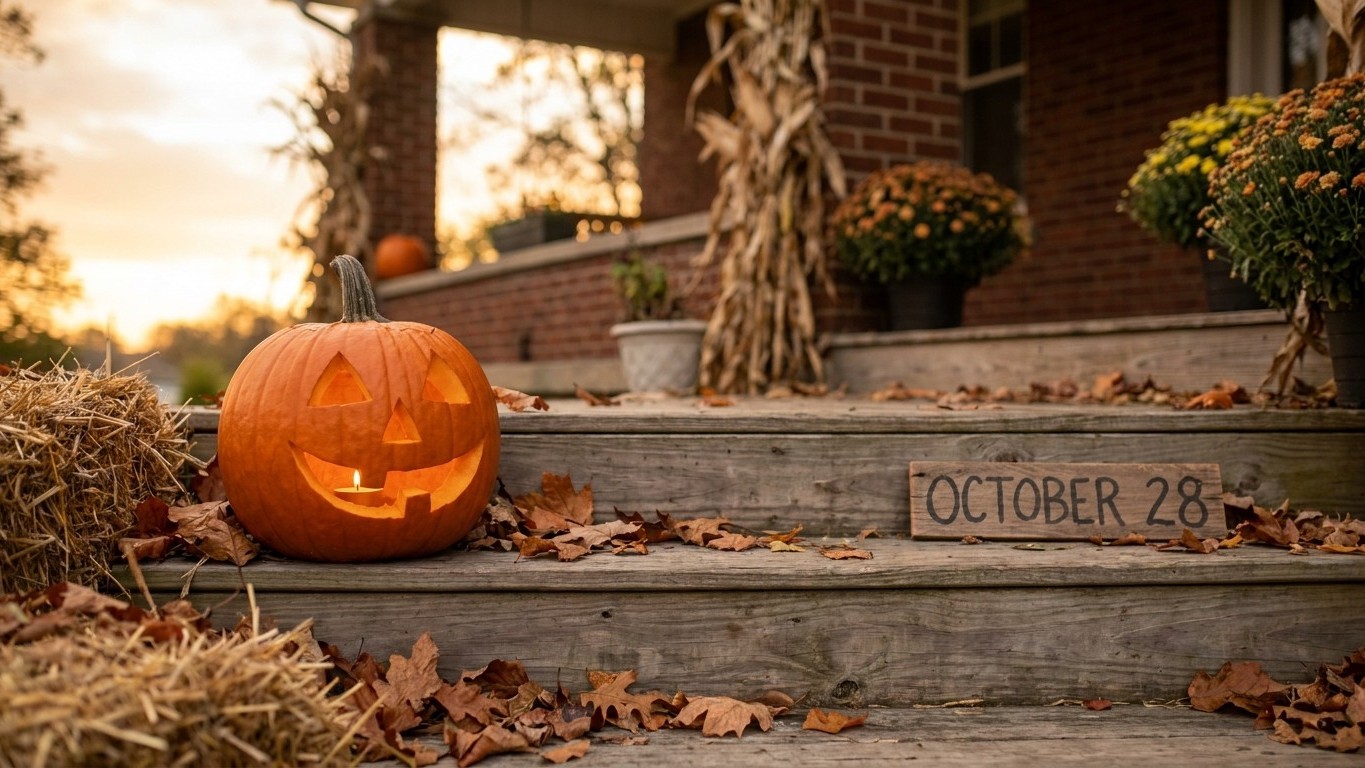

Kentucky’s mean first fall frost lands somewhere between November 2 and November 12, according to NOAA climate normals for the Louisville area. That’s after Halloween, not before it. So the pumpkin on your porch isn’t racing a freeze this year, or any typical year. The real question in this state isn’t frost. It’s warmth, storage, and how long a stem holds.
The short answer

Around November 2 to November 12 is when Louisville’s official weather station typically records its first freeze. That’s the reference point for the whole region, and it puts the average frost date roughly one to two weeks past Halloween, not before it. For a pumpkin sitting out until October 31, that means freezing temperatures aren’t the thing working against you this fall.
This is worth sitting with for a second, because it flips the usual worry. Most guides about “when to carve” assume frost is closing in before the holiday, forcing an early cut. In Kentucky, the math runs the other way. If the average first frost arrives around the second week of November, a pumpkin carved on October 25 or 26 has almost two weeks of margin before a freeze becomes the concern, not five days.
But an average is exactly that; an average. NOAA’s own data covers a thirty-year window, and any single year can arrive earlier or later than the mean. NWS Louisville has also noted that the official station, sitting in the urban core, tends to run later in fall than the rural county around it. If you garden or live outside Jefferson County proper, in a low-lying area, a valley, or open farmland with less concrete to hold heat, your own first frost could show up meaningfully earlier than the November 2 to November 12 window. Treat “around” as the operative word here, not “on.”
So the window to carve in Kentucky isn’t dictated by frost risk for most of the state. It’s dictated by something else entirely: how well the pumpkin was chosen at the patch, and where it sits once it’s cut. A pumpkin carved four or five days before Halloween and kept in a cool, shaded spot will generally hold its shape and color through the night of trick-or-treating. One carved two weeks out, then left on a sunny porch, is fighting a different battle, and it’s not the cold.
Frost or heat: which one gets it here
A whole pumpkin keeps best between 45 and 50 degrees Fahrenheit, in a dark spot, according to University of Illinois Extension. That’s a narrow band. Kentucky’s late-October weather doesn’t sit neatly inside it, and figuring out which side you’re on, too cold or too warm, matters for where you store the thing.
The cold end
Given that the mean first frost across the region runs from November 2 to November 12, freezing air isn’t typically the risk in the run-up to Halloween. A pumpkin carved on October 28 and left outside overnight in most of Kentucky is unlikely to meet a hard freeze before the 31st arrives. That said, this is a statewide average, not a house-by-house guarantee. Rural low spots, especially in the eastern and western extremes of the state, can see a frost show up ahead of the metro-area norm. If your area sits well outside the Louisville reference station’s typical pattern, an early cold snap is possible, just not the expected outcome.
The warm end
The bigger everyday issue in Kentucky is the opposite problem: it’s often too warm, not too cold. Late October afternoons here regularly climb well above the 45 to 50 degree storage band, sometimes into the 60s or higher, especially in a sunny spot like a south-facing porch or a car dashboard. Warmth speeds up softening and mold growth in a cut pumpkin far faster than a cool basement would. This is the one that actually applies here: heat, not frost, is what a Kentucky pumpkin needs protection from in the days before Halloween.
Where to keep it until you carve
- Pick an unheated space first. A basement, cellar, or attached garage that doesn’t get direct sun is usually the closest thing in a Kentucky home to that 45-50 degree band, especially compared to a porch that bakes in afternoon light.
- Keep it out of direct sun entirely. Even a north-facing porch can warm up more than expected on a bright Kentucky afternoon in late October. Shade matters as much as temperature.
- Skip the kitchen counter and any spot near a heat vent. Indoor household temperatures run well above the ideal storage range, which shortens how long a whole pumpkin holds before you’ve even picked up a knife.
- Store it away from apples, potatoes, and tomatoes. Ripening produce gives off a gas that ages a pumpkin faster, per University of Illinois Extension, so the crate of apples on the porch is the worst possible neighbor for it.
- Check the stem before you commit to a storage spot. A pumpkin with 1 to 2 inches of stem left seals better and resists spoiling. Never lift or carry it by that stem; if it snaps off, that exposed section is where rot starts first, regardless of where you store it afterward.
Checking this against your own county
Statewide averages are a starting point, not a forecast for your yard. Kentucky’s frost timing shifts by county, by elevation, and by how close you are to a river valley or an urban heat pocket. The Louisville station data used here is useful, but NWS Louisville itself flags that rural Jefferson County typically sees frost earlier than the official urban reading suggests.
The most reliable way to narrow this down for your own property is to contact your county’s extension office directly, through the University of Kentucky Cooperative Extension Service. Staff there track local frost patterns and can tell you how your county compares to the statewide average used in this guide.
Common questions
How long will a carved pumpkin last in Kentucky?
No extension service publishes a set number of days for a carved pumpkin, and there’s no verified preservation protocol, bleach dip, or petroleum jelly trick backed by research. What is documented is simpler: choose a heavy pumpkin with 1 to 2 inches of stem, no soft spots, keep it whole for as long as possible, and carve close to the day you plan to display it.
Should I worry about frost before Halloween in Kentucky?
Generally not. The mean first fall frost runs from around November 2 to November 12, which is after Halloween in most of the state. Warmth and sun exposure are the more common problems for a pumpkin sitting out in late October here.
Where’s the best place to store a whole pumpkin before carving?
An unheated, dark space like a basement or garage, ideally holding between 45 and 50 degrees Fahrenheit, kept away from ripening fruit like apples or tomatoes.
Does the stem length actually matter?
Yes. A pumpkin with 1 to 2 inches of intact stem seals better against spoiling. If the stem breaks off, that exposed section becomes a weak point where rot can start early, so it should never be used as a handle.