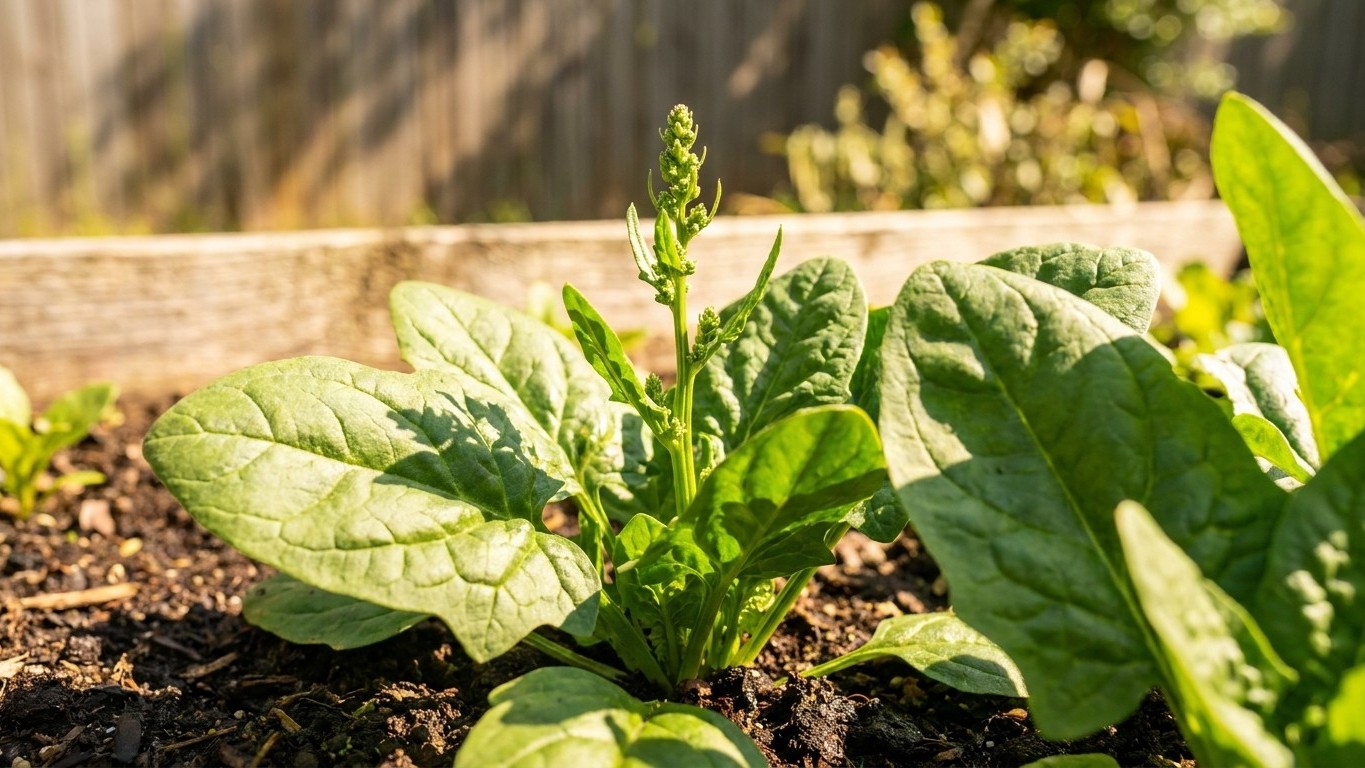

Cut spinach when the plant has a full rosette of leaves big enough to eat and the center is still flat. Around Baltimore that usually means April into May for a spring sowing, and October into November for a fall one. After cutting, the clock runs fast. At 32°F spinach holds good quality for two weeks at best, and in most home refrigerators it fades sooner. Where you put the bag matters about as much as when you cut.
When spinach is ready in Maryland
The plant tells you before the calendar does. A spring crop is ready once the outer leaves have reached eating size and the center of the rosette is still low and tight. Around Baltimore, that lands in a window from roughly mid-April to late May. The window slides later in the mountains of Garrett and Allegany counties and earlier on the Eastern Shore. For the full season picture, see Growing Spinach in Maryland.
The frost dates explain why the window sits where it does. At the Baltimore reference station, the last spring freeze falls between April 3 and April 16, using NOAA NCEI climate normals and their 30 to 70 percent probability band. Spinach sown as soon as the soil can be worked is already growing when that last freeze passes, so the first cuttings come in April. The first fall freeze falls between October 26 and November 5, which is why a fall crop can still be picked into November.
Heat closes the spring window. Utah State University Extension says spinach grows best where temperatures do not exceed 75 F, and the same number is where leaves start to turn bitter. Baltimore averages 24.6 days a year at 90°F or more, so the 75 F line is crossed weeks before the worst heat arrives. Day length adds a second push. The longest day brings 14 hours and 45 minutes of daylight, and Utah State notes that spinach bolts during long days as well as warm temperatures. A cool June does not buy extra time. If you want the details, read Will Spinach Bolt Early in Maryland?
How do you know a spinach plant is ready to cut?
Check four things before you reach for the scissors:
- The rosette has a full ring of leaves large enough for a salad bowl.
- The center is flat, with no stalk rising from it.
- A leaf from the center tastes mild and sweet.
- Afternoon highs are still below 75 F.
For a longer harvest, cut the outer leaves and leave the center so the plant keeps producing. Once a stalk starts to rise, cut the whole plant at the base. Leaves with chew marks can still go in the bowl after trimming. What Eats Spinach in Maryland, and When covers what is doing the chewing.
When should you sow a fall crop?
Utah State University Extension gives a simple rule for fall: plant 50 to 75 days before the date you want to harvest. Count back from the first fall frost range to time your sowing. The obstacle is warm soil, since germination drops once soil is above 80 F. After a summer with that many 90-degree days, August soil is often still too warm. The window opens when the soil cools. Shade over the seedbed and a good soaking before sowing both help. Ask your local county extension office which varieties they recommend. Your county extension office can tell you which of them suits your part of the state.
Keeping it, and for how long
The UC Davis Postharvest Technology Center gives the optimum for spinach as 0°C (32°F) at 95-98% relative humidity. Its verdict on shelf life is blunt: spinach is highly perishable and will not maintain good quality for more than 2 weeks. That is a ceiling for perfect conditions. A kitchen refrigerator rarely delivers them.
How long does cut spinach last?
Plan on no more than 2 weeks, and only at 32°F, then treat any extra day as luck. UC Davis says wilting, yellowing of leaves and decay are likely to increase after 10 to 14 days of storage. Commercial handling at 5 to 10°C (41 to 50°F) speeds those losses. The table below lays the three situations side by side.
| Condition | What UC Davis reports |
|---|---|
| 32°F with 95-98% relative humidity (optimum) | Good quality for no more than 2 weeks |
| Same conditions, beyond 10 to 14 days | Wilting, yellowing and decay are likely to increase |
| 41 to 50°F (5 to 10°C), common distribution conditions | The same losses come faster |
Garden spinach starts that clock at the moment of cutting, with no time spent in a truck or on a store shelf. That is a real advantage, since a bunch picked this morning begins with more of its two weeks than one bought in a bag. It will still age at the same rate once it is warm, so cool it quickly after cutting.
Why does humidity matter as much as temperature?
Spinach leaves are thin and lose water fast. At 95-98% relative humidity, very little moisture leaves them, which is why the target is nearly saturated air. Dry fridge air pulls water from the leaves, and they go limp long before they rot. Wet leaves sitting in a sealed bag with no air movement break down quickly. Aim for damp air around dry leaves.
Picking in the cool of the morning gives the leaves a head start. Cutting at midday heat sends warm, already-wilting leaves into storage. For the same reason, bring the harvest indoors quickly instead of leaving the basket in the sun.
Where in the house that actually is
A home refrigerator runs warmer than 32°F, and its door runs warmer still. Every time the door opens, the shelves on it take the warm air first, which puts them in the 41 to 50°F range where spinach yellows fastest. The door is the worst spot for spinach, however handy the little compartment looks.
The coldest, steadiest spot is the back of the bottom shelf, away from the door and away from the cooling vent. That is the closest a household fridge comes to the optimum. If the crisper drawer has a humidity slider, close it toward high. Leaves in a drawer with the slider open lose water quickly.
High humidity at home means a bag. A loose plastic bag with a folded damp paper towel inside creates the moist air the leaves need without soaking them. Squeeze out most of the air and leave the bag slightly open so it does not trap condensation. Whole plants with their cut ends can go another way: stand the stems in a little water in a jar and slip a bag loosely over the top. Either method gives the leaves what the 95-98% figure describes.
Dry the leaves after rinsing, or skip rinsing until you eat them. Free water on the leaves invites decay. Replace the paper towel when it turns slimy. Put the bag at the back of the bottom shelf and check it every couple of days, because a bag left in the door loses most of its quality within days, well before the two-week ceiling.
Common questions
Can you cut spinach more than once?
Yes, if you take only the outer leaves and leave the center growing. The plant keeps making new leaves until heat or long days push it to bolt. When a stalk starts to rise, cut the whole plant, since the leaves turn bitter from there on.
Why does spinach turn bitter?
Warmth is the usual cause. Utah State University Extension puts the growth ceiling at 75 F, and leaves taste harsher once temperatures climb past it. Long days and heat together also trigger bolting. A bitter leaf in May means the spring crop has run its course.
Which spinach varieties grow in Maryland?
Your local county extension office can name suitable varieties. Your county extension office can tell you which of them has done best locally, and which suits your soil and your sowing date.
How can you tell stored spinach has gone bad?
UC Davis lists wilting, yellowing of leaves and decay as the signs of aging. Slimy leaves or a sour smell mean the batch is finished. Limp but still green leaves can be cooked, though they no longer make a good salad.