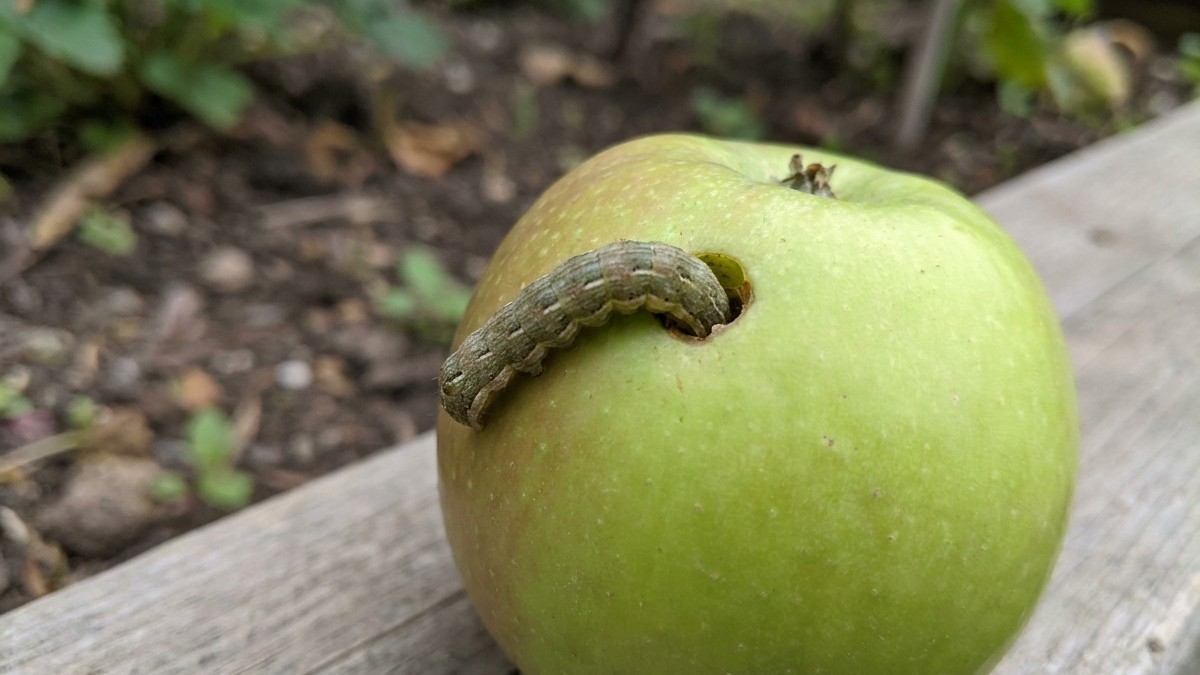

Apples in Montana come off the tree anywhere from late August to mid-October, depending on variety and how close you are to the state’s first fall frost. Early types like Norland ripen well ahead of any freeze risk. Late keepers such as Haralson get picked right up against it. How long they last afterward depends entirely on whether that variety was bred to hold or bred to be eaten fresh.
When apples are ready to pick in Montana
Forget the calendar. The tree tells you when. A ready apple has shifted its background skin color from green toward yellow or cream, the seeds inside have turned brown instead of white, and the fruit separates from the spur with a gentle twist instead of a tug. Bite into one too early and you get starch and acid with none of the sugar that’s supposed to be there.
What actually pins down the window in Montana is frost, not the month on a wall calendar. In Billings, one of the milder valleys in the state, the last spring freeze at 32°F typically falls between April 29 and May 10, and the first fall freeze at 32°F typically arrives between October 1 and October 14, according to NOAA NCEI’s 1991-2020 Climate Normals. Bloom follows once nights stay reliably above that spring threshold, and harvest for late-season fruit has to wrap up before the fall threshold turns from a risk into a certainty.
That’s the timing for Billings specifically. Mountain valleys elsewhere in Montana run colder and can see a damaging frost in almost any month of the growing season. If you’re growing in the Bitterroot, the Flathead, or up in elevation anywhere in between, the Billings dates are a reference point, not your local answer. There’s no statewide frost date because Montana isn’t one climate zone stacked on top of another. It’s dozens of valleys, each with its own cold-air drainage and its own risk pattern.
Reading the season by variety
Early, low-acid varieties bred for short seasons, things like Norland, State Fair, and Zestar!, tend to finish ripening in mild valleys through August and into the first weeks of September, well clear of the fall frost window. Later, denser varieties such as Haralson and cold-hardy Honeycrisp strains ripen closer to the edge of that October 1-14 window, and growers watching the forecast will often pick a few days early rather than risk a freeze splitting the skin or softening the flesh overnight.
The safest approach isn’t a date at all. It’s checking a few fruits a week before you expect ripeness, cutting one open, and looking at the seed color. Once they’ve gone brown across most of the fruit on a tree, the rest will follow within days.
Which ones keep, and which must be eaten
Not every apple that grows in Montana is built to sit in a box until January. The early-season varieties that thrive in short, mild-valley growing seasons, Norland, State Fair, Zestar!, tend to have thinner skin and softer flesh. They’re built for eating fresh or turning into sauce within a few weeks of picking, not for long storage. Push past that window and they go soft and mealy fast.
The varieties bred for cold northern climates and grown for their keeping ability, Haralson, Wealthy, Cortland, and the hardier Honeycrisp strains, have denser flesh and higher acidity. That combination is exactly what resists breakdown in storage. These are the apples worth setting aside a real storage space for, because they’re the ones that reward the effort.
Hardiness and winter chill aren’t the same filter
Two separate questions decide whether an apple variety belongs in a Montana orchard, and they get confused constantly. The first is hardiness: does the tree survive the winter at all. In Billings, the mean daily minimum temperature of the coldest month sits at 17.9°F, according to NOAA NCEI’s 1991-2020 Climate Normals. That figure, not the record low and not a monthly average, is what actually determines whether a given variety’s wood and buds make it through winter intact. Varieties bred for northern climates are selected specifically to tolerate minimums in that range; softer southern varieties often aren’t.
The second question is winter chill: does the tree accumulate enough sustained cold to break dormancy correctly and flower on schedule. That’s a different filter entirely, and no source consulted for this territory publishes a specific chill-hour figure for Montana’s growing regions. Rather than guess at a number that isn’t documented here, the practical move is to stick with varieties already known for cold hardiness in northern climates, since those selections were bred with both survival and reliable flowering in mind together.
There’s a real trade-off worth naming plainly. A low-chill variety breaks dormancy on less accumulated cold, which means it flowers early. Early flowering is exactly what walks a tree straight into the April 29 to May 10 frost window in Billings, and potentially a later window in colder valleys. In Montana, that risk isn’t worth taking. Choosing a variety known for later, hardier flowering and accepting the shorter fall storage list that comes with it is the safer trade.
Storing them through a Montana winter
Long-term apple storage runs on three conditions: cold, humid, and dark. The target is somewhere between 32°F and 40°F with humidity above 90 percent, and no light hitting the fruit. Get those right and a dense keeper variety can hold for months. Get the humidity wrong and even a good keeper shrivels within weeks, because dry air pulls moisture out of the skin faster than the fruit can compensate.
Montana’s winter air works in the grower’s favor here, at least in the milder valleys. With a mean daily minimum of 17.9°F in the coldest month in Billings, an insulated but unheated root cellar, garage, or crawl space can sit naturally in the right cold range for weeks at a stretch without any mechanical cooling at all. That’s a real advantage over warmer states where growers have to refrigerate everything artificially. The catch is that the same cold that helps can also freeze the space solid if it isn’t insulated enough, which ruins the fruit just as fast as heat would. And that 17.9°F figure is specific to Billings; colder mountain valleys elsewhere in the state will need more insulation to keep a storage space from dipping below freezing altogether.
Handling that actually extends storage life
A few habits make more difference than the storage space itself:
- Sort by variety and by ripeness before storing, since one soft apple among firm ones speeds rot across the whole batch
- Handle fruit gently; a bruise from a two-foot drop becomes a soft brown spot within days
- Check stored apples every couple of weeks and pull anything showing rot before it spreads
- Keep humidity up with damp sand, straw, or a container of water in the space, since dry high-plains air drains moisture from stored fruit quickly
Early, soft-fleshed varieties don’t belong in this system at all. Eat or process those within a few weeks. Save the cold, humid, long-term space for the dense keepers that were bred to use it.
What goes wrong here
The most common mistake is picking by date instead of by stage. A grower who picks on September 15 every year regardless of conditions will sometimes catch fruit before it’s finished developing sugar, and other years will catch it after a frost has already softened it. The tree runs on its own schedule based on the season’s actual weather, not a fixed date.
The second mistake is storing fruit that took frost damage on the tree. If a late-season apple is still hanging when the first fall freeze hits, that window falling between October 1 and October 14 in Billings, the fruit often looks fine on the outside but develops soft, water-soaked spots within days once it warms up in storage. Those spots turn to rot and spread to whatever they’re touching. Inspecting fruit closely after any near-frost picking, rather than boxing it straight up, catches this before it costs the whole batch.
The third is planting a low-chill, early-flowering variety because it was cheap or available locally, without checking whether it flowers before or after the region’s typical last frost. A variety that blooms early in a mild spell will lose its whole crop the first year a normal frost lands in the April 29 to May 10 window.
The fourth is treating Montana as one climate. A frost date, a hardiness figure, or a variety recommendation that holds true in Billings simply doesn’t transfer to a colder mountain valley without checking the local pattern first. Where no local source documents a specific figure for a given valley, that’s worth stating outright rather than borrowing a number from somewhere else in the state and hoping it applies. For guidance specific to a given county or valley, Montana State University Extension is the resource built for that kind of local detail.
Common questions
What month do you pick apples in Montana?
It depends on the variety and the valley. Early types often finish in late August or early September in milder valleys. Late-season keepers ripen closer to the first fall frost window, which in Billings falls between October 1 and October 14, according to NOAA NCEI’s 1991-2020 Climate Normals. Colder valleys elsewhere in the state can see that window arrive earlier.
Can apple trees survive Montana winters?
Varieties bred for cold hardiness can. In Billings, the coldest month averages a daily minimum of 17.9°F, a figure taken from NOAA NCEI’s 1991-2020 Climate Normals, and that’s the threshold hardy northern varieties are selected to tolerate. Colder mountain valleys will demand even hardier stock, and no single statewide answer covers every elevation.
How long do apples last in cold storage in Montana?
It depends entirely on the variety. Soft, early-season apples hold for a few weeks at most. Dense, high-acid keeper varieties bred for cold climates can hold for months in a properly cold, humid, dark space. No single storage duration applies across every variety.
Do stored apples need to be refrigerated in Montana?
Not necessarily. An insulated but unheated space, like a root cellar or garage, can sit naturally in the right cold range for much of the winter in milder valleys, given how cold the ambient air already runs. The risk runs the other way: an under-insulated space can freeze solid and ruin the fruit just as fast as heat would.