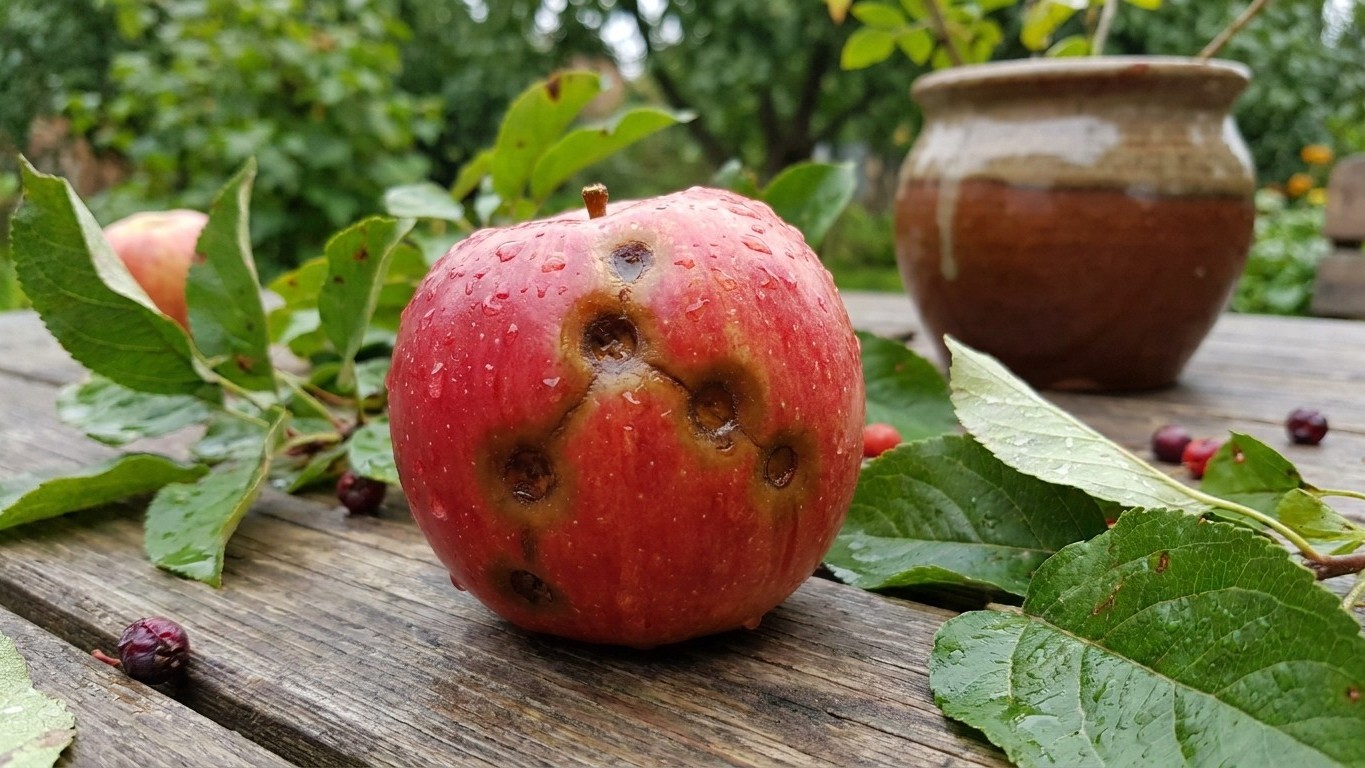

Most Nebraska apples come off the tree between late August and mid-October, with the exact week set by variety and by how the local growing season played out, not by a date on the calendar. Early types like Lodi or Zestar ripen first; late keepers like Fuji or Enterprise hang on until the season’s edge, sometimes racing the first fall frost. The safest read is always the fruit itself: background skin color, seed color, and how easily it lets go of the branch.
When apples are ready to pick in Nebraska
Harvest date is a downstream number. What actually sets it is bloom date, and bloom date is anchored to the last spring frost. At the Omaha reference station, that frost risk runs from April 12 to April 23 in a typical year (NOAA NCEI Climate Normals 1991-2020). Trees generally bloom a few weeks after that window closes, and fruit follows anywhere from 100 to 160-plus days after bloom depending on the variety’s season length. Push that math forward and you land on the same spread growers already know: late August for the earliest apples, October for the latest ones still holding on before the first fall frost.
That frost window is a station reading, not a state guarantee. Suburban yards and rural orchards away from the Omaha airport commonly see their own last freeze run later in spring and their first fall freeze arrive earlier, sometimes by one to two weeks, more at higher elevation in the Panhandle or along river bluffs. A grower in a low-lying frost pocket near the Platte should expect a tighter, later-starting season than this station figure implies. Check your own county’s frost history rather than treating April 12-23 as fixed everywhere in the state.
Reading the tree instead of the calendar
Three cues matter more than the date on the wall. First, background color: the green undertone between any red blush should be shifting toward yellow or cream, not staying grass-green. Second, seed color, checked by cutting one test fruit; ripe apples usually show brown, not white, seeds. Third, ease of separation, a ripe apple detaches with a gentle upward twist, while an unripe one clings and tears. Growers who wait for all three signs together rarely pick too early, which matters because immature apples never finish ripening properly once off the tree and lose out on both flavor and storage life.
Weather in the final weeks also nudges the date. A stretch of unusually warm September days can push ripening ahead by several days, while a cool, cloudy stretch slows sugar development and delays the pick. Growers watching a late-season variety against an approaching first fall frost, October 15 to October 26 at the Omaha station, sometimes choose to pick slightly under-ripe rather than risk a hard freeze splitting the fruit or damaging the flesh overnight.
Which ones keep, and which must be eaten
Not every apple that ripens well in Nebraska stores well afterward, and mixing up the two is the single most common reason a harvest goes soft in a few weeks instead of lasting into winter. As a rule, early-season varieties are built for quick eating: they ripen fast, soften fast, and rarely reward more than a few weeks of refrigeration. Late-season varieties tend to be denser, thicker-skinned, and slower to break down, which is exactly what long storage requires.
| Ripening group | Typical harvest window in Nebraska | Keeping behavior | Best use |
|---|---|---|---|
| Early-season | Late August into early September | Softens and loses crispness quickly once picked | Fresh eating, quick baking, cider pressing soon after harvest |
| Mid-season | Mid-September | Holds a few weeks in a cold refrigerator | Fresh eating, sauce, short-term storage |
| Late-season | Late September into October, up to the first fall frost | Firmer flesh and thicker skin, built for months of cold storage | Long-term root-cellar or fridge storage, storage for winter baking |
Firmness at picking time also predicts storage life within a single variety. An apple picked a few days early, while still firm and slightly starchy, generally outlasts one picked at full ripeness or slightly past it. Bruised fruit is the other variable growers underestimate: a soft spot from a drop or a rough handling bin becomes a rot point within days, and one rotting apple in a storage bin speeds up decay in everything touching it. Sorting the harvest before storage, setting aside anything bruised, soft, or insect-damaged for immediate use, is what actually determines whether the rest of the crop reaches February.
Skin thickness matters too, though it isn’t the whole story. Thin-skinned apples lose moisture faster in storage and shrivel sooner, even under good refrigeration, while thick-skinned late types resist moisture loss for months. If the goal is winter storage rather than fall eating, choosing a late-season, thick-skinned variety and picking it firm, slightly before dead-ripe, is the combination that gets a Nebraska harvest furthest into the cold months.
Storing them through a Nebraska winter
Cold storage works by slowing two things at once: the fruit’s own ripening chemistry and the growth of the molds and bacteria that cause rot. The colder the storage space, without actually freezing the fruit, the slower both processes run. A basement corner, an unheated but frost-free garage, or a dedicated refrigerator all outperform a kitchen counter or a warm pantry by a wide margin, and the difference shows up as weeks or months of extra keeping time rather than days.
Humidity matters as much as temperature. Apples stored in dry air lose moisture through their skin and shrivel even if they never rot, which is why growers who use a root cellar often keep a container of water nearby or store the fruit in perforated plastic bags to hold moisture in without trapping condensation. Storing apples away from potatoes and onions also helps; apples give off ethylene gas as they age, which speeds up sprouting in potatoes and can push onions toward early decay, and the reverse traffic isn’t kind to the apples either.
What the local extension service adds
The University of Nebraska-Lincoln Extension service publishes home storage and small-orchard guidance for growers in the state, and it’s worth checking their current recommendations at extension.unl.edu before setting up a winter storage space, since specifics on ventilation, container choice, and variety performance in Nebraska conditions are best confirmed directly with them rather than assumed from general storage advice written for a different climate.
Checking the stored fruit periodically, every couple of weeks through the winter, catches the first soft or rotting apple before it spreads. Growers who store in bulk without checking often lose a much larger share of the crop than the single bad apple that started the problem, simply because nobody caught it in time.
What goes wrong here
The biggest single risk to a Nebraska apple harvest isn’t storage, it’s spring. The last frost window at the Omaha station, April 12 to April 23, sits close enough to typical bloom time that an early or late-flowering variety can get caught by a freeze right as blossoms open, wiping out that year’s fruit before it ever forms. This is where the trade-off with winter mildness actually plays out: a low-chill variety breaks dormancy on less accumulated cold and flowers earlier, which sounds like an advantage in a short growing season but instead pushes bloom straight into that frost window. Nebraska’s winters aren’t mild, the mean daily minimum of the coldest month runs 15.2°F at the Omaha station (NOAA NCEI Climate Normals 1991-2020), which means chill accumulation is rarely the limiting factor here. Given that, choosing a variety with a higher chill requirement and a later, more frost-shy bloom date is the safer call in this climate, not the early-flowering, low-chill types that make sense in milder regions.
Winter cold itself is the second risk, separate from spring frost. A mean minimum of 15.2°F in the coldest month is well within what standard apple rootstocks tolerate, but marginal or borderline-hardy varieties can suffer bark splitting or dieback in a harder-than-average winter, which shows up the following season as reduced bloom or dead wood rather than as a failed harvest in the same year.
On the other end of the season, a late-season variety left on the tree too long runs into the first fall frost, October 15 to October 26 at the Omaha station. A hard freeze on unpicked fruit can damage the flesh internally even when the skin looks fine, and that damage often isn’t obvious until the apple is in storage and breaking down faster than expected. Picking late varieties a few days ahead of a forecast freeze, even if they’re not fully at peak ripeness, avoids that loss.
Common questions
How do I know an apple is ripe without cutting it open?
Twist it gently upward where the stem meets the branch. A ripe apple separates easily with the stem attached; one that resists or tears is not ready yet, regardless of color.
Can I still pick apples after a light frost?
A brief light frost on ripe, unpicked fruit is usually survivable for the apple, but repeated freezes or a hard freeze near the first fall frost dates can damage the flesh internally even when the skin looks normal.
Why did my apples shrivel in storage even though they didn’t rot?
That’s moisture loss from storing in air that’s too dry. Perforated bags or a humidity source nearby in the storage space slow that process considerably.
Does Nebraska get cold enough in winter to grow apples reliably?
Yes. A coldest-month mean minimum of 15.2°F at the Omaha station is well within the range standard apple varieties tolerate; the more common growing risk here is a late spring frost hitting bloom, not winter cold killing the tree.