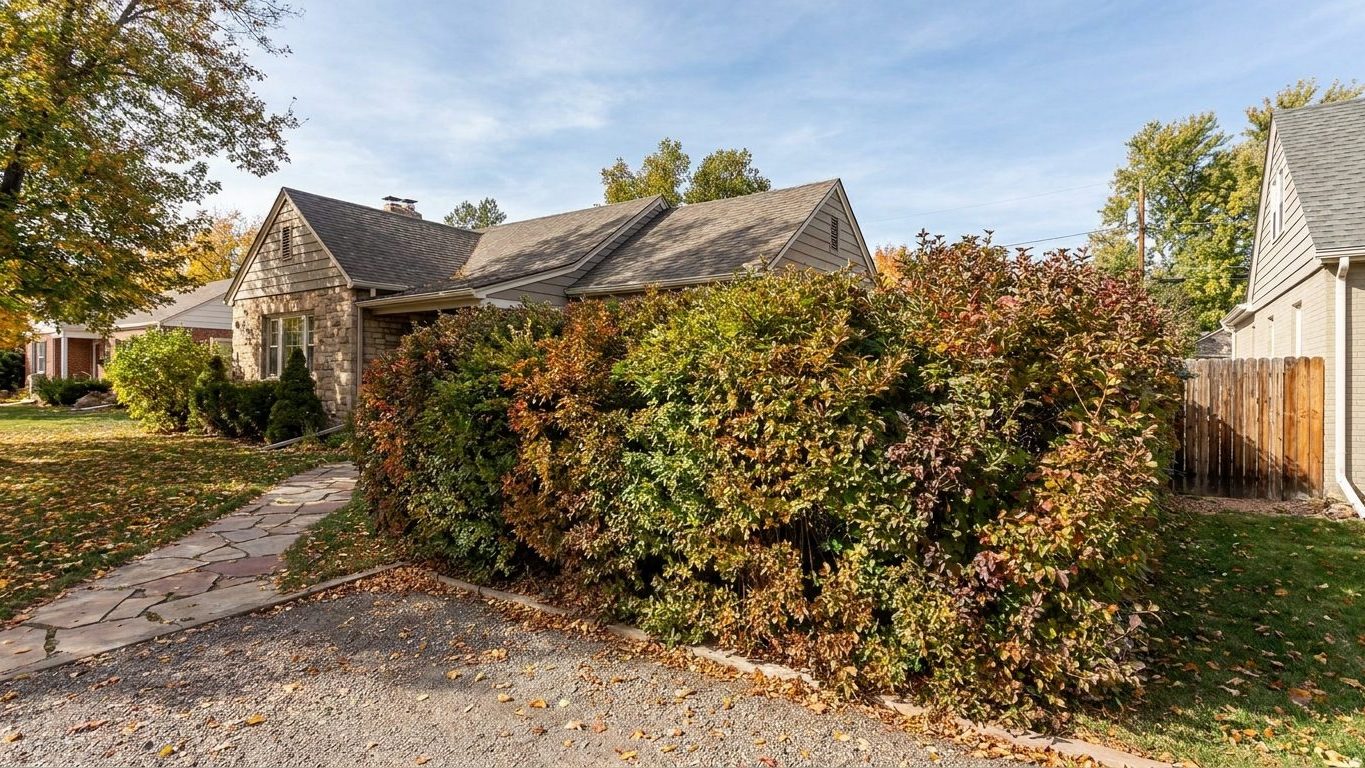

Nebraska has no statewide hedge height limit. The state has never set a number for how tall a privet, arborvitae or lilac row may grow. The figure that governs your yard comes from your city or village, and some municipalities set none at all. Any site that quotes one Nebraska height for the whole state is guessing. What you need is your local rule, the corner-visibility rule that applies almost everywhere, and a plan for branches that cross the property line.
There is no Nebraska hedge height law
Height limits on plants come from zoning, and zoning is a local job. A city council or village board adopts a code, and that code decides what you can build or grow in each part of town. Two neighbors on opposite sides of a municipal boundary can live under different rules, or one of them can live under none. Land outside any city or village falls under county rules where the county has adopted zoning, and some rural parcels have no hedge rule at all.
Why do websites quote a single number for the whole state?
Many commercial sites take one city’s fence ordinance and stamp it on the entire state. The result looks authoritative and is wrong for most readers. A figure only means something when it is tied to a named municipality and its published code. If a page gives you a Nebraska-wide height without naming a city, ignore the number.
Is a hedge treated as a fence?
Often it isn’t. Many codes regulate fences as structures, with a height cap and sometimes a permit, and handle living hedges under a separate heading such as landscaping, screening or vegetation. Some codes say nothing about hedges at all. If yours is silent, the fence limit does not automatically apply to a row of shrubs, but you should not assume it doesn’t either. Read the definitions section of the code, where the words “fence” and “hedge” are usually spelled out.
Many codes also set different limits for the front yard, side yard and rear yard. A hedge that is fine behind the house can be a problem along the street.
Is there any rule that applies almost everywhere?
Yes, the sight triangle. At a street corner or where a driveway meets the road, nothing may block a driver’s view of cross traffic or pedestrians. The zone is a triangle measured back from the corner or the driveway edge, and the height allowed inside it is usually far lower than the general fence height. A hedge that is perfectly legal along your side lot line can be a violation within a few feet of the corner. This limit tends to apply even in towns that have no other hedge rule, so check it first if you live on a corner lot.
How to find the rule that actually applies to you
The rule sits in your municipal code, and most American cities publish that code online through one of three publishers. Finding it takes about ten minutes once you know where to look.
Where is my city’s code published?
Start with your city or village website, which will usually link to the code. If it doesn’t, search the three main publishers directly.
| Publisher | Address | How to reach your code |
|---|---|---|
| Municode | library.municode.com | Choose the state, then your municipality, then use the search box inside the code |
| American Legal Publishing | codelibrary.amlegal.com | Pick your municipality from the list of codes, then search or browse by chapter |
| eCode360 | Search “eCode360” plus your municipality name | Open the code from the municipality page and browse the zoning section |
Smaller villages sometimes skip all three and post their ordinances as PDFs on the village site, or keep them at the clerk’s office.
What do I look for once I’m in the code?
Go to the zoning chapter and find the section on fences, walls or accessory structures. Then run a search for these words, because ordinances use them inconsistently:
- hedge
- shrub or shrubbery
- vegetation or landscaping
- screening or buffer
- sight triangle, clear vision or visibility triangle
Pay attention to which word the code uses for living plants. If the fence section never mentions hedges and a separate section covers vegetation near intersections, you have probably found the whole picture. Write down the height limit for each yard (front, side, rear), the sight triangle distance, and any setback from the sidewalk or property line. Note the section number and the date of the code version so you can point to it later.
Who do I call if the code is unclear?
Call the city or village planning and zoning department. Smaller places may route you to the city clerk, who keeps the code, or to the building inspector. If a neighbor’s plantings are the issue, code enforcement is the office that takes complaints. Before you call, confirm you are actually inside municipal limits. Your county assessor’s parcel map or your tax statement can settle that, and it matters because a rural address with a town mailing address may fall under county rules or none.
Ask four things: whether the code covers living hedges, what the height limit is in each yard, how far the sight triangle extends at corners and driveways, and whether any permit is needed. Ask for the answer by email if you can. A written reply is useful if a neighbor disagrees later.
One more layer sits outside the city code. A homeowners association can restrict hedge height, species or placement through its covenants, and those rules can be stricter than the city’s. Check your deed documents or the HOA handbook alongside the ordinance.
The branches that cross the line
Height is only half of most hedge disputes. The other half is growth that leans across the boundary. The general principle in most states is that a property owner may cut back branches and roots that cross onto their land, but only up to the boundary and no further, and at their own expense. They may not go onto the neighbor’s side to trim, and they may not kill the plant. This principle comes mostly from court decisions rather than statutes, and it varies from state to state, so treat it as a general rule of thumb. It is not a statement of what a Nebraska court would decide in your case.
What does cutting to the line look like in practice?
Say a neighbor’s arborvitae has pushed a foot of foliage over your fence. The usual approach is to trim only what hangs on your side, cutting at the vertical line of the boundary. Stay off their ground unless they give permission. Don’t cut so hard that the plant is damaged or left unstable, since that is where “trimming” turns into “destroying” and a neighbor can claim you harmed their property. Poisoning roots or girdling the trunk is treated as killing the plant and is the fastest way to turn a small annoyance into a legal claim.
A survey pin or a recorded survey tells you where the line really runs. Fences are often placed a little off the true boundary, so a fence is not proof of the line. If the line is uncertain, settle that before you cut.
What should I do before I pick up the pruners?
Talk first. A short, friendly conversation resolves most of these cases, and many neighbors will trim their own side once asked. Take dated photos of the overhang before and after any work. Keep the clippings, since the cut branches belong to the neighbor in many places and tossing them over the fence can cause its own argument. Offer to split the cost of a professional crew if the hedge is large.
If the hedge is taller than your city allows, that is a separate matter from trespassing branches. Contact the code enforcement office with the section number you found, because many cities act on complaints rather than patrolling. A hedge planted exactly on the boundary may be owned jointly by both owners, which changes who may trim or remove it. When talk fails, or when roots threaten a foundation, a driveway or a sewer line, consult a Nebraska attorney. The rules on damages and notice are specific, and a lawyer can tell you which ones apply to your facts.
What to check before you plant
A hedge is a long-term decision. Shrubs that grow quickly can outgrow a limit you never checked, and removing a mature hedge costs far more than planting one. A short checklist before you buy saves that trouble.
Start with the local code. Confirm the height limit for the yard where the hedge will go, whether the code treats living hedges differently from fences, and whether the property line setback applies. Then measure the sight triangle if you are on a corner or near a driveway. Keep the planting well clear of that zone, or choose a variety that stays low there. Next, check easements. Utility easements along the back or side of many lots allow crews to remove plants that interfere with lines or pipes, and nothing guarantees they will replace them. Call your local utility locating service before you dig so buried lines are marked.
Choose a plant by its mature size, not its size at the nursery. A good habit is to set the row back from the boundary so the mature plant stays on your side. That keeps branches on your side of the line and leaves room to trim from your own yard. If a species grows taller than your local limit, pick a smaller variety rather than counting on constant shearing. Our Hedges guides cover species and spacing in more depth.
Last, read any HOA covenants. A row of mature hedges that has stood for years is not proof that the code allows it, since some cities exempt older plantings and others do not.
Common questions
Is there a maximum hedge height in Nebraska?
Not at the state level. Any height limit comes from the ordinance of your city or village, or from county zoning if you live outside municipal limits. Some places have no hedge rule at all, so check your own code before planning around a number.
Does my city’s fence height limit apply to my hedge?
Maybe not. Many codes regulate fences as structures and treat living hedges under separate language or leave them out. Read the definitions and the landscaping or vegetation sections, and ask the planning and zoning department directly if the wording is unclear.
Can I trim branches from my neighbor’s hedge that hang over my yard?
In most states you may cut back what crosses the boundary, up to the line, at your own cost, without killing the plant. That comes from case law and varies, so confirm with the city or an attorney before acting, and talk to your neighbor first.
Can an HOA make hedge rules stricter than the city’s?
Yes. Covenants are private agreements that can set lower heights or restrict species and placement, so you need to satisfy both the ordinance and your association’s documents.