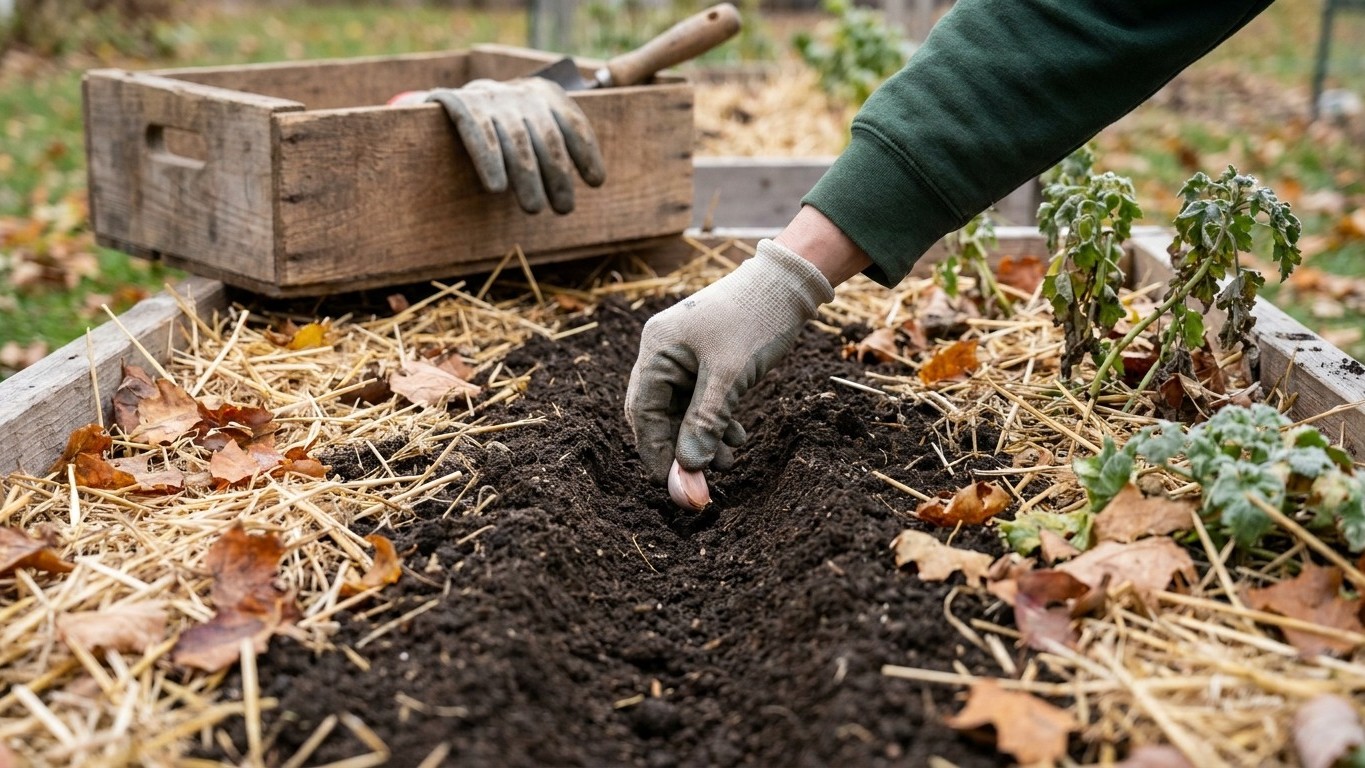

Garlic and shallots can still go into workable soil, cold frames and low tunnels keep hardy greens alive, and bare-root fruit stock goes in the ground while it’s dormant. Beyond that, direct-sowing outdoors in Nebraska by November is mostly over. The real work this month is forcing, protecting, and planning ahead.
What goes in the ground in November

Nebraska’s first fall frost lands between October 15 and October 26 at the reference weather station used for the state’s official climate record, and rural gardens and anything above the valley floor typically see that frost one to two weeks earlier. By November, the state has almost certainly already had its first freeze, and in most counties the ground is either frozen at the surface or close to it. That’s the mechanism that matters here, not the calendar page: soil temperature and how deep the frost has gone decide what’s still possible, not the fact that November has arrived.
So the honest answer for most of Nebraska is that nothing new goes into open, unprotected ground this month expecting to grow through winter and produce next season. What still works is narrower and worth naming precisely instead of padding the list.
Garlic and shallots are the exception. Both want six to eight weeks of root growth before the ground locks up solid, and as long as the soil can still be worked with a hand trowel, they can go in through early November in the milder, southeastern parts of the state. Plant cloves and bulbs 2 inches deep, mulch heavily with straw, and let them sit dormant until spring.
Bare-root and dormant plantings are the other real option. Fruit trees, berry canes, and roses sold bare-root or as dormant stock can be planted while they’re not actively growing, provided the hole can still be dug. This is also the window for moving established dormant shrubs before the ground is unworkable.
Cold frames and low tunnels extend the life of anything already growing, spinach, kale, mache, that got established earlier in fall. They don’t create new growth this late, but they buy weeks of harvest by holding soil temperature a few degrees above ambient.
Indoors, forcing rhubarb crowns or chicory roots in a dark, cool space gives a harvest when nothing outside is producing. That’s a legitimate November planting, just not one that happens outside.
What to start under cover
Nebraska’s last spring frost window runs April 12 to April 23 at the reference station, later in most home gardens once elevation and local terrain are factored in. Counting backward from that window is how seed-starting dates should be set, not from a fixed date on a calendar. For most warm-season transplants, that math points to late winter, not November, which is exactly why this month’s under-cover work looks different from what gardeners do in February or March.
The task that fits November is cold stratification. Many perennial flowers, native prairie plants, and some tree and shrub seeds need 60 to 90 days of sustained cold before they’ll germinate at all. Sowing them into flats or pots now and holding them in an unheated cold frame, garage, or sheltered spot outdoors lets winter do that work naturally, so they’re ready to sprout when soil warms toward that April frost window.
The arithmetic is simple to redo for any county: count the weeks between now and the expected last frost, and check whether that gap covers the stratification period a given seed needs. Native milkweed, coneflower, and many shrub seeds fit comfortably. Seeds that need less cold time can wait until midwinter.
Two mistakes show up every year. Starting too early, before there’s enough cold weather left to complete stratification, risks seeds sprouting during a brief warm spell only to be killed by the next hard freeze. Starting too late, closer to spring, risks incomplete stratification and poor, uneven germination once the seeds do get warmth. November sits early enough in most of the state’s cold season that either error is avoidable if the count is done honestly against the local frost window rather than guessed.
What is ready to pick
Little to nothing comes out of open, unprotected ground in Nebraska by November. Any tender crop still standing after the first fall frost is done, and the honest move is to harvest what’s salvageable and clear the bed rather than hope for more.
What still feeds a household comes from three places. Overwintered kale, leeks, and Brussels sprouts left in the ground under mulch or snow cover often improve in flavor after a freeze and can be picked as needed through the cold months, as long as the ground around them isn’t frozen solid. Cold frames holding spinach, mache, and hardy lettuces keep producing small pickings on any day the frame isn’t buried in snow. Indoors, sprouts and microgreens started in trays on a windowsill or under a grow light supply fresh greens in a week to ten days regardless of what’s happening outside.
The other job this month is checking storage. Squash, potatoes, and onions put up earlier in fall need a hands-on inspection now. Squash with soft spots, potatoes that have gone soft or sprouted, and onions with any give when squeezed should come out of storage and get used first, before they spread rot to the rest of the batch. A single soft squash left in a bin can take down its neighbors within a couple of weeks, so this check is worth doing on a set schedule rather than only when something starts to smell.
The jobs that matter this month
November’s real workload is dormant-season maintenance, and skipping it costs more than a missed planting ever would.
In the garden and orchard
Dormant pruning of fruit trees and cane berries can start once leaves have dropped and the plant is fully dormant. Pruning too early, while sap is still moving, invites dieback at the cuts; waiting until full dormancy but before the hardest part of winter gives clean wounds time to callus before extreme cold sets in. This is also the window to stake or re-stake young trees before heavy snow load bends unprotected trunks, and to clean up fallen fruit and diseased leaf litter that would otherwise shelter pests through winter.
Soil, tools, and planning
Soil testing and amending should happen while the ground can still be worked. Lime, compost, or other slow-acting amendments applied now have the whole winter to integrate before spring planting. Turning the compost pile one more time before it freezes keeps decomposition going a few extra weeks. Cleaning and sharpening pruners, loppers, and spades before they sit idle all winter means they’re ready to go instead of rusted shut come spring.
Seed catalogs start circulating in fall, and ordering early matters more than it sounds: popular varieties, especially for onions, sweet peas, and any seed sold in limited runs, sell out well before spring. Planning next year’s crop rotation on paper now, while this year’s layout is still fresh, avoids repeating the same bed with the same disease-prone crop two years running.
Finally, walk the fence lines and raised beds. Repairing broken boards, loose wire, or a gate that’s about to fail is a lot easier in November than in a foot of snow.
What not to do in November
The most common mistake is trusting a mild afternoon over the ground itself. A 60-degree day in early November doesn’t mean it’s safe to tuck in a tomato start or leave warm-season crops in place hoping for one more harvest; soil temperature and the season’s trajectory matter more than a single warm reading, and a hard freeze can follow within days.
Uncovering cold frames or removing row cover during a warm stretch is another version of the same error. It feels reasonable in the moment, but it exposes hardened-off greens to the next freeze without protection, undoing weeks of careful cover management for the sake of a day or two of sun.
Feeding nitrogen fertilizer to trees, shrubs, or perennials this late pushes soft new growth right before the coldest part of the year arrives. That new growth has no time to harden off and is usually the first thing killed by a hard freeze, weakening the plant going into winter rather than helping it. If a plant needs feeding, that’s a spring job, not a November one.
Pruning fruit trees before they’re fully dormant carries the same risk in a different form: cuts made while sap is still active heal poorly and invite dieback and disease at the wound site. And leaving squash, potatoes, or onions in the ground once a hard freeze has hit does more harm than good; frozen storage crops don’t recover in the fridge, they just rot faster once thawed.
Checking this against your own county
A statewide month is a starting point, not an instruction. Nebraska’s hardiness range runs from USDA zone 4a in the northwest to 5b in the southeast, and that spread, plus elevation changes across the Panhandle and the difference between the Missouri River valley and the high plains, can shift frost timing by two weeks or more in either direction from the reference-station dates used here.
Before acting on anything in this guide, check it against your own county’s typical frost pattern and current soil conditions. The University of Nebraska-Lincoln Extension publishes county-level guidance and a state planting calendar that accounts for these local differences far than a single statewide date range can.
Common questions
Is it too late to plant garlic in Nebraska in November?
Not if the soil is still workable. Garlic and shallots can go in through early November in the milder parts of the state, planted 2 inches deep and mulched heavily, as long as a trowel still goes into the ground without a fight.
Can I still start seeds indoors this month?
Yes, but the useful work is cold stratification rather than warm-weather seed starting. Sowing perennial or native seed into flats and holding them in an unheated cold frame or garage lets winter break their dormancy naturally ahead of spring.
What vegetables can survive a Nebraska winter under cover?
Kale, leeks, spinach, mache, and hardy lettuces can hold through cold weather under row cover, cold frames, or a layer of mulch and snow, and can often still be picked as needed through the colder months.
Why does the same frost date not apply to every part of Nebraska?
The published frost windows come from a single reference weather station. Elevation, terrain, and the difference between the Panhandle and the southeast corner of the state routinely push local frost dates a week or two earlier or later than that station’s record.
Gardeners who plant by the Moon can check the November 2026 moon planting calendar, a tradition rather than a proven method.
Related guides
Elsewhere? See what to plant in November in every state and province.