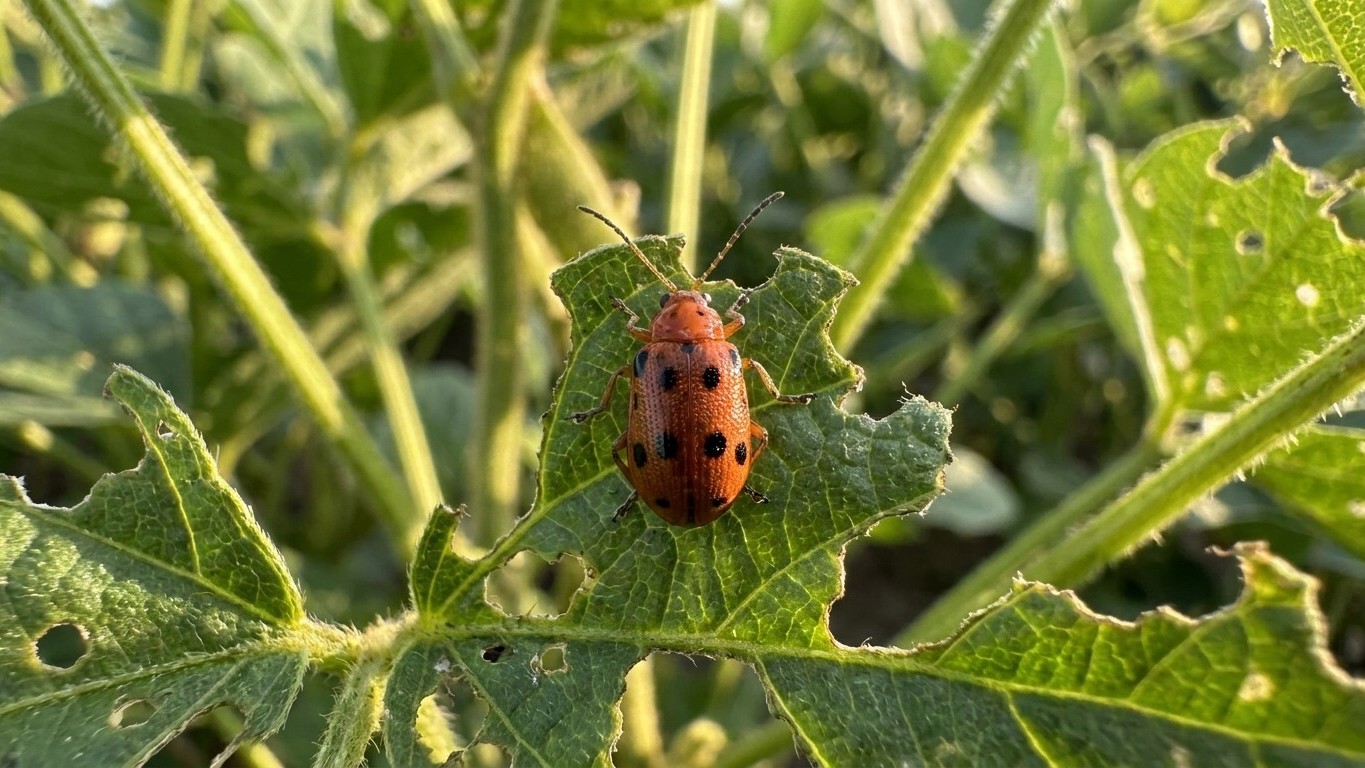

Nebraska’s own vegetable pest calendar from UNL Extension tracks grasshoppers and squash bugs by name, but it stays silent on Bean leaf beetle specifically. That gap matters for anyone growing snap beans or soybeans in a backyard plot. What follows uses the general biology of this insect, tied to Nebraska’s actual frost dates, to tell you when to watch and what stops the damage before it spreads through a bean patch.
When Bean leaf beetle turns up in Nebraska

Nebraska Extension (UNL) publishes a seasonal timing guide for vegetable garden insects, and it names two species directly: the twostriped grasshopper, which hatches around mid-May and is best controlled mid-to-late June, and the squash bug, which runs through the whole summer in overlapping life stages. Bean leaf beetle doesn’t get a line in that guide. That’s worth saying plainly rather than guessing at a date that isn’t published anywhere.
What the general pattern says instead
Outside Nebraska’s own extension data, this beetle is well documented across the Corn Belt as an insect that overwinters as an adult, tucked into leaf litter, fence rows, and wooded edges near old bean or soybean fields. It comes out of that shelter once the ground warms in spring, feeds briefly on early legumes, then lays eggs in the soil near host plant roots. A second generation of adults typically shows up in late summer, and those are the ones that do the most visible damage to pods just before harvest.
The honest answer for a Nebraska gardener: there’s no locally published window to circle on a calendar. Watch soil temperature and plant growth stage instead of a date, and expect two waves of adult activity each season rather than one.
Reading the calendar from your last frost
Nebraska’s last spring frost, based on NOAA’s 1991-2020 climate normals for the reference weather station, falls between April 12 and April 23. That’s a range, not a promise, and it comes from an airport station. Suburban and rural gardens around the state typically see their own last frost later, sometimes by one to two weeks, and gardens at higher elevation lag further still. Check your own county before you plant.
Why the beetle doesn’t read a calendar
Bean leaf beetle activity answers to soil warmth, not to the date on a seed packet. An early spring pulls the first adults out of their overwintering cover sooner; a cold, wet April holds them back. Since Nebraska’s own frost window already spans eleven days at the reference station, and local gardens shift later still, the practical rule is to watch your soil and your seedlings rather than count days on paper.
Damage from the first generation generally shows up within the first few weeks after bean seedlings emerge or after transplants go into the ground, while the leaves are still tender and low to the soil. That’s the window where a row cover earns its keep. Covers need to come off once flowering starts, since most snap and lima beans need open access for pollination and pod set once blossoms appear.
What it attacks, and what the damage looks like
Snap beans, lima beans, cowpeas, and soybeans are the main hosts. In a backyard setting, that usually means a bean row planted for fresh eating or freezing, sitting next to whatever else fills out a vegetable bed.
Spotting it without ever seeing the insect
The tell is on the leaf, not the bug. Look for small, roughly round to irregular holes scattered between the leaf veins, sometimes described as a lace or windowpane pattern where only the thin membrane between veins has been chewed through. On pods, especially later in the season, watch for shallow feeding scars on the outer surface rather than tunneling straight through.
- Interveinal leaf holes on young seedlings, first sign in spring
- Skeletonized or lace-like leaf sections on older plants
- Surface scarring on pods, usually a late-summer symptom
- Stunted or yellowing seedlings where root feeding has gone unnoticed underground
The adult beetle does essentially all of the visible damage, chewing leaves and later pods out in the open where a gardener can spot it. The larval stage lives underground, feeding on roots and root nodules, and it does its damage out of sight. That split matters for treatment: anything aimed at the insect has to reach the adult above ground, because once the larvae are established in the root zone, there’s no practical home remedy that reaches them there.
How Nebraska sits in this pest’s range

This pest is documented in two territories on this site. With a count that narrow, Nebraska sits closer to an edge of the range this collection covers rather than in the thick of it, and that’s worth naming honestly rather than dressing it up. A wider footprint would mean the story is mostly about timing shifting from one territory to the next while the insect shows up everywhere; a count this small doesn’t support that claim.
No neighboring territory is named in the available data as the source of local guidance for this particular species, so there’s nothing to borrow here. What can be said with confidence is that bean leaf beetle is present in Nebraska’s growing region as part of a broader Midwest pattern tied to soybean and bean production, and that its behavior lines up with the general overwintering-adult pattern described above rather than with anything unique to this state.
No claim about severity, ranking, or trend belongs here beyond that. The data on hand supports presence and a rough biology, not a comparison of how bad it gets in Nebraska versus anywhere else.
What actually works against it
Cheap, low-effort measures come first, and each one works by breaking a specific step in the insect’s life cycle rather than by brute force.
Timing, covers, and cleanup
- Delayed or staggered planting pushes tender seedlings past the point where overwintered adults are most active, so the first wave has less to feed on.
- Row covers placed at planting or transplant physically block adult beetles from reaching leaves, but they have to come off once flowers open, since beans need pollinator access at that stage and the beetle threat to open pods is lower than the cost of blocked pollination.
- Hand-picking adults off leaves in early morning, when beetles move slowly in cool air, reduces egg-laying directly since fewer feeding adults means fewer eggs going into the soil near roots.
- Crop rotation, moving beans away from last year’s bean or soybean bed, works because overwintering adults emerge near where they fed the previous fall and have to travel further to find a new host, which cuts survival and colonization.
- Fall cleanup of plant debris removes the leaf litter and old stems where adults shelter over winter, cutting down the local population that emerges the following spring.
All of these target the adult stage, above ground, where they’re visible and reachable. Once eggs have hatched and larvae are feeding on roots below the surface, none of these measures reach them anymore. The only leverage at that point is prevention that happened weeks earlier, which is the real argument for acting on adults early rather than waiting for root damage to show up as a wilting or stunted plant.
Common questions
Does Nebraska Extension list a bean leaf beetle spray or treatment window?
Not in the vegetable garden insect timing guide referenced here. That guide names the twostriped grasshopper and squash bug with specific windows; bean leaf beetle isn’t included, so home gardeners are working from general biology rather than a state-specific published date.
Can row covers stay on all season to block bean leaf beetle?
No. Covers need to come off once plants flower, because most bean varieties need open pollinator access to set pods. Leaving covers on past bloom trades one problem for another.
Is the damage on my bean pods from this beetle or something else?
Shallow surface scarring on pods late in the season fits this beetle’s feeding pattern. Deeper tunneling or damage that starts inside the pod usually points to a different pest entirely, and it’s worth checking the leaves nearby for the same interveinal, lace-like holes before assuming a cause.