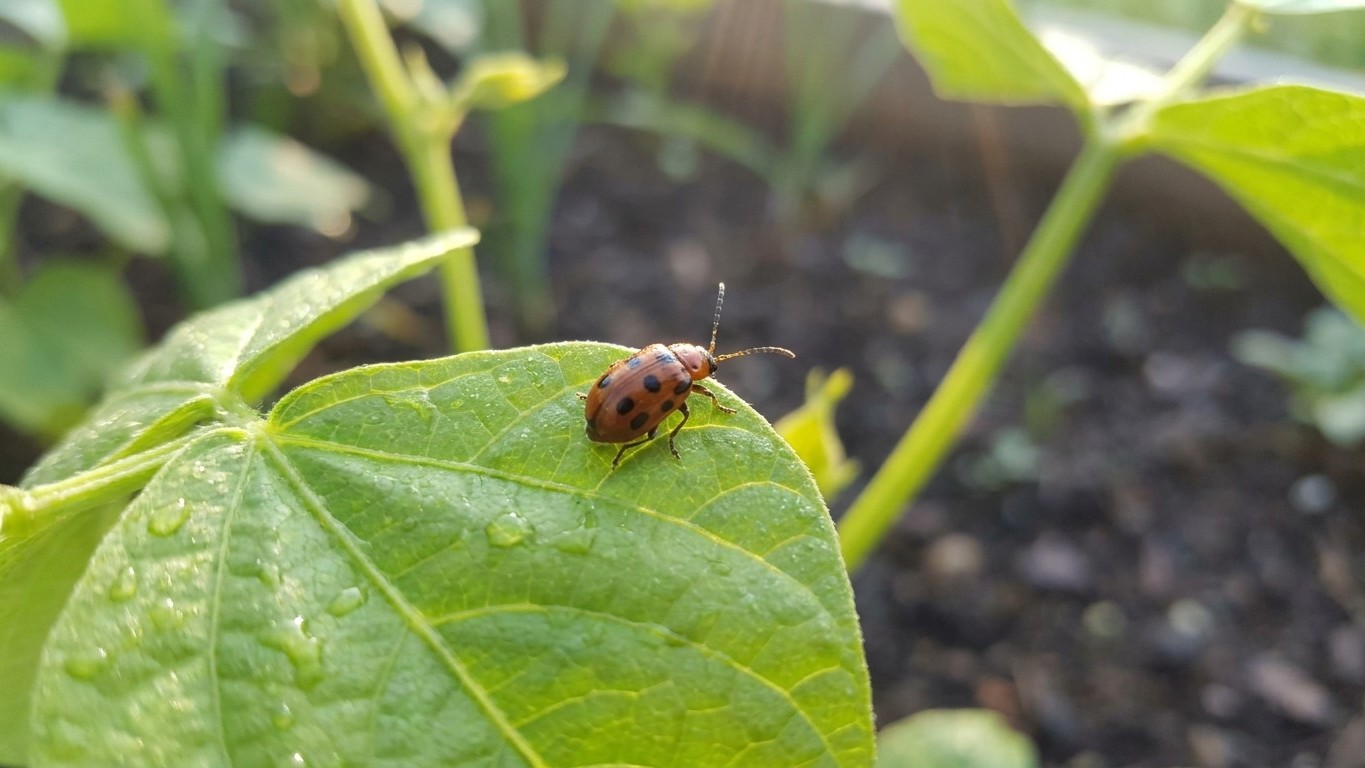

Bean leaf beetle shows up in New Jersey gardens in a narrow window each spring, and knowing that window matters more than any calendar date because it’s the beetle’s cue, not yours, that decides when it lands on your bean plants.
The weeks to watch

Rutgers NJAES Cooperative Extension publishes a clear window for this insect in its home garden vegetable pest guide: bean leaf beetle activity runs from mid-May to early June. That’s the range to work from, not a single date circled on your wall calendar. The same publication lists windows for several other common garden pests too, cucumber beetles emerging early May once soil temperatures cross 60°F, with a second generation showing up midsummer, Colorado potato beetle adults appearing early spring with their own second wave late in summer, and spotted lanternfly nymphs hatching mid-May before adults take over from late July through the first frost. None of those other windows apply to bean leaf beetle directly, but they’re useful context: this is a garden where several insects overlap in early-to-mid spring, and a gardener watching for one often spots another.
What the mid-May to early-June window tells you practically is this: the beetle isn’t waiting for a specific date on the calendar, it’s waiting for conditions. Adults overwinter in leaf litter and hedgerows, then move into bean plantings once temperatures and plant growth line up. That’s why the range spans several weeks rather than landing on a single day, some springs push activity toward the earlier end, others toward the later one. If you garden in South Jersey versus the northern counties, you may see the beetle show up at different points inside that same window, since soil warms at different rates depending on latitude and local microclimate. The takeaway is simple: start checking bean foliage in mid-May, and don’t assume you’re in the clear just because June 1 has come and gone. The window runs through early June for a reason.
Reading the calendar from your last frost
New Jersey gardeners plan around one date more than any other: the last spring frost. According to NOAA NCEI’s 1991-2020 U.S. Climate Normals, the reference station used for this data puts that date between March 29 and April 6, based on 32°F freeze probabilities in the 30-70% band. That’s a range, not a promise, and it comes from an airport weather station. Suburban and rural gardens typically see their own last frost later, often by one to two weeks, and gardens at higher elevation can lag even further behind. Check your own county’s extension office data before you trust this figure as gospel for your yard.
Here’s why that frost date matters for bean leaf beetle: the insect answers to soil warmth, not to a printed date. An early spring pushes its mid-May to early-June appearance earlier inside that window; a cold, wet April holds it back. Doing the math from the two ranges already in hand, since New Jersey’s last frost falls between March 29 and April 6, and Rutgers NJAES Cooperative Extension lists beetle activity starting mid-May, that puts the beetle’s earliest appearance roughly six to eight weeks after the frost window closes. That’s not a single day you can mark down, it’s a range built from two ranges, and it should stay that way. Practically, that six-to-eight-week mark is exactly when many gardeners are hardening off transplants or watching first true leaves appear on direct-seeded beans, which means any row cover protection needs to go on before that window opens, not after damage is already visible.
What it attacks, and what the damage looks like
Most gardeners notice the damage before they ever spot the insect responsible. Bean leaf beetle feeding leaves small, round to irregular holes scattered across leaf surfaces, sometimes described as a shot-hole or lace-like pattern once feeding is heavy. On young seedlings, damage can be severe enough to skeletonize cotyledons and first true leaves, which is often mistaken for a fungal or fertility problem rather than an insect. Adults will also chew on pods directly, leaving shallow pits or scars that can open the door to secondary rot in humid weather.
Which crops and which life stage
Snap beans and lima beans are the primary garden targets, though this beetle is closely tied to legumes broadly, which is worth remembering if you rotate beans through different beds each year. The adult beetle does essentially all of the visible foliage and pod damage a home gardener will see. Larvae live underground and feed on roots and root nodules, damage that’s invisible above ground but can weaken a plant’s vigor and its ability to fix nitrogen. That distinction matters for treatment: because adults are the ones chewing leaves and pods in the open, timing and physical controls aimed at adults still have a chance to work. Once larvae are established below the soil line feeding on roots, there’s little a home gardener can do to intervene directly, since the damage is happening out of sight and out of reach.
How New Jersey sits in this pest’s range

This site currently documents bean leaf beetle activity in 2 territories. With a count that narrow, New Jersey sits closer to the edge of what’s been mapped here so far rather than in the middle of a widely-documented range. That’s a statement about how much ground this particular resource has covered, not a claim about how far the insect itself actually travels biologically, and it’s worth keeping those two things separate. A narrow documented count means less cross-territory comparison is available right now, not that the pest is rare or unusually severe in New Jersey.
What can be said with confidence, based on the seasonal note from Rutgers NJAES Cooperative Extension, is that the mid-May to early-June window is specific to conditions here, tied to local soil warming and plant growth stages rather than to a fixed national schedule. If this site expands its documentation to more territories over time, the useful comparison will likely be about timing shifts, earlier windows in warmer regions, later ones further north, rather than about whether the beetle shows up at all. For now, treat New Jersey’s window as the one piece of local, sourced data available, and don’t extrapolate a severity ranking or trend that isn’t in the record.
What actually works against it
The measures below are ordered from cheapest to most involved, and each one earns its place by addressing a specific part of the beetle’s life cycle.
- Timing your planting costs nothing and works because adults move into bean plantings once conditions line up in that mid-May to early-June window, so delaying planting slightly or choosing early-maturing varieties lets seedlings get past their most vulnerable cotyledon stage before beetle pressure peaks, since younger, tenderer growth is what adults prefer to feed on first.
- Row covers work as a physical barrier that keeps adults from reaching foliage to feed or lay eggs nearby, but they need to go on before beetles arrive, ideally ahead of that six-to-eight-week mark after your last frost, and come off once plants start flowering so pollinators can reach the blossoms, since left on too long, covers stop being useful and start costing you fruit set.
- Hand-picking works on small plantings and costs only time, since adults are visible on leaf surfaces during the day and knocking them into a container of soapy water is old-fashioned but genuinely effective at reducing numbers on a handful of raised beds, though it doesn’t scale to a large planting.
- Crop rotation and clearing garden debris address the overwintering side of the problem, since adults spend winter in plant litter and field edges, so removing old bean residue and rotating legumes to a different bed each year reduces the local population that emerges the following spring.
None of these measures, though, can reach larvae once they’re established underground feeding on roots. At that point, the damage is happening out of sight, and physical controls aimed at adults on foliage simply don’t intersect with what’s happening below the soil line.
Common questions
Does bean leaf beetle only attack beans?
Snap beans and lima beans are the main garden targets, but this beetle is closely associated with legumes as a group, which is one reason rotating beans away from the same bed each year helps reduce local buildup.
Can I still save my plants once I see lace-like holes in the leaves?
Yes, in most cases. That damage pattern comes from adult feeding, and adults are the life stage still reachable through timing, row covers, and hand-picking. It’s larval feeding on roots, invisible above ground, that’s harder to address once it’s underway.
Should I plant beans earlier to avoid the beetle entirely?
Not necessarily earlier than your last frost allows. New Jersey’s last spring frost falls between March 29 and April 6 at the reference station, though suburban and rural gardens often see frost later. Planting too early risks frost damage that’s just as costly as beetle feeding, so check your own county’s typical dates before shifting your schedule.