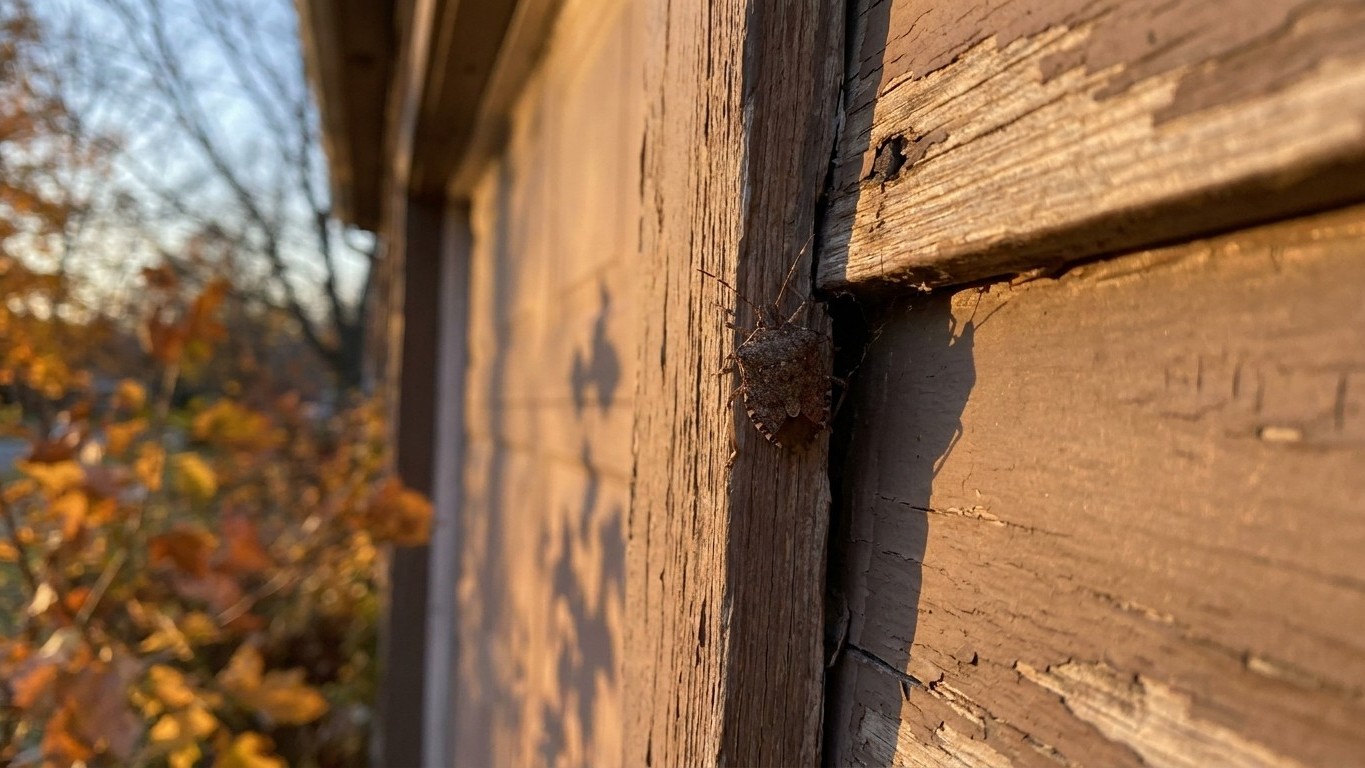

Brown marmorated stink bugs start showing up in Oregon homes every September and October, right when nighttime temperatures drop into the 40s. They’re not looking for food indoors, they’re looking for a warm crack to wait out winter. Sealing up entry points before that seasonal push begins, combined with vacuuming (never squashing) any bugs you find, is what actually keeps populations down inside a house. Outdoors, in orchards and gardens, the fight looks different and involves pheromone traps and targeted timing rather than blanket spraying.
When Stink Bugs Actually Show Up in Oregon

Oregon’s Brown marmorated stink bug problem has a real start date. The insect, native to East Asia, was first confirmed in the Portland metro area around 2004, likely arriving as a hitchhiker in shipping materials. For a decade it stayed a curiosity. By the mid-2010s, researchers at Oregon State University confirmed established, reproducing populations across parts of the Willamette Valley, and the range has kept expanding since.
The yearly cycle follows the state’s mild, wet climate closely. Adults emerge from overwintering spots in April or May, once daytime temperatures reliably climb into the 60s. Through summer they feed and mate outdoors, producing one generation per year in most of Oregon, sometimes a partial second generation in warmer pockets of the Willamette Valley. Late August through October is when things change: shortening days and cooling nights trigger a hardwired urge to find shelter, and that’s exactly when they start piling onto siding, squeezing through window screens, and slipping under garage doors.
Indoors, they don’t feed and they don’t reproduce. A bug that gets into your attic in October is simply waiting. Come a warm afternoon in January or a stretch of unseasonable sun, some individuals wake up early and wander into living spaces, which is why homeowners often report seeing stink bugs on windowsills in the dead of winter even though nothing is actively infesting the house.
Where in Oregon You’re Most Likely to See Them
Population density in Oregon isn’t uniform. The heaviest concentrations sit in the Willamette Valley, stretching from Portland south through Salem and into the Eugene area, where mild winters and dense residential tree cover give the insect exactly what it needs. Hood River and other fruit-growing regions in the Columbia Gorge have also reported significant numbers, largely because those areas combine orchard crops with suburban housing right next door.
East of the Cascades, colder winters and drier summers have slowed the spread, though isolated detections have turned up in cities like Bend as the insect continues expanding its range. The pattern tracks a broader trend documented by USDA researchers: brown marmorated stink bug spreads fastest through areas with a mix of ornamental trees, fruit crops, and closely packed housing, since all three give it food and shelter within a short flight or crawl.
Certain host plants concentrate the bugs even more. Butterfly bush, catalpa, and tree of heaven act like magnets in residential landscaping, while in agricultural zones hazelnut orchards and stone fruit trees draw large numbers by late summer. If your property has any of these, expect higher bug pressure than a neighbor a few blocks over without them.
What Actually Stops Them Indoors
Exclusion beats extermination every time with this pest. Because adults are hunting for tiny gaps rather than food sources, the most effective fix is mechanical: caulking cracks around window frames, replacing worn weather stripping on doors, and patching or replacing torn window screens before the fall push begins in September. Attic and soffit vents deserve particular attention, since stink bugs favor high, dark, undisturbed spaces exactly like the ones vents lead into.
Once bugs are already inside, a shop vacuum with a disposable bag is the tool of choice. Squashing releases the defensive odor that gives the species its name, an unpleasant, lingering smell that can soak into carpet and upholstery. A vacuum traps them without triggering that response, and emptying the bag outside afterward avoids attracting more.
Light management helps too. Stink bugs are drawn to bright light at night, so porch lights and uncovered windows in early fall can act as unintentional invitations. Switching to yellow “bug light” bulbs or simply closing blinds after dark during September and October reduces how many bugs cluster near entry points in the first place.
Do Insecticides Work Indoors?
Over-the-counter sprays applied around baseboards or window frames offer limited value against this species. Extension entomologists generally advise against relying on indoor pesticide treatments, both because residual sprays kill only bugs that make direct contact and because the insects that die inside walls or attics can attract secondary pests like carpet beetles. Exclusion and removal remain the more reliable approach for homes.
Long-Term Control: Traps, Timing, and Why Broad Spraying Falls Short
Outdoors, particularly for anyone managing fruit trees or a vegetable garden, pheromone-based monitoring has become the standard tool. Aggregation pheromone traps, developed through USDA research, don’t wipe out a population, but they tell you when adults are actively moving into an area, which lets homeowners and small-scale growers time any intervention instead of guessing. The StopBMSB.org network, a multi-state collaborative built around USDA and land-grant university research, tracks distribution and publishes updated management guidance that Oregon growers and extension offices draw on directly.
Broad-spectrum insecticide applications, the kind that kill everything on contact, tend to backfire in home gardens because they also wipe out the natural predators and parasitoid wasps that keep other pest populations in check. Oregon researchers have been monitoring the establishment of Trissolcus japonicus, a tiny parasitic wasp that attacks stink bug eggs and has shown up naturally in parts of the Pacific Northwest after being studied as a potential biological control. Its presence doesn’t eliminate the need for exclusion at home, but it does suggest that natural checks on the population are slowly building.
For anyone dealing with heavy pressure year after year, a fall inspection routine matters more than any single product. Walking the perimeter of a house in late August, checking screens, patching gaps around utility pipes, and sealing chimney caps addresses the problem at its source rather than after bugs have already found their way in.
The Stakes for Oregon Agriculture
This isn’t just a nuisance-pest story. Oregon produces roughly 99 percent of the commercial hazelnut crop in the United States, concentrated almost entirely in the Willamette Valley, the same region carrying the state’s heaviest stink bug numbers. Feeding damage from the insect causes kernel discoloration and deformities that can knock an entire nut lot down in grade, a real financial hit for growers who depend on visual quality standards for premium buyers.
Tree fruit growers face a similar risk. Apples, pears, and peaches show corky, sunken spots where the bug’s needle-like mouthpart punctures the skin to feed, damage that often doesn’t appear until well after harvest, making it hard to catch during initial inspection. Oregon State University’s integrated pest management programs have spent years refining spray-timing models specifically to reduce chemical use on these crops while still protecting yield, an approach that mirrors what home gardeners are told: watch, trap, time your response, and avoid reaching for broad chemical treatments as a default.
The insect’s spread across Oregon hasn’t slowed, but it also hasn’t matched the population explosions seen in parts of the mid-Atlantic where it first established in the U.S. Cooler summer nights in much of Oregon limit how many generations the bug can squeeze into a year, which keeps numbers lower than in Maryland or Virginia even as its range here continues to creep outward.