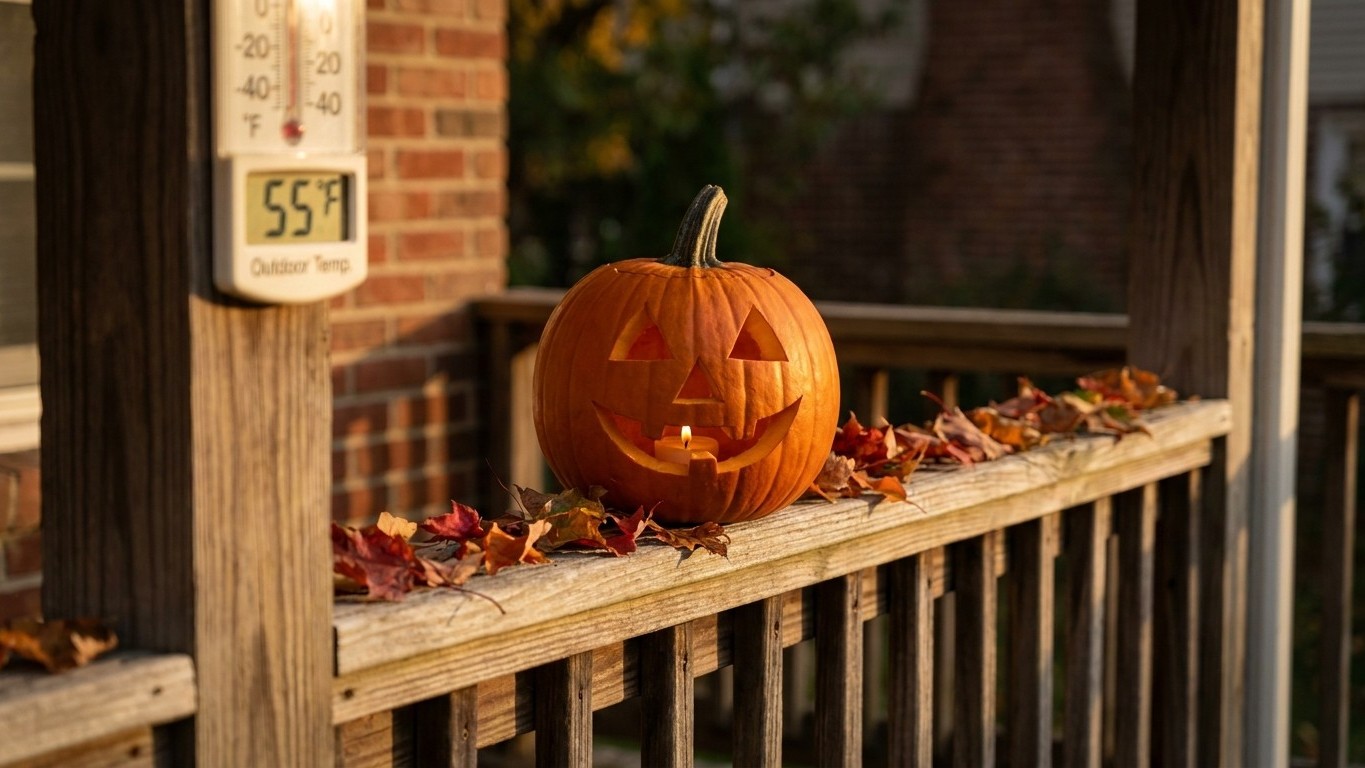

Around Newark, the mean first fall frost lands somewhere between November 4 and November 16, a window that falls one to two weeks after Halloween. That single fact reshapes the whole question of when to carve. A pumpkin sitting on a New Jersey porch through October 31 almost never has to survive a freeze first. The pressure here runs the other way: keeping a cut pumpkin looking good in weather that’s often still mild, not keeping it from freezing.
The short answer

If you’re picking a date, carve close to Halloween itself, ideally within a day or two of October 31, rather than the weekend before. New Jersey’s frost timing gives you room on the cold side, since the freeze that would eventually take down an unprotected pumpkin doesn’t typically arrive until after trick-or-treating is already over. But that same mild stretch works against you the moment you make the first cut. A carved pumpkin has no skin left to slow anything down, and October afternoons in this state can still run warm enough to speed along softening and shrinkage well before any frost shows up to end the season.
So the calendar math isn’t about racing a freeze. It’s about not giving warmth a head start. A pumpkin bought in early October and left whole, in a cool spot, can hold for a while. The University of Illinois Extension puts whole-pumpkin storage life at three to six months when it’s kept dark and cool, between 45 and 50 degrees Fahrenheit. That’s the buffer that lets a New Jersey household buy a pumpkin weeks ahead without worry. The buffer disappears once you carve it, which is exactly why the smart move is to hold off on cutting until the display window actually starts.
None of this means frost is irrelevant here, just that it isn’t the variable that decides your carving date. Around Newark, the mean date sits well past Halloween, and mean dates are averages built from decades of records, not a promise for any single year. Some years bring an early cold snap; most don’t, based on that historical window. Either way, the practical takeaway is the same: treat late October in New Jersey as frost-free for planning purposes, and let the pumpkin’s own condition, not the thermometer, tell you when to start cutting.
Picture the difference between a pumpkin carved on October 20 and one carved on October 30. Both might look fine on the day you cut them. Ten days later, in a New Jersey October that’s still hovering in the 50s and 60s during the day, the earlier one is noticeably softer at the cut edges and stem. The later one still has most of its structure. That gap is the whole reason the carving window matters more than the frost date does.
Frost or heat: which one gets it here
The cold end
New Jersey’s coldest-month mean daily minimum, based on the Newark reference station, is 25.5 degrees Fahrenheit. That number describes winter hardiness, the kind of cold a plant or a landscape has to survive across a full January, not what’s happening on a porch in late October. It’s a useful figure for gardeners thinking about perennials or shrubs. It has nothing to do with when a pumpkin should get carved, and it shouldn’t be read as a stand-in for a frost date. The actual first fall frost, arriving in that November 4 to November 16 window around Newark, is the number that matters for a Halloween pumpkin, and it lands safely after the holiday in most years.
The warm end
Here’s the part that actually applies to New Jersey carvers: heat, or mild-to-warm temperatures that outlast the calendar’s turn toward fall. A whole pumpkin wants to sit between 45 and 50 degrees. New Jersey afternoons in the back half of October frequently run warmer than that, sometimes into the 60s or even 70s depending on the year and the part of the state. That gap between what the pumpkin wants and what the air actually delivers is the real risk factor here, not frost. It’s why the smart storage move, covered in the next section, is finding the coolest, darkest indoor or covered spot available rather than assuming the outdoors will do the job on its own the way it might in a state with an earlier, harder frost.
Where to keep it until you carve
- Before carving, look for a good stem. University of Illinois Extension recommends choosing a pumpkin with one to two inches of stem still attached. That stem is the seal over the top of the fruit; once it snaps off, that spot is exposed and starts to break down faster. Never lift or carry a pumpkin by the stem; it isn’t built to bear the weight, and losing it early costs you storage time before you’ve even gotten the pumpkin home.
- Store it whole in the coolest dark space you have. An unheated basement corner, a mudroom, an attached garage, or a cellar tends to run closer to that 45-50 degree target than a sunny porch does during a mild New Jersey October. Aim for the darkest, most consistently cool spot in the house, not the most visible one.
- Keep it away from ripening fruit. Apples, potatoes, and tomatoes give off ethylene gas as they ripen, and that gas accelerates aging in a nearby pumpkin. With New Jersey’s apple harvest in full swing through October, it’s tempting to stack a pumpkin next to a bushel from the orchard. Don’t. Give it its own shelf.
- Avoid direct sun and heating vents. A front porch that gets afternoon sun, or a spot near an indoor heat register once the furnace kicks on for a cold snap, both push the pumpkin’s environment further from that cool, stable target.
- Move it to its display spot only once you’re ready to carve. Since New Jersey’s warmth, not frost, is the thing working against a carved pumpkin, the fewer days it sits cut and exposed before Halloween, the better it’ll look on the day itself.
Checking this against your own county
The Newark-based frost window is a reference point, not a guarantee for every yard in the state. Suburban and rural gardens, especially at elevation in the northwest highlands or in low-lying inland spots that trap cold air, often see their first fall frost arrive earlier than an airport station reports, sometimes by a week or two. Shore communities and the immediate Newark-New York corridor tend to run milder and later. If you want a read that’s specific to your county rather than to one weather station, Rutgers Cooperative Extension is the state’s land-grant resource for that kind of local detail, and it’s worth a look before you lock in a carving date based on statewide averages alone.
Common questions
Does a hard freeze ruin an uncarved pumpkin?
A hard freeze can damage the flesh and speed up collapse once it thaws, but a whole pumpkin with intact skin tolerates a light frost far better than a carved one does. Since New Jersey’s mean first fall frost lands after Halloween, most whole, uncarved pumpkins on porches through October 31 don’t face that test at all in a typical year.
How long does a carved pumpkin actually last?
No extension service publishes a fixed number of days for a carved pumpkin, and there’s no verified preservation trick, bleach dip, or coating that’s backed by that kind of research. What is established: pick a heavy pumpkin with no soft spots and one to two inches of stem, store it whole and cool until you’re ready, then carve close to the day you plan to display it.
Should I refrigerate a pumpkin instead?
A standard refrigerator runs colder than the 45-50 degree range a whole pumpkin wants, and most pumpkins are too large to fit anyway. A cool basement, garage, or cellar is a more practical match for New Jersey’s climate than trying to chill it artificially.
Does the shape of the pumpkin matter for storage?
No. University of Illinois Extension notes shape is unimportant; what matters is weight (heavier for its size generally means more flesh and moisture), a clean surface free of blemishes or soft spots, and that intact one-to-two-inch stem.