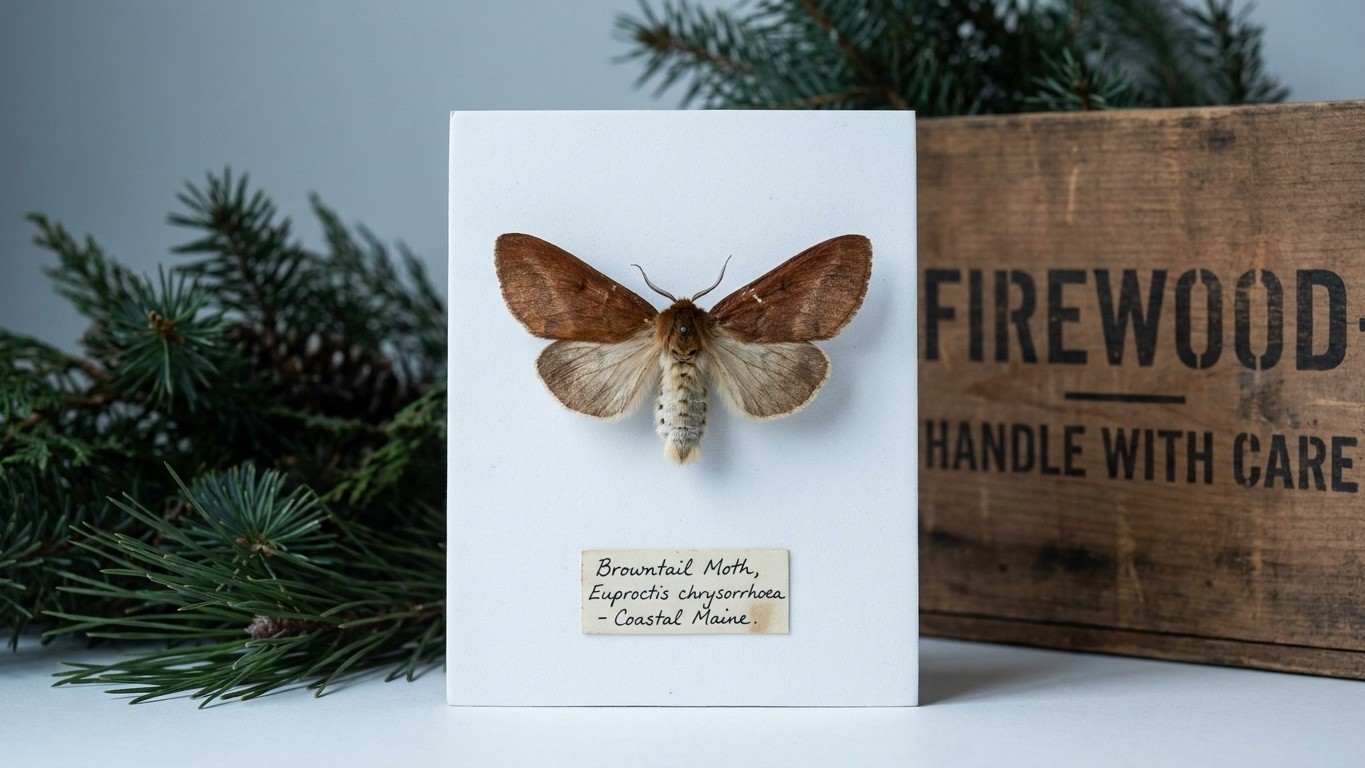

Newfoundland and Labrador has no confirmed, established population of browntail moth. The pest’s northernmost strongholds in North America sit in coastal Maine, with pockets in Nova Scotia and New Brunswick, but the province’s cooler maritime climate, geographic isolation, and forest makeup have kept it off the map so far. That doesn’t mean residents can ignore it. Moths, egg masses, and firewood move around, and a single overlooked shipment could change the picture.
The Short Answer: No Confirmed Browntail Moth Population in Newfoundland and Labrador

Browntail moth (Euproctis chrysorrhoea) is a European import first documented in Massachusetts around 1897. It spread through New England and parts of southeastern Canada within a couple of decades, then largely collapsed by the mid-1900s thanks to introduced parasites, harsh weather, and natural predators. Since roughly 2015, populations have surged again, mostly concentrated in central and coastal Maine, with smaller pockets elsewhere in Atlantic Canada.
Newfoundland and Labrador sits outside that current range. Provincial forestry surveys haven’t flagged sustained browntail moth activity, and the insect isn’t listed among the province’s active forest pest concerns the way spruce budworm or hemlock woolly adelgid are. What that means for a homeowner in St. John’s or Corner Brook: this is a “watch for it” pest, not a “deal with it now” pest.
Why the Island’s Climate and Forests Work Against This Pest
Two things matter more than raw winter temperature here: what the caterpillars eat, and where they spend the winter.
Browntail moth larvae overwinter in tight silk webs wrapped around the tips of branches, usually on deciduous hardwoods. Come spring, they need the tender new leaves of oak, apple, cherry, hawthorn, and similar broadleaf trees to feed on before pupating into adults. Newfoundland and Labrador’s forests skew heavily toward boreal conifers, black spruce, balsam fir, and tamarack dominate the landscape, with hardwood stands limited mostly to warmer pockets on the island’s west coast and parts of the Avalon Peninsula. Fewer preferred host trees mean fewer places for a colony to take hold even if a few moths arrived by accident.
The Overwintering Web Problem
The winter web isn’t just a shelter, it’s a survival strategy. Dozens of larvae cluster inside a single silk nest, which buffers them against cold snaps that would kill an exposed insect. That’s part of why browntail moth has managed to persist through Maine winters that dip well below zero. Cold alone hasn’t been the thing keeping it out of the Maritimes or Newfoundland and Labrador. Distance, water barriers, and a mismatch between the pest’s preferred trees and the province’s forest composition do more of that work than frost does.
Geography plays its own role. The island of Newfoundland is separated from the mainland by the Cabot Strait and the Gulf of St. Lawrence, and Labrador sits even farther north along a coastline with limited road connections to established browntail moth territory. Moths are weak fliers as adults and don’t cross open water on their own. Every documented range expansion of this species has followed either gradual overland spread or the accidental movement of infested material, egg masses on nursery stock, caterpillars in firewood, webs on landscaping debris.
How Close the Infestation Really Is
Coastal and midcoast Maine remain the epicenter of North American browntail moth activity, with heavy defoliation reported in multiple counties in recent years. Cape Cod, Massachusetts, holds a separate, longer-standing population. In Canada, historical records place browntail moth in parts of Nova Scotia and New Brunswick going back to the early spread of the insect, though populations there have stayed smaller and more localized than in Maine.
None of those areas border Newfoundland and Labrador directly. The shortest realistic path for the pest to reach the province isn’t a moth flying north, it’s a person driving north with an infested nursery plant, a load of firewood cut in an affected area, or outdoor furniture and vehicles that picked up egg masses or hairs from a webbed branch. That’s a slow, low-probability route, but it’s the one that matters for prevention.
Canada regulates the movement of certain wood products and nursery stock partly to slow the spread of forest pests like this one. For residents, the practical takeaway is simple: buy firewood locally, avoid transporting yard waste or pruned branches from outside the province, and inspect nursery stock before planting, especially anything shipped from the northeastern United States or the Maritimes.
What Would Need to Change, and What to Do If You Spot One
A warming climate could eventually shift the equation. Longer growing seasons and milder winters tend to favor hardwood regeneration and give cold-sensitive insects a longer window to establish. Researchers tracking browntail moth’s Maine resurgence have pointed to a string of warm, dry springs as one factor behind the recent population boom there. If Newfoundland and Labrador’s climate trends warmer and its hardwood stands expand, the natural barriers that currently limit this pest could weaken over time. That’s a gradual process measured in decades, not something likely to show up as a sudden infestation next spring.
Human-assisted introduction remains the faster-moving risk. A single infested shipment of nursery stock, a trailer load of firewood from an affected region, or even camping gear stored near a webbed tree could carry the pest into a new area. This is exactly how browntail moth reached isolated pockets of its current range in the first place.
Identification matters because the health risk is real wherever this insect does establish. The caterpillars carry tiny barbed hairs that break off and become airborne, and contact (or even breathing them in) can cause a poison-ivy-like rash and respiratory irritation in sensitive people. The hairs can persist in old webs and yard debris for a year or more, so even a nest that looks abandoned deserves caution.
Here’s what to look for:
- Winter webs: Tight, silvery-white to tan silk nests wrapped around the tips of bare branches, usually 2 to 3 inches long, most visible on deciduous trees after leaf drop.
- Caterpillars: Dark brown, hairy larvae with a broken white stripe down each side and two distinctive orange-red dots near the tail end, active in spring and early summer.
- Adult moths: Pure white wings with a distinctive tuft of brown hair at the tip of the abdomen, flying in July.
- Skin reactions: An itchy, red rash resembling poison ivy exposure after yard work, especially after handling brush or old branches.
Anyone who finds webs or caterpillars matching this description in Newfoundland and Labrador should report the sighting to provincial forestry or agriculture officials rather than trying to remove the material without protection. Early reporting is exactly how isolated introductions get caught and contained before they turn into an established population, which is still the story for browntail moth in this province: a pest that’s close enough to take seriously, but not yet close enough to show up in the backyard.