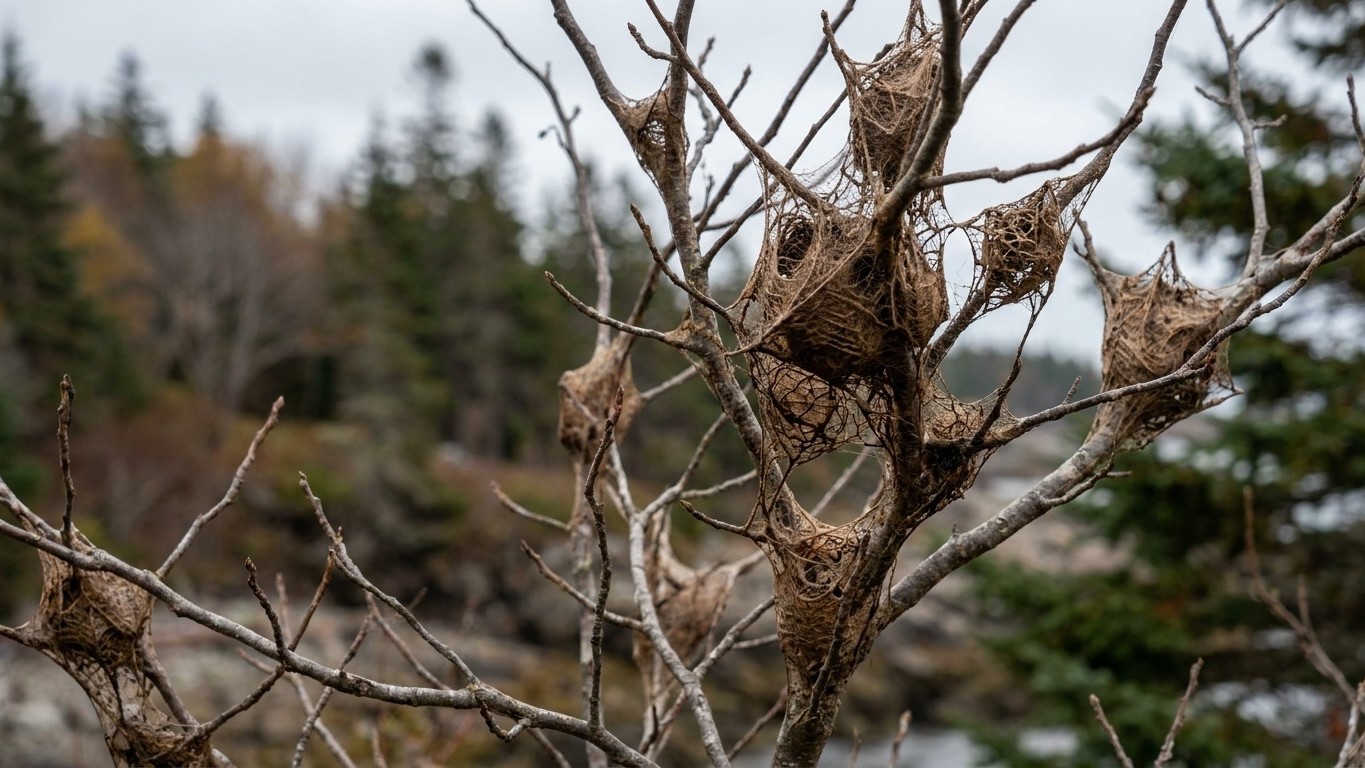

Browntail moth caterpillars have been active in southwestern Nova Scotia for years, with the heaviest concentrations in Shelburne County and pockets of Queens, Digby, and Yarmouth counties along the South Shore. The insect follows a predictable calendar: caterpillars feed from April through June, moths fly in July, and the toxic winter webs that give away an infestation sit exposed on bare branches from October through early spring. Control comes down to timing. Cut and destroy those webs before mid-April, and you knock out the population before it ever gets a chance to feed.
Where Browntail Moth Has Taken Hold in Nova Scotia

Unlike an insect that just arrived, browntail moth (Euproctis chrysorrhoea) has been part of the Atlantic Canada landscape for decades, originally arriving from Europe in the late 1800s through Massachusetts. From there it spread north along the coast, eventually settling into pockets of Maine, New Brunswick, and Nova Scotia where the climate and host plants suit it.
In Nova Scotia, the province’s core infestation zone sits along the southwestern coast. Shelburne County carries the heaviest and most consistent populations, with Lockeport and surrounding communities reporting recurring webs year after year. Queens, Digby, and Yarmouth counties see lighter but persistent activity, and isolated sightings occasionally show up farther up the South Shore as winds and vehicle traffic help carry egg masses to new areas. This patchy spread pattern is typical for the species elsewhere too, moths don’t travel far on their own, but human activity and storm winds move them faster than natural dispersal would.
The insect favors a specific menu. Oak, wild cherry, crabapple, hawthorn, serviceberry, and rugosa rose (the beach rose common along coastal properties) top the list of preferred host plants. Coastal gardens planted heavy with rugosa rose for its salt tolerance often end up as unintentional caterpillar nurseries, which partly explains why South Shore properties see repeat problems.
The Life Cycle, Month by Month
Knowing where the insect is in its cycle tells you exactly what to do and when. Nothing about browntail moth control works on a random schedule, it’s entirely tied to biology.
Fall Through Early Spring: The Web Stage
From August through April, young caterpillars live inside tightly woven silk webs attached to the tips of branches, usually wrapped around a cluster of dried leaves. A single web can hold 200 to 400 caterpillars packed together for the winter. This is the easiest stage to spot and the easiest stage to control, since the webs stay visible against bare branches long after leaves have dropped.
April Through June: Active Feeding
Once temperatures warm, caterpillars leave the winter web and start feeding on new leaf growth. This is when they grow their signature look: dark brown bodies with two orange-red dots near the tail and rows of white markings down the sides. It’s also when the barbed hairs responsible for skin reactions become most concentrated on their bodies. By late June, mature caterpillars pupate, often in curled leaves or bark crevices.
July: Adult Moths and Egg-Laying
Adult moths emerge in July, recognizable by pure white wings and a distinctive tuft of brown hair at the tip of the abdomen, which gives the species its name. Females lay egg masses on the undersides of leaves, and by August those eggs hatch into the next generation of caterpillars, which immediately start spinning the winter webs that repeat the cycle.
Health Risks From Contact
The barbed hairs covering browntail moth caterpillars are the real problem, not the insect itself. These microscopic hairs break off easily and become airborne, meaning a reaction can happen without ever touching a caterpillar directly. Mowing a lawn near an infested tree, raking old leaves, or even standing downwind on a breezy day can be enough.
Contact typically produces a red, itchy rash similar to poison ivy, sometimes developing into blistering that lasts one to two weeks. People with asthma or other respiratory sensitivities can experience breathing difficulty if hairs are inhaled in enough concentration, and Nova Scotia health authorities have noted seasonal spikes in rash-related clinic visits in the counties where the moth is established.
What catches most homeowners off guard is how long the hairs stay dangerous. Shed skins, old winter webs, and even caterpillar frass sitting in a gutter or on a deck can trigger reactions for up to three years after the insects themselves are gone. That’s why removing a web isn’t the end of the job, the debris left behind still needs careful cleanup.
A short list of situations that carry the highest exposure risk on residential properties:
- Pruning branches with visible winter webs without gloves or eye protection
- Using a gas-powered leaf blower near old webs or shed caterpillar skins
- Line-drying laundry under host trees during May and June
- Letting kids play under infested oak or rugosa rose during peak feeding weeks
- Mowing over fallen caterpillar debris without a bag attachment
What Actually Stops It
Nova Scotia’s climate doesn’t offer much natural resistance to this insect, so control mostly falls on property owners and municipal forestry crews doing the physical work of removing webs before caterpillars emerge.
Winter Web Removal
This is the single most effective step available to homeowners, and the window runs from October through mid-April, before caterpillars leave the web to feed. Webs sit at branch tips, often 3 to 15 feet up, and can be clipped with pole pruners. Once removed, webs need to be burned or dropped directly into a bucket of soapy water, never left on the ground where hairs can still spread. Protective gear matters here: long sleeves, gloves, and eye protection, since even dormant winter webs carry irritating hairs.
Chemical and Biological Options
For trees too tall to safely prune, or properties with heavy infestations, targeted insecticide treatment applied by a licensed pest control operator during the early feeding window (April into May) can knock back populations before they mature. Bacillus thuringiensis kurstaki (Btk), a naturally occurring bacterium, is commonly used because it targets caterpillars specifically without broad harm to pollinators, provided it’s applied while caterpillars are still young and actively feeding. Spinosad-based products are another option foresters use on a larger scale.
Natural Predators Aren’t Reliable Yet
In parts of New England, certain parasitic wasps and a naturally occurring fungal pathogen have helped suppress browntail moth populations over time. Nova Scotia hasn’t seen the same level of natural population crash, so relying on predators alone tends to disappoint. Physical removal combined with targeted spraying remains the more dependable approach here.
Landscaping Choices That Help Long-Term
Property owners replanting after an infestation sometimes swap out heavily favored hosts like rugosa rose or crabapple for less preferred species such as maple or birch, which the caterpillars largely ignore. It won’t eliminate risk from a neighboring infested tree, but it reduces how attractive a yard is to egg-laying females in July.
When to Call a Professional
Small numbers of webs on low branches are manageable as a weekend project with the right gear. Once webs show up 20 feet or higher, or a property has dozens of infested branches across multiple trees, calling a licensed arborist or pest control company makes more sense than risking a fall or heavier hair exposure. Several municipalities in Nova Scotia’s affected counties also run seasonal reporting programs, so flagging a heavy infestation to local forestry or health authorities can help track how far the population is spreading that year.