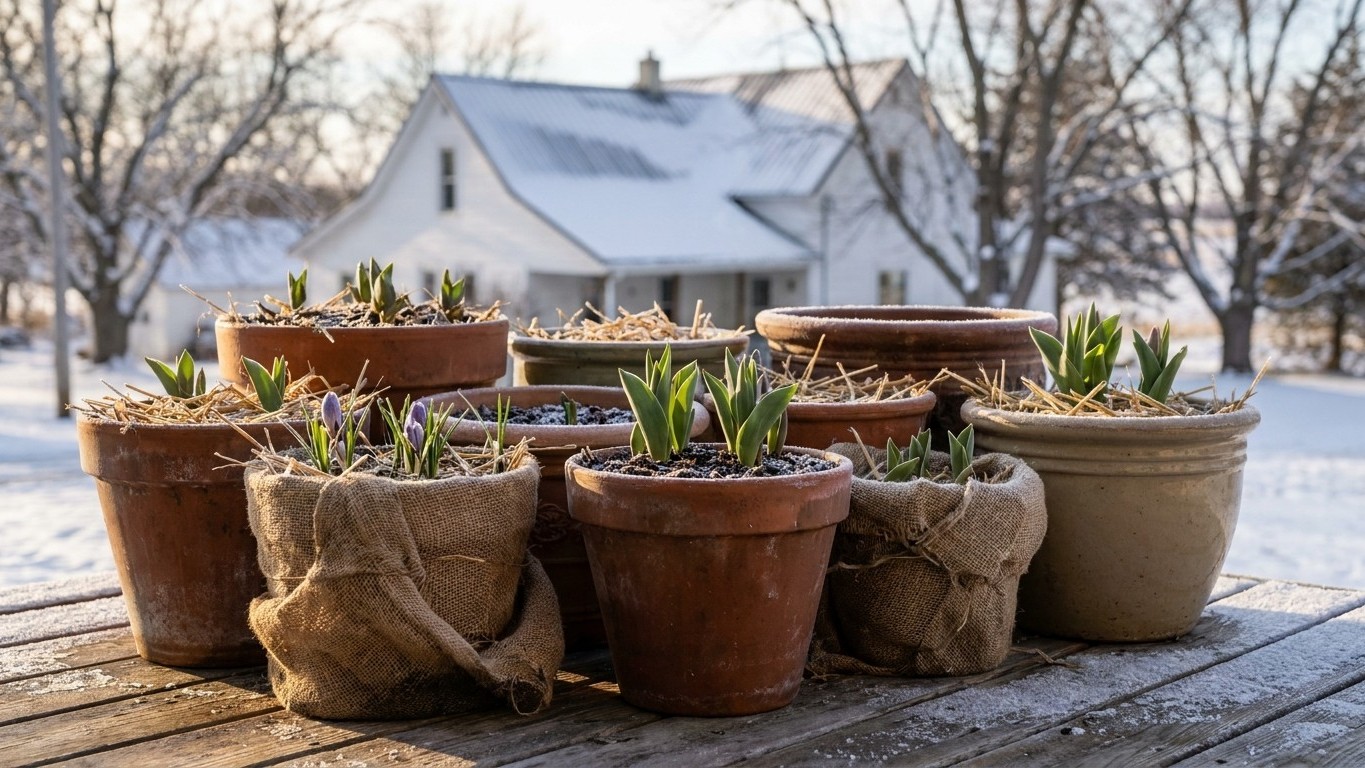

Dig dahlias, cannas and gladiolus in North Carolina after the first frost blackens their foliage, usually within about a week or two. Around Charlotte, NOAA’s 1991-2020 normals put that first 32°F freeze between October 30 and November 8, so lifting runs from early to late November. Mountain gardens lift sooner and coastal gardens later. A few mild-winter spots can skip the job and mulch instead, and the next section shows where that line falls.
Do you have to dig them up in North Carolina?
The USDA Plant Hardiness Zone Map (2023 edition, built on 1991-2020 normals) runs from 5b to 8b across the state, and that spread decides the question. Zones rest on a single variable, the average annual extreme minimum temperature, so they describe how hard the worst night of a typical winter gets. Dig dahlias, cannas and gladiolus every fall in the mountains and the Piedmont, and consider mulching them in place only on the milder coastal plain. Where the ground does not freeze deeply, tubers can ride out winter under a thick blanket of mulch. Where it does, they cannot.
Mountains and Piedmont: lift them
The Blue Ridge sits toward the 5b end of the range, and there is nothing to debate. Dahlias are Mexican highland natives, cannas come from the warmer parts of the Americas, and the gladiolus in garden centers trace mostly to southern Africa. None of them evolved for frozen soil. They are summer-flowering tender bulbs, a different group from Spring Bulbs such as tulips and daffodils, which actually need the cold.
The Piedmont is closer to a coin flip, which is why gardeners argue about it. At Charlotte, NOAA’s 1991-2020 climate normals give a coldest-month (January) mean daily minimum of 31.8°F. That is an average of nights, so a typical January includes mild ones and others well below freezing, and the tubers answer to the worst of them. Water adds a second threat. Heavy red clay holds winter rain around a tuber, and a dahlia sitting in cold, saturated soil can rot even in a winter that never turns truly harsh.
Cannas are the toughest of the three, and plenty of Piedmont gardeners leave them under mulch and accept an occasional loss. If you want a dependable show next summer, though, lift all three. Mulching in place works in mild winters and fails in hard ones, and you will not know which kind you are getting until spring.
Coastal plain: mulch can work
Toward the 8b end of the range, winters are milder and the ground rarely freezes deeply. A well-drained bed topped with a thick layer of shredded leaves or pine straw can carry cannas through reliably and dahlias often. Drainage matters more than temperature here. A low bed that stays soggy in winter rots tubers just as the Piedmont’s clay does, so lift those plants anyway.
One cheap hedge for anyone sitting near the line: lift half of each planting and mulch the other half. After one winter you will know what your own soil does, which beats any map.
When to lift them
Wait for the blackened foliage
Dates are a guide, and the frost is the signal. The first killing frost turns dahlia and canna leaves black and limp almost overnight. In the NOAA Charlotte normals, the probability of a 32°F freeze moves through the 30 to 70 percent band between October 30 and November 8. Lift within about a week or two after the first frost that blackens the foliage, which in the Charlotte area means roughly early to late November.
A frost that only nips leaf edges has not finished the job, so keep waiting until the plants collapse. Gladiolus run on a slightly different clock. Their foliage often yellows and browns on its own before frost arrives, and once most of the leaves have turned, the corms are ready.
Why lifting early backfires
Pulling tubers while the plant is still green feels like prudent caution. It is the most common way to lose them. Until frost ends top growth, the foliage keeps feeding the underground parts and the skins keep thickening and hardening. Tubers dug early are immature, with thin skins that lose moisture fast and let fungi in. They look fine in November. By February they have turned to mush or shrunk to leather.
The week or two after frost is not wasted time. It lets the skins set and, in dahlias, makes the growing eyes easier to spot. Waiting longer than that carries its own risk, since a hard freeze or weeks of cold, soggy soil can damage the crown. That is why the rule is a window rather than a deadline.
Adjusting for your part of the state
The trigger stays the same everywhere, but the calendar shifts. The Blue Ridge gets its first frost earlier than Charlotte, so mountain gardeners lift earlier than that early-to-late November window. The coastal plain gets frost later, so lifting there slides later. For the first-frost and last-frost dates in your county, see First and Last Frost Dates in North Carolina.
On lifting day, choose dry weather so the soil falls away easily. Cut dahlia and canna stalks back to a few inches, push a garden fork in well away from the crown, and lever the clump up rather than pulling on the stem. Dahlia necks snap with surprising ease, and a tuber without a neck will not sprout.
Storing them over winter
Cure first, then clean lightly
Freshly lifted tubers need a short drying period before they go into storage. Set dahlia clumps upside down in a sheltered, airy spot so the hollow stems drain, and let the surface moisture dry off. Then brush away loose soil with your hands or a soft brush. Skip the hose and the scrubbing: a little dirt protects the skin, while a scrubbed, wet tuber invites rot. Label everything as you go, because a box of unlabeled dahlia tubers in March tells you nothing about which is which.
The right place is cool, dark and frost-free. A basement or an interior closet that stays above freezing works well in the Piedmont. In the mountains, an attached garage can dip below freezing during a hard snap, so choose a spot with more insulation.
How the three differ
Storage medium and moisture are where the three plants part ways. Dahlia tubers and canna rhizomes both want a barely damp packing material, while gladiolus corms keep best nearly dry.
| Step | Dahlia tubers | Canna rhizomes | Gladiolus corms |
|---|---|---|---|
| After lifting | Drain upside down, dry briefly | Shake off the heaviest soil, dry briefly | Cut off the tops, cure in a warm, airy spot until husks turn papery |
| Cleaning | Brush lightly, keep the neck intact | Leave a little soil clinging | Pull away the old shriveled corm beneath the new one |
| Packing | Barely damp wood shavings, peat or vermiculite in a vented box | Barely damp medium, slightly more forgiving | Mesh or paper bags, no damp medium |
| Main danger | Rot if too wet, shrivel if too dry | Shrivel if the medium dries out | Mold in humid air, mice |
The logic follows the plant’s anatomy. A dahlia tuber is a fleshy storage root that holds a lot of water, so it needs just enough humidity around it not to shrivel. Canna rhizomes behave similarly and tolerate slightly rougher handling. A gladiolus corm is a compact, dense stem base wrapped in a dry husk, and it molds when packed in anything damp.
The monthly check
Storage does not run on autopilot. Open the boxes once a month from the day you pack them until planting time. Look for soft spots, white or gray mold, and tubers gone wrinkled. Cut a soft spot back to clean, firm flesh and let the cut surface dry, or discard the piece if rot has spread. If the tubers are wrinkling, mist the packing material lightly. If it feels wet, open the box and let it air for a day. One rotting tuber can spoil its neighbors in a box, and a monthly look is what keeps a small problem small.
What goes wrong
Most losses trace back to four mistakes, and each one shows itself well before spring if you are looking.
- Rot. The tuber feels soft or spongy, smells sour, and may have fuzzy white or gray patches. It comes from storing too wet, packing before the surfaces dried, or poor air movement. Dry the tubers properly, use only barely damp packing, and vent the box.
- Shriveling. The skin wrinkles like a raisin and the tuber feels light. The storage space is too dry or too warm, or the tubers were lifted immature. A light misting of the packing material often rescues them if caught early.
- Lifting too early. Tubers dug while the foliage was still green have thin skins and tend to do both of the above. Wait for the frost to blacken the leaves, then lift within a week or two.
- Leaving them in the ground one zone too far north. Advice written for the coastal plain does not travel to Charlotte, let alone the mountains. After a run of mild winters it is tempting to skip the digging, and the one hard winter then takes the whole planting.
Pack only firm, fully dried tubers, and if one turns soft in midwinter, remove it that same day. A reliable bulb bed in a state with this much climate variety comes from matching the ritual to your own corner of North Carolina. To see how hardy bulbs handle the same winters you are protecting these from, read Which Spring Bulbs Survive Your Winter.
Common questions
Can I leave cannas in the ground in the Piedmont?
Often, yes, with a thick layer of mulch and good drainage. They are the hardiest of the three, and many Piedmont gardeners accept a loss in the harshest winters. In heavy clay that stays wet, lifting is safer.
Should I cut dahlias down before the first frost?
No. Let the frost blacken the foliage first, then cut the stalks back and lift within about a week or two. Cutting down green plants and digging early gives you immature tubers that rot or shrivel in storage.
What if I garden in the mountains or on the coast?
Same signal, different calendar. Mountain gardeners lift earlier than the Charlotte window of early to late November, and coastal gardeners later, with mulching in place realistic only on the milder coastal plain. More regional guidance is collected in the North Carolina guides.
When do they go back in the ground?
After your last spring frost, once the soil has warmed. The Blue Ridge runs several weeks later in spring than Charlotte, so a mountain gardener who stored tubers carefully still has to wait well past the Piedmont’s planting date. For the fall-planted side of the bulb bed, see Planting Spring Bulbs in North Carolina.