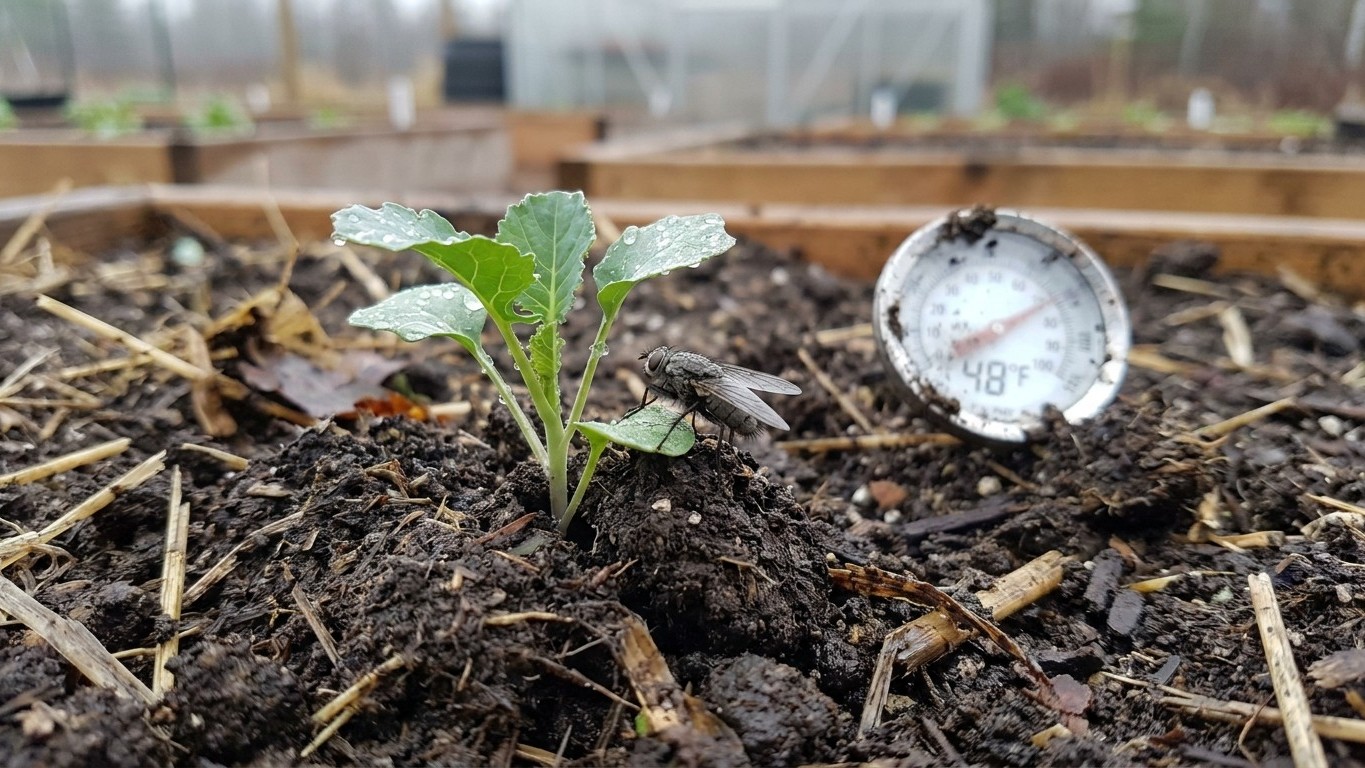

Root maggot flies start laying eggs in Yukon gardens as soon as the soil hits roughly 45 to 50 degrees Fahrenheit, which in the Whitehorse area typically happens in the back half of May. That timing lines up almost exactly with when most gardeners are transplanting cabbage, broccoli, and turnips into the ground, which is exactly why so many northern growers lose seedlings before June even ends. The fix isn’t a single product. It’s a combination of timing, physical barriers, and soil management that breaks the fly’s life cycle before it gets started.
Why Yukon’s Cool Soil Attracts Root Maggot Flies

Root maggots aren’t one species. The group includes the cabbage maggot (Delia radicum), the onion maggot (Delia antiqua), and the seedcorn maggot (Delia platura), and all three share a preference for cool, moist soil that most warm-climate pests can’t tolerate. That preference makes Yukon’s short, cool growing season close to ideal for them rather than a limiting factor.
Compare that to a garden in Kansas or Georgia, where soil warms past 70 degrees by late spring and root maggot flies mostly fade out by early summer. In the Yukon, soil temperatures often sit in that 45 to 60 degree sweet spot for weeks at a stretch, sometimes into July at higher elevations or in shaded raised beds. The flies, which look like small gray houseflies about a quarter inch long, are drawn to the smell of disturbed soil and decaying organic matter, both of which are common in a garden bed that’s just been tilled and planted.
Female flies lay eggs directly at the base of host plants, usually within an inch of the stem, and the larvae hatch within a few days and tunnel straight into the roots. A single female can lay 50 to 200 eggs over her lifetime, and in a cool Yukon spring that lifetime can stretch longer than it would in a warmer region, since the flies aren’t racing against rising heat that would normally kill them off.
The Window When Damage Peaks in Yukon Gardens
Whitehorse averages a frost-free season of roughly 90 to 100 days, running from late May to early September in a typical year. Root maggot activity clusters into two waves inside that window: the first tied to overwintering pupae emerging as adults once soil warms in spring, and a second, usually smaller wave in late July or August from the next generation.
The first wave is the one that does the most damage, because it hits transplants and direct-seeded crops when they’re smallest and least able to recover from root injury. A cabbage transplant with a maggot tunnel through its root ball wilts fast, often within days, even though the soil around it looks perfectly moist. Gardeners frequently mistake this for transplant shock or underwatering, which delays the correct response by a week or more.
Soil temperature, not the calendar, is the real trigger. Extension research across cold-climate regions consistently points to fly emergence starting once soil hits the mid-40s Fahrenheit at a two-inch depth, with peak egg-laying activity between 50 and 65 degrees. If you’re tracking a soil thermometer instead of guessing from the weather forecast, you’ll get a much more accurate read on when to put protection in place.
Crops Most at Risk in a Yukon Garden
Brassicas take the heaviest hit, since cabbage, broccoli, cauliflower, kale, and turnips are all hosts for the cabbage maggot specifically. Onions, leeks, and garlic draw the onion maggot. Radishes are a favorite target too, and because they’re often one of the first direct-seeded crops planted in a Yukon garden, they end up as an early warning sign for the whole season.
Spotting the Damage Before You Lose the Crop
Above-ground symptoms show up as wilting during the warmest part of the day, a bluish or grayish tint to the leaves, and stunted growth that doesn’t respond to watering. By the time those signs are obvious, the damage below ground is usually already significant, since the visible wilting only appears once the root system has lost a meaningful chunk of its function.
Pulling a struggling plant is the fastest way to confirm what you’re dealing with. Cabbage maggot damage looks like a network of narrow tunnels through the main root and lower stem, sometimes packed with small white larvae less than a third of an inch long. Onion maggot damage tends to concentrate at the base of the bulb, turning it soft and slimy, often with a smell close to rot even before any larvae are visible.
Root vegetables that survive to harvest can still carry hidden tunnels that only show up when you slice into a carrot or turnip at the counter. That’s a good reason to check a few roots mid-season rather than waiting until pulling everything at once, especially in a bed where you’ve had trouble in past years.
What Actually Stops Root Maggots in a Yukon Garden
Timing your planting to dodge the first fly emergence is the single most effective move available, and it costs nothing. Delaying brassica and onion transplants by even two to three weeks past the earliest possible planting date can mean the difference between setting seedlings out during peak egg-laying versus after the first wave has already died down.
Floating row covers laid directly over the bed at planting time, with the edges buried or weighted down, physically block adult flies from reaching the soil to lay eggs. This works because the flies need direct contact with bare or lightly disturbed soil near the plant base, and a properly sealed cover removes that access entirely. Covers need to go on before the flies arrive, not after you spot the first wilting plant, since by then eggs may already be laid underneath.
Crop rotation matters more in the Yukon than in warmer regions, because pupae overwinter in the soil and emerge close to where the previous year’s host crop grew. Moving brassicas and onions to a different bed each year, ideally with a three-year gap before returning to the same spot, interrupts that cycle. A lot of small-plot gardeners skip this step simply because space is tight, but even rotating within a raised bed system, shifting crops to a different corner each season, helps.
Diatomaceous earth applied as a barrier around the base of transplants can deter egg-laying adults, and it’s commonly used by organic growers in cold-climate regions where synthetic pesticide options are limited or unwanted. It needs reapplication after rain, which in a Yukon summer with regular showers means checking it every few days rather than a one-time application.
Beneficial nematodes, applied to the soil around transplants, target the larval stage directly and have shown effectiveness against root maggot species in cool-soil trials, since the nematodes themselves are active in the same temperature range the maggots prefer. They’re sold specifically for soil-dwelling pest larvae and need moist soil to move through and find their targets, which lines up well with Yukon’s typically damp spring conditions.
Removing and destroying, rather than composting, any infested plants pulls larvae and pupae out of the garden before they can complete their cycle. Backyard compost piles rarely get hot enough to kill root maggot pupae, so tossing infested roots into a home compost bin can quietly reseed the problem for the following year.
Sanitation Steps That Cut Next Year’s Population
Tilling the soil in fall exposes overwintering pupae to freezing temperatures and predators like birds, which can reduce the population emerging the following spring. This works especially well in the Yukon, where winter cold arrives early and stays hard, giving exposed pupae little chance of survival.
Clearing crop debris promptly after harvest, rather than leaving roots and stems in the ground over winter, removes a food source and breeding site the flies would otherwise return to. A clean bed going into freeze-up is one of the simplest habits that pays off across multiple growing seasons rather than just the current one.
None of these methods work as well alone as they do stacked together. A grower who combines delayed planting, row covers at transplant time, and fall tilling typically sees a fraction of the damage compared to relying on any single tactic, since each method interrupts a different stage of the fly’s life cycle rather than just one point of vulnerability.