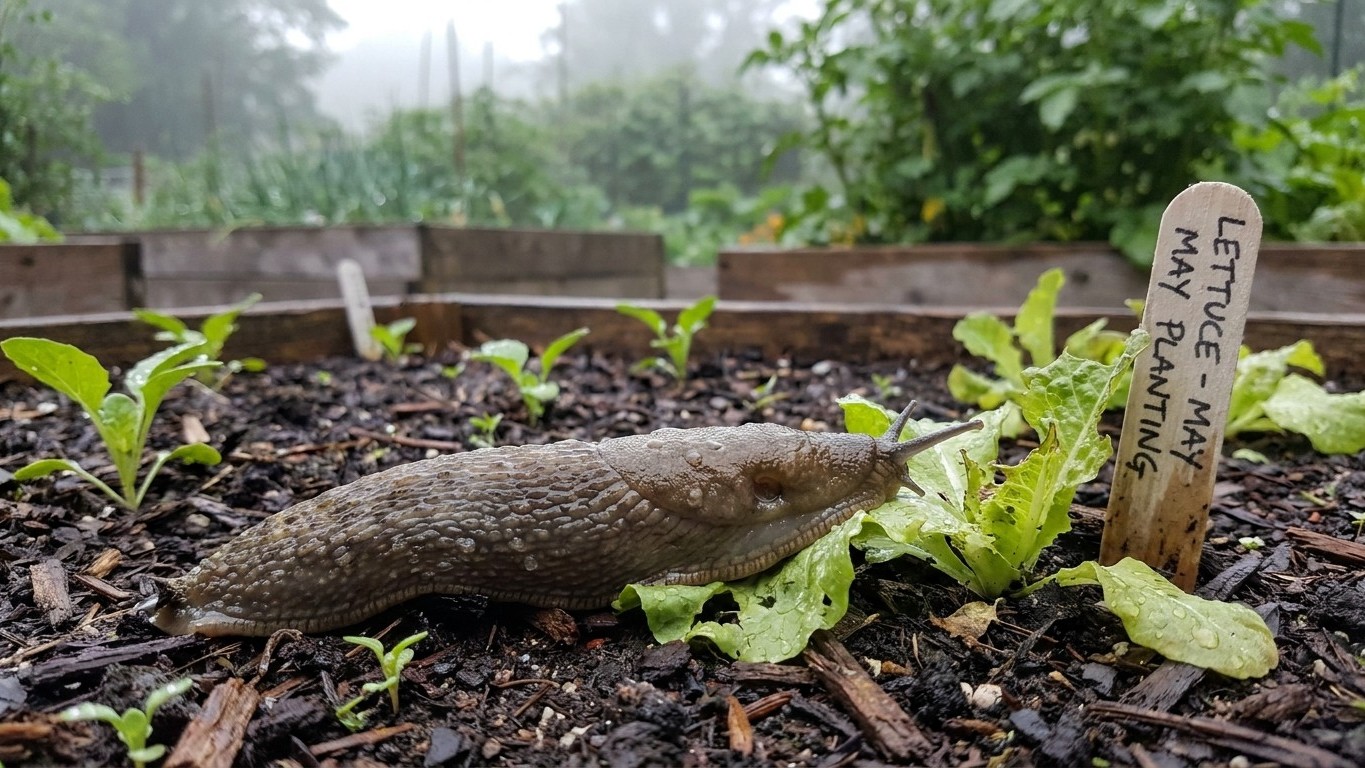

Slugs show up in Ontario the moment nighttime temperatures climb past roughly 45°F and the soil stays damp for more than a day or two, usually mid-April in the south of the province and closer to early May farther north. They disappear on their own once things dry out or freeze, but between those two points, a slug population can chew through a vegetable bed faster than most homeowners expect. Iron phosphate baits, copper barriers, and simply changing when you water are the three tools that actually make a measurable difference, and each works on a different part of the slug’s biology.
Why Ontario Is Basically Slug Country

Slugs are mollusks, not insects, which means they breathe through skin that has to stay moist or they die. Ontario gives them exactly what they need: a humid continental climate, heavy clay soils in much of the south that hold water for days after rain, and a growing season bookended by cool, wet shoulder seasons. Compare that to a place like Arizona, where slugs barely register as a pest problem because the air itself pulls moisture out of anything without a shell. Southwestern Ontario, the Ottawa Valley, and the Niagara region see the heaviest slug pressure because of the combination of clay-heavy soil and lake-effect humidity.
Home gardens with raised beds, mulch, and dense plantings actually make the problem worse, not better. Mulch retains moisture and gives slugs daytime cover, which is great for soil health and terrible for lettuce. A three-inch layer of shredded bark or straw can drop soil surface temperature by several degrees and keep humidity high enough that slugs never need to burrow deep to escape the sun.
The Species Actually Showing Up in Ontario Gardens
Most homeowners assume one slug looks like every other slug. In practice, Ontario hosts a handful of species with different habits, and knowing which one you’ve got changes how you respond.
- The gray garden slug (Deroceras reticulatum), small and mottled, is the most common species in vegetable gardens and does the most damage to seedlings.
- The leopard slug (Limax maximus), larger and spotted, tends to prefer decaying organic matter over living plants, making it more of a compost dweller than a crop pest.
- Banded and marsh slugs show up occasionally in wetter, low-lying yards near rivers or drainage areas.
The gray garden slug is the one worth worrying about. It reproduces fast, lays eggs in batches of 20 to 100 in the top few inches of soil, and a single slug can produce several hundred offspring in one season under good conditions. That’s the math behind why a light infestation in May can look like a full-blown problem by July if nothing gets done.
When Slugs Peak in Ontario, and Why the Calendar Matters More Than the Thermometer
Slug activity in Ontario follows two peaks rather than one long summer stretch. The first hits in late spring, typically the last two weeks of May into early June, when soil is still cool and consistently damp from spring rain. This is when seedlings and transplants take the worst hits, because young leaves have little tissue to spare. Activity usually dips during the hot, drier stretch of mid-July through early August, when surface soil dries out enough to push slugs deeper or into shaded refuges. A second, often overlooked peak arrives in September and early October, when cooler nights bring dew back and rainfall picks up again before frost.
Gardeners who only watch for slugs in June often miss that fall wave entirely, and it can hit fall lettuce, spinach, and brassicas just as hard as anything in spring. Anyone who’s found a hosta shredded overnight in late September has usually met this second wave firsthand.
Temperature alone doesn’t drive the pattern. Slugs can tolerate a fairly wide range, from near-freezing up into the 70s, but they go dormant or die quickly without surface moisture. That’s why a warm, dry June in Ontario can suppress slug damage more effectively than a cool, wet one, even though the warmer month sounds like it should favor pests.
What Actually Stops Slugs
Baits That Work Without Poisoning the Yard
Iron phosphate bait pellets remain the most reliable chemical option for home use in Ontario, and they’re approved for organic gardening. Slugs eat the bait, stop feeding within hours, and die over the following days, largely underground where they aren’t visible. The U.S. Environmental Protection Agency lists iron phosphate as a low-toxicity active ingredient in molluscicide products, with minimal risk to pets, birds, or earthworms when used as labeled (EPA ingredient profile). That’s a meaningful upgrade over older metaldehyde-based baits, which carry real risk for dogs that graze on lawn debris.
Bait works best scattered thinly around the base of vulnerable plants rather than piled in one spot, since slugs are drawn to it by scent over a fairly short radius. Reapplication after heavy rain is necessary, since the pellets break down once soaked.
Physical Barriers and Trapping
Copper tape wrapped around raised bed edges or pot rims creates a mild electrical charge when a slug’s slime touches it, and the mollusk simply turns back. It’s a one-time purchase that keeps working season after season, provided the tape doesn’t get bridged by fallen leaves or overhanging stems. Diatomaceous earth, a fine powder made from fossilized algae, works differently: it’s abrasive enough to damage the slug’s soft underside, but it loses effectiveness the moment it gets wet, which limits its usefulness during Ontario’s damp spring stretch.
Beer traps, the classic backyard fix, do work, but the mechanism is simple attraction to the yeast, not anything magical about the alcohol. A shallow container sunk to soil level and filled with cheap beer will drown slugs overnight, though it needs to be emptied and refilled every few days or it turns into a smelly chore nobody wants to keep up with.
Cultural Changes That Reduce Numbers Long-Term
Watering in the early morning instead of evening cuts overnight surface moisture dramatically, and since slugs are almost entirely nocturnal feeders, that single change can reduce damage more than any bait application. Clearing dense mulch away from the direct base of vulnerable seedlings, while still using it elsewhere in the bed, removes daytime shelter without giving up the soil benefits mulch provides.
Encouraging natural predators helps too. Ground beetles, certain birds, and garter snakes all eat slugs, and a yard that isn’t blanketed in broad-spectrum insecticide tends to keep more of these predators around. Raised beds with a slight slope for drainage also help, since standing water after rain is exactly the kind of surface moisture that keeps a slug population fed and breeding.
What Doesn’t Really Work
Salt kills slugs on contact, but it also damages soil structure and plant roots if applied anywhere near a garden bed, so it’s a method better suited to a slug crossing a driveway than one in a lettuce patch. Crushed eggshells, a popular home remedy, have never held up under controlled testing, largely because slug slime lets them glide over sharp edges more easily than people assume. Coffee grounds show some repellent effect in small studies, but the concentration needed to matter is far higher than what typically ends up on a garden bed after a morning pot of coffee.
One detail that surprises a lot of Ontario gardeners: a single gray garden slug can travel roughly 40 feet in a single night searching for food, which means a barrier around one raised bed does nothing for the bed twenty feet away unless that one gets protected too.