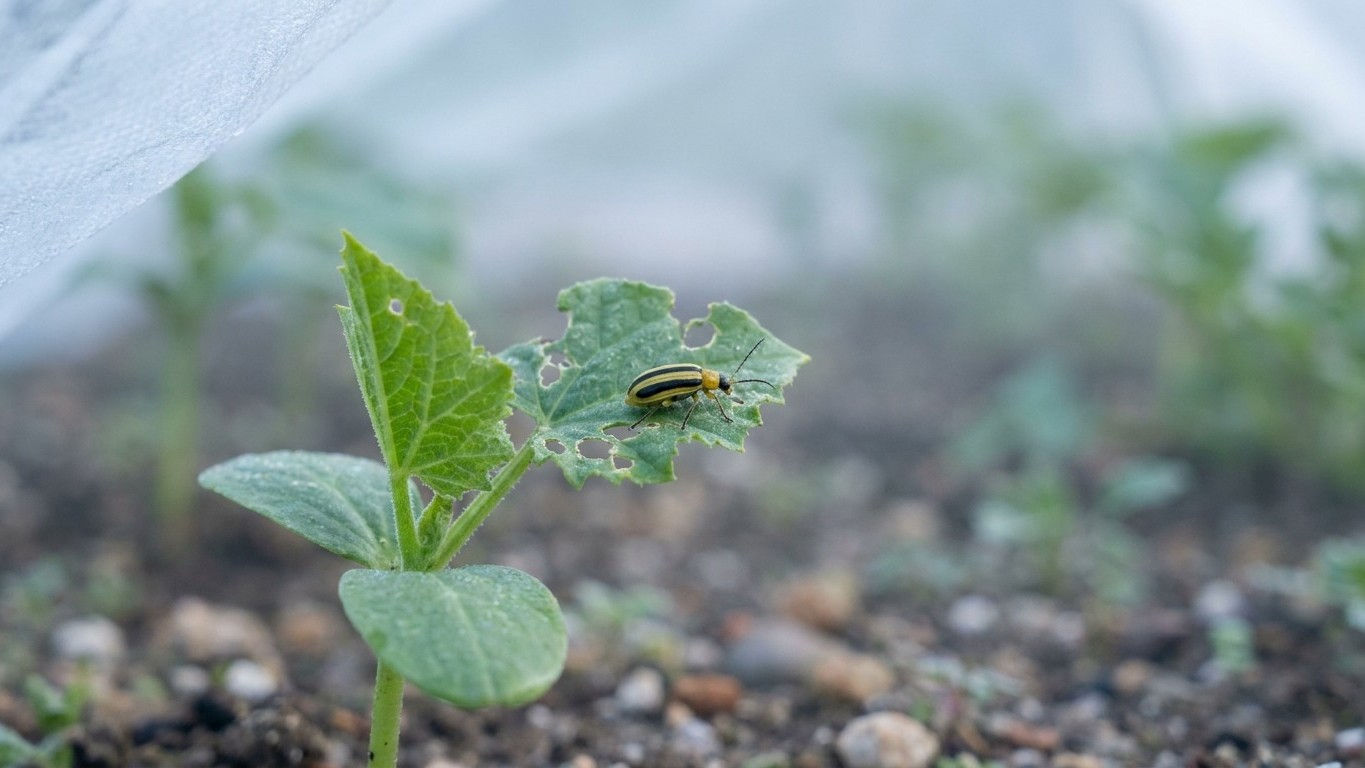

Striped cucumber beetles typically show up in Prince Edward Island gardens between late May and mid-June, right as cucumber, squash, and pumpkin seedlings push out their first true leaves. Cool coastal springs delay their arrival compared to warmer parts of Canada, but once soil temperatures climb past 65°F, adults emerge fast and head straight for cucurbit seedlings. The most reliable defenses are floating row covers installed at planting, strict rotation away from last year’s cucurbit beds, and prompt removal of any plant showing bacterial wilt symptoms before beetles spread the disease further.
Identifying the Striped Cucumber Beetle in PEI Gardens

The insect is small, about a quarter-inch long, with a yellow-to-cream body marked by three bold black stripes running lengthwise down its back. Its cousin, the spotted cucumber beetle, is more common in warmer regions of North America, but on the Island the striped form dominates almost every home garden and market plot growing cucurbits.
Adults are quick fliers and drop to the soil the instant a shadow passes over the plant, which makes them tricky to spot by eye. A better tell is the damage pattern: ragged holes in cotyledons, scarring along young stems, and sometimes entire seedlings toppled overnight. Look closely at the base of the plant, in the crease between the stem and the soil line, since that’s where adults cluster to feed and mate during the cool mornings typical of an Island June.
When It Arrives: PEI’s Growing Season and Beetle Timing
Prince Edward Island’s growing season runs roughly from late May to early-to-mid October, a window shaped by its Zone 5a-5b maritime climate and the tempering effect of the surrounding water. That short season actually works slightly in a gardener’s favor when it comes to this pest. Unlike warmer regions of eastern Canada and the northern United States where two generations can develop in a single summer, PEI’s cooler soil and shorter frost-free stretch generally limit the beetle to one generation per year, sometimes a partial second wave in an unusually warm September.
Overwintering adults hide in leaf litter, hedgerows, and the edges of woodlots surrounding fields and gardens. They wait out the winter in a dormant state and become active again once daytime temperatures hold consistently above the mid-60s, a threshold PEI usually reaches sometime between the third week of May and the first week of June depending on the year. That timing lines up almost exactly with when most Island gardeners are direct-seeding or transplanting cucumbers, zucchini, and pumpkins, which is exactly why seedling damage feels so sudden and severe.
Females start laying eggs at the base of host plants within a couple of weeks of emerging. The resulting larvae tunnel into roots and lower stems, a phase that’s harder to see but still weakens plants, especially in squash and melon varieties with shallower root systems. By late July, most of that first generation has cycled through, though adults remain active and feeding on foliage, flowers, and eventually fruit right into September.
The Real Danger: Bacterial Wilt, Not Just Chewed Leaves
Chewed cotyledons are annoying, but they rarely kill a healthy plant outright. The bigger threat riding along with the beetle is bacterial wilt, caused by the bacterium Erwinia tracheiphila, which the beetle carries in its gut and transmits through feeding wounds. Cucumbers and muskmelons are highly susceptible; squash and pumpkins vary by variety, with some winter squash types showing much stronger resistance.
Once a plant is infected, there’s no cure. Leaves wilt starting at the growing tip, the wilting spreads down the vine over a matter of days, and the plant collapses even though the soil around it is perfectly moist. A simple field test confirms it: cut a wilted stem near the base and slowly pull the two halves apart. If you see a milky, sticky strand of bacterial ooze stretching between them, that plant is done and should come out of the garden immediately, roots and all, to reduce the source of infection for neighboring plants.
Because it only takes a handful of beetles feeding early in the season to introduce the bacteria into a planting, controlling the insect population before flowering matters more than trying to manage wilt after the fact. This is the main reason extension programs across Atlantic Canada push growers toward exclusion methods rather than reactive spraying.
What Actually Stops It
Physical Barriers and Timing
Floating row covers, light spun fabric draped over hoops or laid directly on seedlings, remain the single most effective tool for PEI gardens. Installed at seeding or transplanting and sealed at the edges with soil or rocks, they physically block adult beetles from reaching young plants during the most vulnerable two to three weeks of growth. The catch is timing the removal: covers need to come off once flowers open, since cucurbits depend on bees and other pollinators for fruit set, and a sealed cover shuts pollinators out along with the pests. Most Island growers pull covers in the third week of June, right around when the first female flowers appear.
Delaying planting by even a week or two, so seedlings emerge after the initial beetle flush has passed its peak, can also reduce pressure, though this trades off against PEI’s already tight frost-free window and isn’t practical for every crop.
Trap Crops and Monitoring
Blue Hubbard squash is well documented as a strong trap crop for cucumber beetles because it’s more attractive to the insect than most cucumber and zucchini varieties. Planting a border of Blue Hubbard around the main cucurbit bed, and treating or removing beetles that concentrate on those trap plants, keeps pressure off the main crop without covering the entire planting.
Yellow sticky cards placed at seedling height give an early warning of when beetles arrive in a given year, which matters because PEI’s spring temperatures can swing by a week or more from one season to the next. Checking cards twice a week starting in mid-May lets a gardener time row cover removal and any treatment decisions around actual beetle activity rather than a fixed calendar date.
Cultural Controls That Reduce Overwintering Populations
Rotating cucurbits to a different part of the garden each year, ideally at least 200 feet from the previous year’s planting, disrupts the beetle’s ability to find host plants right after overwintering nearby. Cleaning up old vines, fruit debris, and mulch in the fall removes some of the shelter adults use to survive winter, though beetles that overwinter in adjacent hedgerows or woodlot edges will still find their way back regardless of garden sanitation.
A few cultural details help beyond rotation:
- Delaying mulching with straw until plants are established, since heavy mulch early can create the same humid shelter beetles favor
- Choosing squash and pumpkin varieties with documented resistance to bacterial wilt when cucumber beetle pressure has been heavy in past seasons
- Removing volunteer cucurbit seedlings that sprout from last year’s compost pile, since they attract beetles before the main crop is even planted
When Treatment Becomes Necessary
If beetle counts on sticky cards or direct plant inspection climb past one beetle per plant on seedlings, or if feeding damage covers more than 20 percent of cotyledon tissue, targeted treatment is reasonable. Kaolin clay applied as a spray coats leaves in a fine white film that beetles find unappealing to feed on and doesn’t harm pollinators, making it a solid option once flowers open and row covers are gone. Spinosad-based products offer another option with lower impact on beneficial insects compared to broad-spectrum insecticides, though they still carry some risk to bees if applied while flowers are open, so evening application after pollinators have finished for the day reduces that risk.
Broad-spectrum options exist for severe infestations, but given how heavily cucurbit pollination depends on bees, and how short PEI’s fruit-set window already is due to the compressed growing season, most Island extension guidance leans toward the least disruptive tool that gets the population under control rather than the strongest one available.
One detail that surprises a lot of gardeners: beetle pressure often varies more by what’s growing in the hedgerow next door than by anything happening inside the garden fence. Properties bordering brushy field edges or unmown ditches tend to see earlier and heavier beetle arrival than gardens surrounded by lawn or pavement, simply because those wild margins are where the adults spent the winter.
Related guides
- Striped cucumber beetle in New Brunswick: When It Shows Up and What Stops It
- Striped cucumber beetle in Nova Scotia: When It Shows Up and What Stops It
- Striped cucumber beetle in Quebec: When It Shows Up and What Stops It
- Striped cucumber beetle in South Carolina: When It Shows Up and What Stops It
- Striped cucumber beetle in Michigan: When It Shows Up and What Stops It